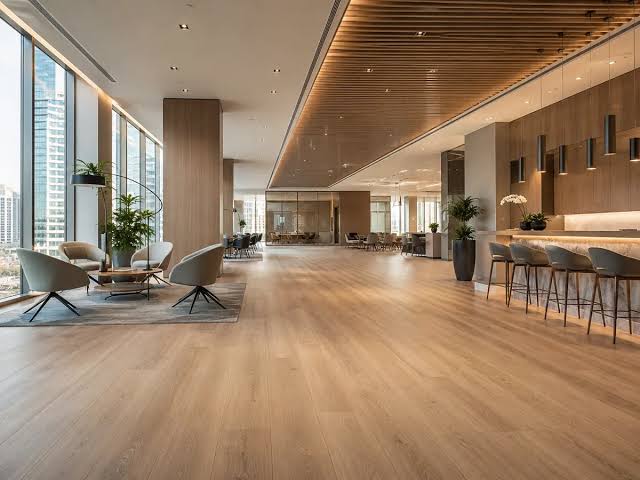
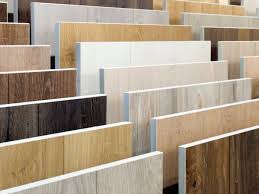
Learn how to specify SPC, vinyl and carpet tiles in a flooring BOQ so Kenyan tenders are comparable and unsuitable substitutes are excluded.
A Flooring BOQ Specification should do more than state the number of square metres required. If a tender document simply says "supply and install vinyl flooring" or "provide SPC flooring," contractors may price different products, different installation systems and different levels of preparation. The resulting tenders may look comparable on paper while actually offering very different flooring systems.
For consultants, contractors, quantity surveyors, developers and procurement teams in Kenya, a properly written flooring BOQ specification should identify the material, performance requirements, installation method, accessories, preparation and quality documentation expected.
This is especially important for commercial fit-outs where flooring may need to satisfy requirements for durability, slip resistance, fire performance, moisture resistance, maintenance and appearance.
Shop Vinyl Flooring
View all Vinyl Flooring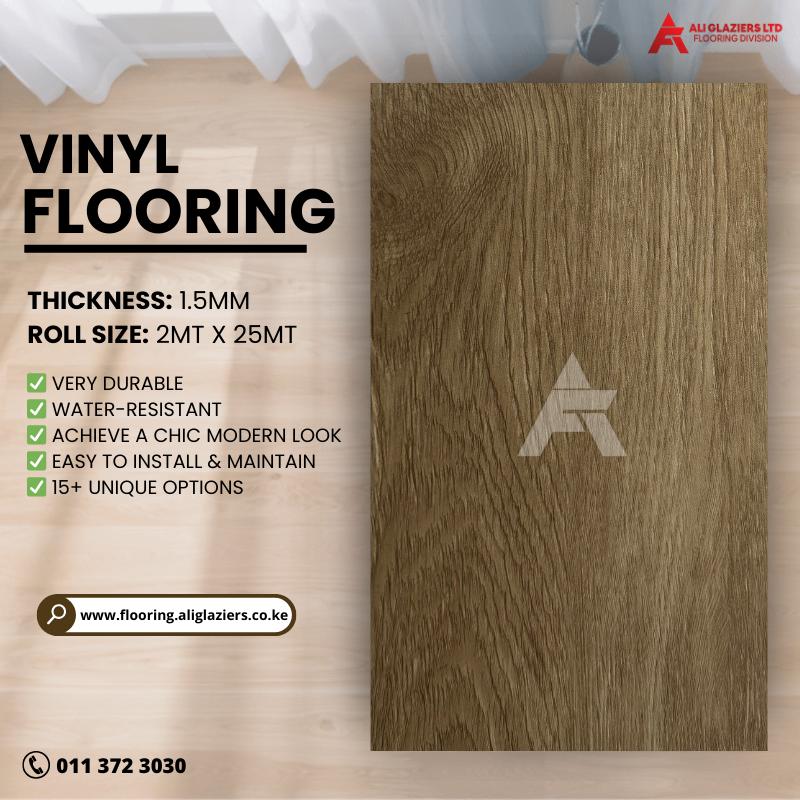
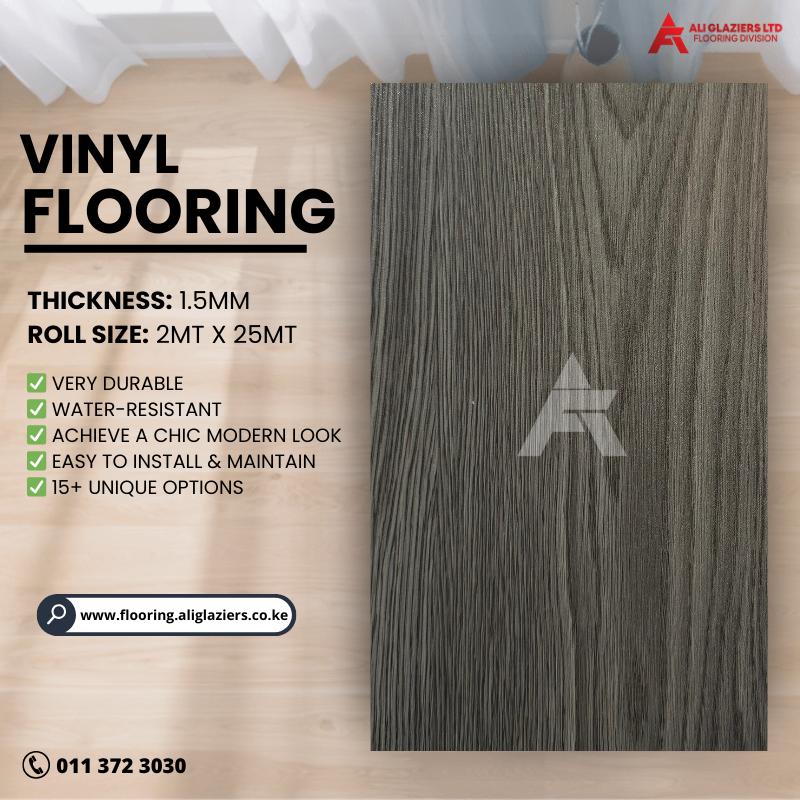
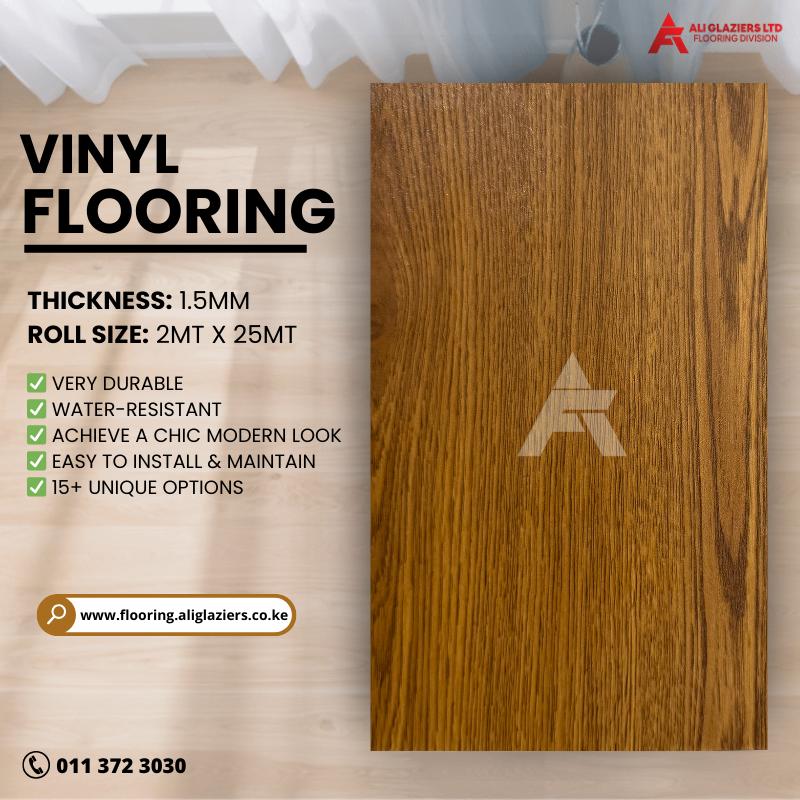
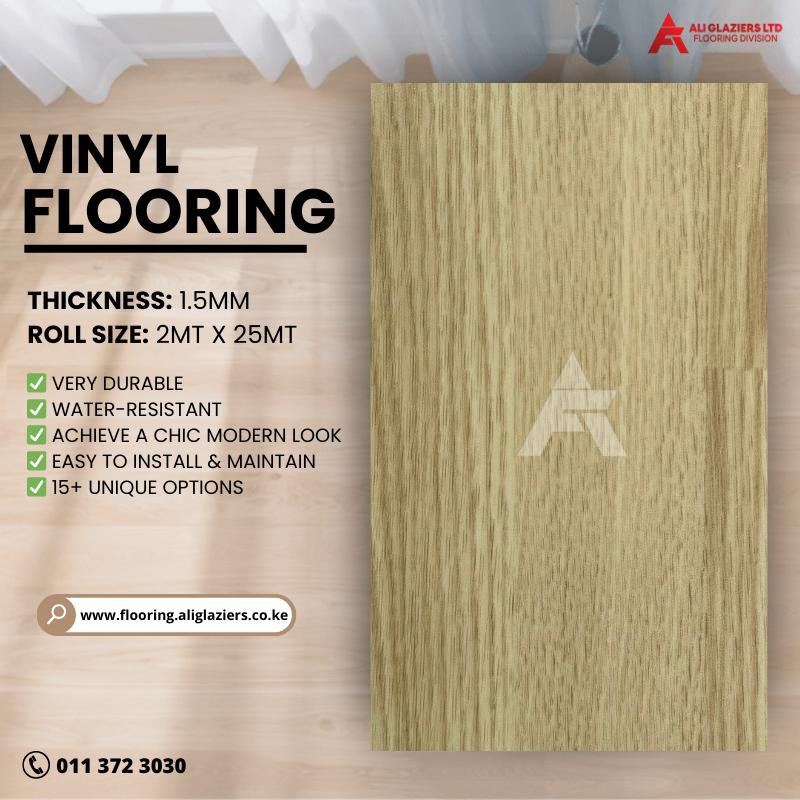
A good BOQ clause reduces ambiguity before tenders are submitted. It helps contractors price the same scope, makes tender comparisons more meaningful and reduces the likelihood that a low-priced alternative will be substituted for the specified product without approval.
Whether the project requires SPC flooring, vinyl flooring, laminated wood, carpet tiles or another commercial flooring system, the BOQ should describe the complete flooring installation, not merely the visible floor covering.
What Should a Flooring BOQ Specification Include?
A flooring BOQ specification should identify the product type, minimum performance, thickness or construction where relevant, installation system, substrate preparation, accessories, workmanship and documentation requirements. The more technically demanding the project, the more important these details become.
A typical flooring BOQ item may need to address:
- Flooring type
- Product construction
- Thickness
- Wear layer where applicable
- Surface finish
- Colour and pattern
- Dimensions
- Performance classification
- Slip resistance
- Fire classification
- Moisture requirements
- Acoustic requirements where applicable
- Adhesive or fixing system
- Subfloor preparation
- Underlay
- Skirting
- Trims
- Transition profiles
- Cutting and wastage
- Protection after installation
- Cleaning
- Testing and documentation
Not every item needs every requirement.
The principle is to include the information necessary for contractors to understand exactly what is being priced.
Why Flooring BOQ Specifications Matter in Kenya
A clear flooring BOQ specification allows Kenyan contractors to price a defined product and installation scope instead of making assumptions. This reduces tender discrepancies and helps consultants compare bids on performance as well as price.
Consider two contractors tendering for the same project.
Contractor A prices a commercial-grade SPC product with a specified wear layer, professional installation, approved underlay and proper finishing accessories.
Contractor B prices a cheaper SPC product with a different construction and minimal preparation.
If the BOQ only says:
Supply and install SPC flooring — 500 m².
Both prices may appear valid.
But they are not necessarily pricing the same thing.
A detailed specification might instead identify:
- SPC construction
- Minimum thickness
- Minimum wear layer
- Click-lock or approved installation system
- Required slip classification
- Required fire classification
- Approved underlay
- Subfloor preparation
- Matching trims
- Installation workmanship
- Manufacturer documentation
Now the tender comparison becomes much more meaningful.
How to Write a Flooring BOQ Item
A good flooring BOQ item should describe the complete scope in a way that allows several competent contractors to price the same requirement. It should avoid vague descriptions such as "good quality" and instead use measurable or verifiable requirements.
A useful structure is:
Supply, deliver and install + flooring product + minimum specification + installation system + substrate preparation + accessories + finishing + testing/documentation + protection + complete.
For example:
Supply, deliver and install commercial-grade click-lock SPC flooring, minimum ___ mm overall thickness with minimum ___ mm wear layer, colour and finish selected by the consultant, installed over properly prepared substrate in accordance with manufacturer's written instructions, including underlay where specified, cutting, fitting, trims, transitions, perimeter finishing, wastage, cleaning and protection, complete.
The exact technical values should be established by the consultant based on the project's requirements.
Avoid inserting arbitrary specifications simply to make the clause appear technical.
Model BOQ Clause for SPC Flooring
An SPC BOQ clause should identify the required construction, dimensions, wear performance, installation method and finishing accessories rather than relying on the generic term "SPC flooring." This gives tenderers a clearer basis for pricing and product selection.
Model Clause
SPC FLOORING: Supply, deliver and install commercial-grade Stone Plastic Composite (SPC) flooring of approved manufacturer and colour, comprising rigid composite core with factory-applied decorative surface and protective wear layer, minimum overall thickness and wear-layer thickness as scheduled, with suitable click-lock installation system, installed to prepared and level substrate strictly in accordance with manufacturer's written recommendations; including all cutting, fitting, perimeter allowances, approved underlay where required, transition profiles, trims, accessories, wastage, cleaning, protection and all necessary labour and materials to provide a complete finished installation.
The consultant can then add project-specific requirements such as:
- Minimum thickness
- Wear-layer thickness
- Slip classification
- Reaction-to-fire classification
- Acoustic rating
- Warranty period
- Approved manufacturers
- Colour range
- Plank dimensions
For projects with specific fire requirements, the relevant classification should be stated explicitly rather than simply saying "fire resistant."
For background on SPC, see SPC flooring as a heavy-duty flooring solution.
What to Specify for SPC Wear Layer
The wear layer is an important part of an SPC specification because it relates to the product's resistance to everyday surface wear. A BOQ should state a minimum requirement where traffic conditions justify it instead of leaving the term "commercial grade" open to interpretation.
For example, a specification could state:
"Minimum wear layer: ___ mm."
The actual value should be selected according to:
- Pedestrian traffic
- Building use
- Expected service life
- Maintenance regime
- Manufacturer recommendations
- Project budget
A hotel corridor, private residence and busy retail shop may not require identical performance.
The specification should therefore be based on the application.
Should the BOQ Specify the SPC Brand?
A BOQ does not always need to specify one brand, but it should provide enough technical requirements to ensure alternative products are genuinely equivalent. Where a particular product is essential, the procurement approach should clearly state the basis for approval and acceptable alternatives.
There are several approaches.
Performance-Based Specification
Specify measurable minimum requirements and allow compliant products from approved manufacturers.
This can encourage competition.
Named Product Specification
Specify a particular product or manufacturer where the project requires a defined system or design.
The procurement documents should address applicable alternative-product procedures.
Hybrid Specification
Identify a reference product together with minimum technical requirements and a process for approving alternatives.
This can be useful when the consultant has a preferred quality benchmark but wants to maintain procurement flexibility.
The important point is that an alternative should demonstrate equivalent or better performance, not simply be cheaper.
How to Prevent Cheap Flooring Substitutes
The strongest way to prevent unsuitable substitutions is to define measurable minimum requirements and require technical submittals before approval. Price alone should not determine whether an alternative flooring product is accepted.
Common vague specifications include:
- "Premium SPC"
- "High-quality vinyl"
- "Heavy-duty carpet"
- "Commercial-grade flooring"
- "Durable flooring"
These phrases sound professional but can be difficult to enforce.
Instead, specify measurable characteristics where relevant.
For SPC, this may include:
- Overall thickness
- Wear layer
- Plank dimensions
- Surface finish
- Slip classification
- Fire classification
- Installation system
- Warranty
For vinyl:
- Product construction
- Thickness
- Wear layer
- Slip performance
- Fire classification
- Installation method
- Manufacturer's warranty
For carpet tiles:
- Fibre construction
- Tile dimensions
- Backing
- Wear classification
- Fire performance
- Acoustic properties where required
- Installation method
This gives the consultant something objective against which substitutions can be assessed.
Model BOQ Clause for Vinyl Flooring
A vinyl flooring BOQ item should define the type of vinyl, construction, thickness or wear layer where relevant, installation system, substrate preparation and finishing requirements. "Supply and lay vinyl" alone is usually insufficient for a commercial tender.
Model Clause
VINYL FLOORING: Supply, deliver and install approved commercial-grade vinyl flooring of selected colour, pattern and finish, of specified construction, thickness and minimum wear layer, suitable for the intended traffic and application, installed using manufacturer's approved adhesive or installation system over properly prepared, smooth, clean, dry and sound substrate; including substrate preparation as specified, adhesive, cutting, fitting, joints, perimeter finishing, trims, transitions, wastage, cleaning, protection and all labour and accessories necessary for a complete finished installation.
The consultant can then insert the project's required:
- Thickness
- Wear layer
- Classification
- Slip resistance
- Fire performance
- Colour
- Pattern
- Sheet or plank format
- Joint treatment
- Adhesive type
Where appropriate, the project can specify that the proposed adhesive must be compatible with both the vinyl and substrate.
The vinyl flooring collection can be reviewed when assessing product formats and finishes.
Glue-Down Vinyl vs Click Vinyl in the BOQ
The installation system should be clearly identified because click vinyl and glue-down vinyl are not interchangeable installation methods. Each has different preparation, labour and material requirements.
A BOQ should avoid simply stating:
"Vinyl flooring — 1,000 m²."
Instead, identify whether the product is:
- Sheet vinyl
- Vinyl plank
- Vinyl tile
- Click vinyl
- Glue-down vinyl
The clause should also state whether the contractor is responsible for:
- Adhesive
- Primer
- Levelling compound
- Subfloor preparation
- Welded joints where applicable
- Skirting
- Transitions
This prevents contractors from making different assumptions during tender pricing.
Model BOQ Clause for Carpet Tiles
A carpet-tile BOQ specification should identify the tile format, fibre or construction requirements, backing, performance characteristics, colour, installation system and replacement or maintenance considerations where relevant.
Model Clause
CARPET TILES: Supply, deliver and install approved commercial-grade carpet tiles of specified size, construction, colour and pattern, with suitable backing and performance characteristics for the intended traffic level, installed to prepared substrate using manufacturer's approved adhesive or fixing system; including setting out, cutting, fitting, edge pieces, wastage, transitions, cleaning, protection and all labour and accessories required to provide a complete finished carpet-tile installation.
Additional requirements may include:
- Tile dimensions
- Fibre composition
- Pile construction
- Backing type
- Wear classification
- Fire classification
- Acoustic performance
- Colour
- Pattern
- Installation direction
- Adhesive
- Warranty
For commercial offices, carpet tiles can provide a practical advantage because individual damaged tiles can potentially be replaced rather than removing an entire carpeted area.
See the carpet tile category for relevant product options.
BOQ Specification for Carpet Installation
The BOQ should distinguish between the carpet material and the installation scope because carpet performance can depend on the backing, adhesive, substrate and installation method. Accurate setting out and edge finishing should be included in the installation item.
Depending on the project, specify:
- Substrate preparation
- Moisture condition
- Adhesive
- Tile orientation
- Pattern matching
- Edge treatment
- Skirting
- Transitions
- Protection
For wall-to-wall carpet, the installation requirements can be more extensive.
See the Egyptian carpets and runner flooring guide for additional considerations when selecting carpet products.
Should Subfloor Preparation Be a Separate BOQ Item?
Subfloor preparation should be clearly identified in the BOQ rather than silently assumed to be included in the flooring rate. Where the extent of preparation cannot be determined accurately at tender stage, a separate provisional or measured item may provide a clearer basis for pricing.
Subfloor preparation may include:
- Cleaning
- Grinding
- Patching
- Crack repair
- Priming
- Levelling
- Moisture treatment
- Removal of existing adhesive
- Removal of loose material
Different flooring systems have different tolerance requirements.
A rigid click-lock product may tolerate certain minor variations differently from glue-down vinyl.
If the contractor discovers extensive preparation after the tender is awarded, a dispute may arise over whether the work was included.
A clearly structured BOQ helps avoid this.
Floor Levelling in the BOQ
Floor levelling should be specified where the proposed flooring requires a controlled, smooth or level substrate. The BOQ should distinguish between routine preparation and substantial remedial work where possible.
For example, a project could separately measure:
- Localised patch repairs
- Self-levelling compound
- Moisture barriers
- Existing floor removal
- General surface preparation
The consultant should establish suitable tolerances based on the flooring manufacturer's requirements.
Avoid simply stating "make floor level."
A measurable requirement is more useful.
Measuring Flooring in Square Metres
Most floor finishes are measured in square metres, but the BOQ should make clear whether cutting, wastage, fitting and accessories are included in the rate. This prevents different tenderers from making different assumptions about what their square-metre price covers.
For example:
| BOQ ItemUnitQuantity | ||
| SPC flooring, supply and installation | m² | 500 |
| Vinyl flooring, supply and installation | m² | 300 |
| Carpet tiles, supply and installation | m² | 450 |
| Floor preparation | m² | 1,250 |
| Transition profiles | m | 80 |
| Skirting | m | 420 |
The actual measurement structure should reflect the project's design and method of measurement.
Should Wastage Be Included?
Wastage should be addressed clearly so that tenderers price the same scope. Depending on the flooring type and room geometry, cutting waste can vary considerably, particularly where patterns, directional installation or irregular layouts are involved.
Wastage can result from:
- Room shape
- Plank direction
- Pattern matching
- Tile orientation
- Doorways
- Columns
- Curved walls
- Staircases
- Design features
A BOQ may measure the net floor area while requiring the contractor's rate to include normal cutting and wastage.
Alternatively, the procurement approach may account for material quantities separately.
The important point is consistency.
How to Specify Flooring Accessories
A flooring BOQ should identify accessories that materially affect the completed installation, including skirting, transition profiles, trims, adhesive, underlay and edge treatments. Omitting these items can result in incomplete tender prices.
Typical accessories include:
- Skirting
- Scotia
- Transition strips
- Reducers
- End profiles
- Stair nosings
- Adhesive
- Underlay
- Moisture barriers
- Expansion profiles
For example, if an SPC floor connects to existing ceramic tiles, the difference in finished floor height may require an appropriate transition profile.
That should not be left entirely to the contractor's interpretation.
Fire Performance in a Flooring BOQ
Where a project requires a specific fire-performance classification, the BOQ should state the required classification and require supporting product documentation. Generic wording such as "fire-resistant flooring" is too vague for a technical commercial specification.
For example, the specification may state:
"Flooring to achieve minimum reaction-to-fire classification of [insert project requirement] when tested and classified in accordance with the specified standard."
The actual classification should come from the project's fire strategy and consultant.
The contractor should then submit:
- Product datasheet
- Test report
- Classification documentation
- Product identification
- Installation requirements
This is particularly important where the floor forms part of a commercial building fit-out subject to defined fire-performance requirements.
Slip Resistance in a Flooring BOQ
Slip resistance should be specified according to the location and expected conditions rather than applying the same requirement to every floor. Wet entrances, kitchens, pool areas and service spaces may require different performance criteria from dry office areas.
A specification could identify:
- Required test method
- Minimum classification
- Wet or dry application
- Intended location
- Manufacturer documentation
For example, where an R classification is appropriate, the BOQ should state the required classification based on the consultant's risk assessment.
Do not simply write:
"Anti-slip flooring."
Instead, specify the measurable requirement.
For more information, see the guide to anti-slip R ratings for flooring.
Moisture Requirements in Flooring Specifications
Moisture conditions should be addressed before flooring is installed, particularly for products and adhesives that require a controlled substrate. A BOQ should make clear who is responsible for testing, preparation and any required moisture mitigation.
Potential requirements include:
- Substrate moisture testing
- Damp-proofing
- Moisture barrier
- Primer
- Drying time
- Adhesive compatibility
This is particularly relevant in new concrete floors where construction moisture may still be present.
A contractor should not be expected to absorb an undefined moisture-remediation cost without a clear tender requirement.
Acoustics and Commercial Flooring
Acoustic requirements can be important in offices, hotels, apartments, schools and healthcare environments. Where acoustic performance is required, the BOQ should specify the measurable target and test method rather than simply describing the flooring as "quiet."
Possible requirements include:
- Impact sound reduction
- Acoustic underlay
- Room reverberation considerations
- Footfall noise
- Manufacturer test data
Carpet tiles can be useful in some office environments because their construction can contribute to acoustic comfort.
SPC and vinyl systems may require specific underlay or acoustic backing where acoustic performance is part of the design.
Maintenance Requirements in the BOQ
A flooring specification should consider the building's maintenance regime, because the cheapest material to purchase may not be the cheapest to operate over its service life. Cleaning requirements, replacement options and manufacturer recommendations can all affect lifecycle cost.
The BOQ or specification can require:
- Manufacturer cleaning instructions
- Approved cleaning products
- Maintenance manuals
- Spare tiles or planks
- Replacement material
- Warranty documentation
For carpet tiles, the project may also require spare tiles to be handed over to the building owner for future repairs.
This can be especially valuable in busy commercial environments.
Sample Approval Before Tender or Installation
Samples help consultants and clients verify appearance and physical characteristics before approving a flooring product, but samples should be assessed alongside technical documentation rather than replacing it.
A flooring approval process can include:
- Product sample
- Technical datasheet
- Fire classification
- Slip-resistance documentation where required
- Warranty
- Installation instructions
- Colour and finish approval
- Mock-up where necessary
The approved sample should be clearly identified and retained for comparison during installation.
Technical Submittals for Flooring
A technical submittal process allows the consultant to verify that the proposed flooring meets the BOQ requirements before material is delivered to site. This is one of the most effective ways to control substitutions.
A flooring submittal can include:
- Manufacturer
- Product name
- Product code
- Technical datasheet
- Thickness
- Wear layer
- Classification
- Test reports
- Installation instructions
- Warranty
- Colour sample
- Adhesive information
- Maintenance instructions
The contractor should not assume that a product is approved simply because it looks similar to the specified material.
Equivalent Product Substitutions
A substitute flooring product should demonstrate compliance with the same minimum technical requirements rather than being accepted solely because it is cheaper or visually similar. The consultant should establish an objective approval process for alternatives.
A useful substitution review can compare:
| Requirement | Specified product | Proposed alternative |
| Flooring type | SPC | SPC |
| Thickness | Minimum specified | Confirm |
| Wear layer | Minimum specified | Confirm |
| Slip classification | Project requirement | Confirm |
| Fire classification | Project requirement | Confirm |
| Installation system | Click-lock | Confirm |
| Warranty | Project requirement | Confirm |
| Colour/finish | Approved | Confirm |
| Documentation | Required | Submitted |
This creates an auditable process.
If the proposed alternative fails one of the minimum requirements, it should not be described as an equivalent product.
How to Make Flooring Tenders Comparable
Comparable tenders require a common technical baseline. The BOQ, drawings, specifications and schedules should work together so that each contractor understands the same product requirements, quantities, preparation and installation scope.
Before issuing a tender, check:
- Are floor areas clearly measured?
- Are different flooring types separated?
- Are thickness requirements stated?
- Are performance requirements stated?
- Is the installation method clear?
- Is subfloor preparation defined?
- Are accessories included?
- Is wastage addressed?
- Are samples required?
- Are substitutions controlled?
- Is technical documentation required?
- Are warranties specified?
The more answers that are provided in advance, the less room there is for tenderers to interpret the scope differently.
Flooring BOQ Example: Complete Tender Structure
A well-structured flooring BOQ can separate material, preparation and ancillary requirements while still making clear what must be included in each installation rate. This creates a better basis for tender comparison and valuation.
A simplified commercial flooring schedule could look like this:
| Description | Unit | Quantity |
| Floor preparation to receive resilient flooring | m² | 800 |
| Commercial SPC flooring, supply and installation | m² | 400 |
| Commercial vinyl flooring, supply and installation | m² | 250 |
| Carpet tiles, supply and installation | m² | 150 |
| Skirting | m | 350 |
| Transition profiles | m | 60 |
| Stair nosings | No. | 24 |
| Floor protection after installation | Item | 1 |
| Samples and technical submittals | Item | 1 |
This is only a framework.
The final BOQ should be developed from the drawings, specifications, project measurement rules and actual floor schedule.
Flooring BOQ for Consultants and Quantity Surveyors
Consultants and quantity surveyors should ensure that the flooring description is sufficiently detailed for accurate tender pricing while avoiding unnecessary requirements that cannot be verified. A good specification should be technically defensible and commercially practical.
The consultant's role is not simply to make the specification long.
It should be clear.
For example, adding ten generic adjectives such as "premium, superior, durable, high-quality" does not necessarily improve a BOQ.
Adding measurable requirements does.
Instead of:
Premium high-quality durable commercial vinyl.
Use:
Commercial vinyl flooring, minimum ___ mm overall thickness, minimum ___ mm wear layer, approved colour and finish, required slip and fire classifications, installed using manufacturer's approved adhesive over prepared substrate.
The second description gives tenderers something concrete to price.
How Developers Can Avoid Lowest-Price Flooring Problems
Developers should evaluate flooring tenders on compliance as well as price. A contractor offering the lowest price may not be offering the same product or installation scope as a higher-priced compliant bidder.
A useful tender evaluation sequence is:
Step 1: Check technical compliance
Does the proposed product meet the minimum requirements?
Step 2: Check documentation
Are the required certificates and datasheets available?
Step 3: Check quantities
Are all floor areas and accessories included?
Step 4: Check exclusions
Has the contractor excluded preparation, adhesive or finishing?
Step 5: Compare prices
Only after technical compliance has been established should price differences be evaluated.
This approach prevents a technically inferior product from appearing artificially competitive.
Flooring BOQ and Lifecycle Cost
A BOQ should support consideration of lifecycle cost, not just initial purchase price. Flooring that costs slightly more but lasts longer, is easier to maintain or is simpler to repair may provide better value over the building's operating life.
Lifecycle considerations include:
- Initial material cost
- Installation cost
- Maintenance
- Cleaning
- Replacement
- Repair
- Downtime
- Expected service life
- Availability of replacement products
For example, carpet tiles can offer maintenance flexibility because individual damaged tiles may be replaced.
A commercial SPC floor may offer a different balance of durability, maintenance and appearance.
The right solution depends on the building.
What to Include in a Flooring Handover Package
The flooring handover should provide the building owner with enough information to maintain the installed floor correctly. Technical and maintenance documentation can protect the flooring investment after the contractor has completed the project.
A handover package may include:
- Final approved product list
- Product datasheets
- Installation instructions
- Cleaning instructions
- Maintenance schedule
- Warranty documents
- Test certificates
- Approved samples
- Spare flooring material
- Supplier contacts
- Replacement product codes
This is particularly important for commercial buildings where facilities teams will manage the floor long after construction ends.
Common Flooring BOQ Mistakes to Avoid
The most common flooring BOQ problems come from vague descriptions, incomplete installation scopes and failure to define technical performance. Correcting these issues before tender is usually easier than resolving them through variations after award.
Avoid:
"Supply and install flooring"
Too vague.
"Premium quality flooring"
Not measurable.
No thickness requirement
Different products can then be priced.
No installation method
Click, glue-down and other systems have different costs.
No subfloor preparation
Contractors may interpret preparation differently.
No accessories
Transitions and skirting may become variation claims.
No technical approval
Unsuitable substitutions may reach site.
No fire or slip requirements where needed
A product may technically fit the description while failing the project's performance expectations.
No maintenance requirements
The building owner may be left without adequate information after handover.
Final Checklist for a Flooring BOQ
Before issuing a flooring tender, consultants should verify that the BOQ identifies the product, performance, installation, preparation, accessories, documentation and approval requirements. This creates a clearer tender baseline and reduces disputes during construction.
Use this final review:
- Flooring type identified
- Product construction specified
- Minimum thickness stated where required
- Wear layer stated where applicable
- Colour and finish identified
- Slip resistance specified where required
- Fire performance specified where required
- Moisture requirements addressed
- Installation method stated
- Adhesive specified where applicable
- Subfloor preparation defined
- Underlay included where required
- Skirting and trims addressed
- Transition profiles included
- Wastage addressed
- Technical submittals required
- Samples required where appropriate
- Alternative-product procedure defined
- Warranty requirements stated
- Maintenance documentation required
- Handover requirements identified
Where to Source Flooring for Kenyan Commercial Projects
Ali Glaziers Flooring Solutions provides a range of flooring products for residential and commercial projects in Nairobi and across Kenya. Contractors, consultants and developers can review flooring categories and discuss project requirements before finalising product selections and specifications.
The Ali Glaziers Flooring Solutions shop provides access to different flooring categories and products.
Relevant categories include:
- SPC flooring
- Vinyl flooring
- Egyptian carpets
- Carpet tiles
- Wall-to-wall carpets
- Corridor runners
- Artificial turf
When requesting a quotation for a commercial project, provide the BOQ or relevant specification so that the proposed flooring can be assessed against the required technical criteria.
Final Takeaway: Write the BOQ Before You Compare the Price
The purpose of a flooring BOQ is to make sure every tenderer is pricing substantially the same product and installation scope. A clear specification for SPC, vinyl or carpet tiles should define measurable performance requirements, preparation, installation and accessories so that low-cost but inferior substitutions do not appear artificially competitive.
The best flooring BOQ is not necessarily the longest.
It is the one that leaves the fewest important questions unanswered.
For SPC, define the construction, thickness, wear performance and installation system.
For vinyl, define the product format, thickness, wear requirements and adhesive or installation system.
For carpet tiles, define the construction, backing, dimensions, performance and installation requirements.
Across all flooring types, clearly address:
- Subfloor preparation
- Fire performance where applicable
- Slip resistance where applicable
- Accessories
- Technical documentation
- Samples
- Warranty
- Maintenance
- Alternative-product approval
This gives consultants a stronger procurement document, contractors a clearer tender basis and developers greater control over the finished building.
Flooring Advice, Products and Quotations
For flooring materials and project advice in Nairobi and across Kenya, contact Ali Glaziers Flooring Solutions.
Why choose Ali Glaziers Flooring Solutions?
- Wide range of flooring solutions
- SPC, vinyl, laminated wood and Egyptian carpets
- Options for commercial and residential projects
- Flooring advice for contractors and consultants
- Product selection support
- Installation guidance
- Online shopping and quotation support
Visit Us: Funzi Road Branch, End of Funzi Road, Industrial Area, Ali Glaziers LTD Building, Nairobi, Kenya
Call / WhatsApp: +254 (0) 716 259 682, +254 (0) 722 522 452
Email: info@aliglaziers.com
Shop Online: flooring.aliglaziers.com/shop
Request a Quote: Contact Ali Glaziers Flooring Solutions
For consultants and procurement teams, the key principle is simple: specify the performance and complete installation scope before comparing the price.