Learn why rising damp damages laminate and wood-look floors over Kenyan slabs and how to detect slab moisture before installation.
Rising Damp Flooring Kenya: Why Wood-Look Floors Fail Over Concrete Slabs
Rising damp flooring Kenya problems can cause serious damage when laminate, wood-look flooring, or other moisture-sensitive floor finishes are installed over a concrete slab without first checking the moisture condition of the base. A floor may look completely dry on the surface while moisture remains within the slab or migrates upward from the ground.
This is particularly important for ground-floor rooms, renovations, extensions, apartments, offices, retail spaces, and other buildings where the flooring is installed directly over or close to a concrete slab.
Wood-look flooring can transform an interior. Modern SPC, vinyl, and laminate products can reproduce the appearance of natural timber while offering different levels of durability and maintenance. However, choosing the right product is only part of a successful installation.
Shop Vinyl Flooring
View all Vinyl Flooring

The condition of the substrate matters just as much.
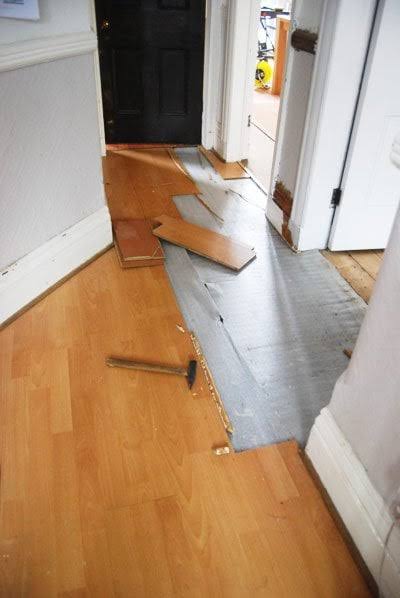
If moisture is trapped beneath the flooring, several problems can develop. Laminate boards may swell, joints may open, boards may cup or lift, adhesives may fail, mould-related problems may occur, and the floor may eventually require replacement.
This guide explains why moisture under laminate develops, how to identify slab moisture flooring risks, what happens when dampness is ignored, and how homeowners, contractors, developers, and flooring professionals can reduce the risk of premature floor failure in Kenya.
What Is Rising Damp flooring?
Rising damp occurs when moisture from the ground moves upward through porous building materials, potentially reaching a floor slab and the flooring installed above it. If the slab lacks adequate moisture protection or has been exposed to persistent ground moisture, the finished floor can be affected.
Concrete may look solid and waterproof, but it is not automatically an impermeable barrier.
A concrete slab contains pores and capillaries through which moisture can move.
Where ground conditions remain damp, moisture can migrate through the structure unless an effective damp-proof or moisture-control system interrupts that movement.
The risk can increase where:
- A building is constructed on damp ground
- A damp-proof membrane is absent or damaged
- The slab is poorly detailed
- Drainage around the building is inadequate
- Ground levels are too high
- Water enters from surrounding areas
- Plumbing leaks occur
- The slab was installed without adequate moisture control
Not every damp floor is caused by rising damp.
That distinction matters.
Moisture can also enter a rising damp flooring system from leaks, condensation, cleaning water, external water ingress, plumbing, or construction moisture.
The source needs to be identified before the flooring problem is treated.
Why Kenyan Ground-Floor Slabs Need Moisture Checks
Ground-floor slabs in Kenya can be exposed to moisture from the surrounding ground, construction materials, plumbing, weather, and building conditions, making substrate assessment important before installing moisture-sensitive flooring.
Kenya has diverse climatic conditions.
Buildings in Nairobi, Mombasa, Kisumu, Nakuru, Eldoret, and other areas can experience different combinations of:
- Rainfall
- Soil conditions
- Groundwater
- Humidity
- Temperature
- Drainage conditions
- Building construction methods
A flooring system suitable for one building may not be suitable for another without proper substrate assessment.
This is why a contractor should not simply assume that a concrete floor is ready because it looks dry.
Surface appearance is not a reliable moisture test.
A slab can appear dry while retaining significant moisture internally.
What Is Moisture Under Laminate?
Moisture under laminate occurs when water vapour or liquid moisture reaches the underside or joints of laminate flooring and remains trapped between the flooring and the substrate.
Laminate flooring commonly contains wood-based materials.
Wood-based materials respond to moisture.
When exposed to excessive moisture, laminate components can:
- Swell
- Expand
- Cup
- Warp
- Delaminate
- Separate at joints
- Lose their appearance
- Develop damaged edges
The visible decorative layer may remain attractive initially while moisture is already affecting the core.
This can make moisture-related failures particularly frustrating.
The floor may appear perfect immediately after installation.
Weeks or months later, problems may become obvious.
Why Laminate Is Vulnerable to Slab Moisture
Laminate flooring is moisture-sensitive because its wood-based core can absorb moisture, causing dimensional changes and damage when exposure exceeds the product's tolerance.
This does not mean laminate is inherently unsuitable for every Kenyan ground-floor application.
It means the installation must respect the manufacturer's moisture requirements.
Before installation, the contractor should establish:
- Subfloor moisture condition
- Moisture barrier requirements
- Slab age
- Installation environment
- Product specifications
- Expansion requirements
- Manufacturer's installation instructions
If the slab is too wet, installing the laminate immediately can lock the moisture beneath the floor.
That can turn a substrate problem into a finished-floor failure.
Slab Moisture rising damp flooring Problems: Why the Surface Can Look Dry
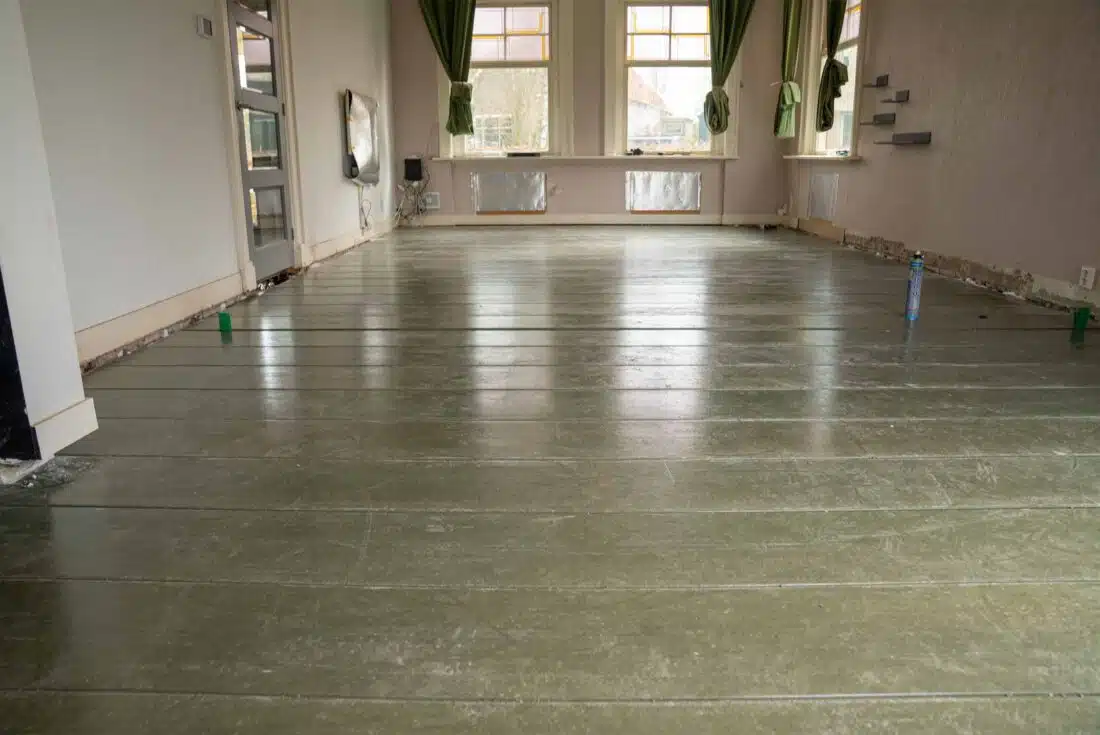
Slab moisture flooring problems can be difficult to detect because the top surface of concrete may appear dry even when moisture remains inside the slab or continues migrating from below.
Consider a concrete slab exposed to sunlight or airflow.
The surface may dry relatively quickly.
However, deeper sections can still contain moisture.
When a less permeable floor covering is installed over the slab, evaporation can become restricted.
Moisture may then accumulate at the interface between the slab and flooring system.
This can create conditions that were not obvious before installation.
That is why professional moisture assessment should happen before flooring installation, particularly for ground-floor projects.
How Rising Damp Damages Wood-Look Floors
Moisture can damage wood-look flooring through swelling, movement, adhesive failure, mould-related conditions, surface deterioration, and loss of dimensional stability.
The exact failure depends on the flooring type.
Laminate
Laminate can swell when its wood-based core absorbs excessive moisture.
The edges may become raised.
Joints may become visible.
The floor can begin to feel uneven underfoot.
Engineered Wood
Wood products can react to moisture by expanding, contracting, cupping, or developing other dimensional changes.
Adhesive-Installed Flooring
Excess moisture can interfere with adhesive performance.
This can lead to:
- Bubbling
- Lifting
- Debonding
- Soft spots
- Unstable flooring
Vinyl
Vinyl is generally more moisture-resistant than laminate, but the complete flooring system still needs to be assessed.
Moisture can affect adhesives and subfloor conditions even when the visible vinyl surface itself is resistant to water.
SPC
SPC is also commonly selected for environments where moisture resistance is desirable, but it is not a substitute for solving a serious moisture problem in the building.
The subfloor still needs to meet the manufacturer's requirements.
Signs of Rising Damp Flooring Kenya Problems
Visible swelling, lifted flooring, staining, musty odours, loose joints, adhesive failure, and recurring dampness can indicate a moisture problem, but the visible symptom alone does not identify the source.
Look for:
Swollen Laminate Edges
Boards may become raised at their edges or joints.
Opened Joints
Moisture-related movement can make connections between boards more noticeable.
Cupping or Warping
Boards can develop changes in shape.
Bubbling
Some flooring systems may develop raised or unstable areas.
Musty Smell
Persistent odours can indicate moisture or microbial growth conditions.
Damp Skirting Boards
Moisture problems can sometimes become visible around perimeter areas.
Discolouration
Staining can appear on flooring or adjacent materials.
Recurring Damage
If replacement flooring fails in the same location again, the underlying moisture condition should be investigated.
However, these signs can have several causes.
A plumbing leak can produce similar symptoms.
So can external water intrusion.
How to Test a Concrete Slab Before Installing Flooring
A proper slab moisture assessment uses appropriate testing rather than relying on visual inspection or simply touching the concrete surface.
Depending on the project and flooring manufacturer's requirements, professionals may use methods such as:
- Relative humidity testing
- Calcium carbide testing
- Moisture meter assessment where appropriate
- Surface moisture testing
- Visual inspection
- Environmental monitoring
The appropriate test depends on the flooring system and applicable installation requirements.
A handheld moisture meter can be useful as part of an assessment, but it should not automatically be treated as definitive evidence of slab readiness for every flooring product.
The flooring manufacturer's installation instructions should specify the required moisture conditions wherever applicable.
Why a Moisture Meter Reading Alone May Not Be Enough
A single moisture-meter reading does not necessarily establish whether a concrete slab is suitable for a particular flooring installation because testing methods have different capabilities and limitations.
For example, a meter may indicate moisture variation across the surface.
That information is useful.
But a professional may need a different test to establish the slab's moisture condition more accurately.
This is especially important for:
- Large commercial projects
- Ground-floor developments
- Newly constructed buildings
- Buildings with a history of dampness
- High-value flooring installations
The cost of testing is generally much smaller than the cost of replacing a failed floor.
New Concrete Slabs and Construction Moisture
New concrete slabs can contain significant construction moisture, meaning that recently completed concrete should not automatically be considered ready for flooring installation.
Concrete needs time to dry and stabilize.
Drying depends on factors including:
- Slab thickness
- Mix design
- Ambient temperature
- Relative humidity
- Ventilation
- Water used during construction
- Building enclosure
- Environmental conditions
The age of the slab alone is therefore not enough.
A contractor should follow the flooring manufacturer's moisture requirements rather than relying on statements such as:
“The slab is three months old, so it is dry.”
A three-month-old slab can still have moisture conditions that are unsuitable for a particular flooring system.
Damp-Proof Membranes and Ground Moisture
An effective damp-proof or moisture-control layer can help reduce ground moisture movement into a floor system, but its effectiveness depends on correct design, installation, continuity, and building construction.
For new construction, moisture protection should be considered as part of the building design.
Depending on the construction system, this may involve:
- Damp-proof membranes
- Damp-proof courses
- Appropriate concrete detailing
- Drainage
- Ground preparation
- Waterproofing systems
- Proper junction detailing
A membrane that is punctured, poorly joined, incorrectly positioned, or terminated improperly may not provide the intended protection.
For existing buildings, the condition of the moisture-control system may need investigation before a flooring replacement.
Rising Damp vs Plumbing Leaks
Not every wet floor is caused by rising damp; plumbing leaks, external water ingress, condensation, cleaning water, and construction moisture can produce similar flooring failures.
This distinction is important because the treatment is different.
For example:
Rising or ground moisture:
May require investigation of damp-proofing, ground conditions, drainage, or slab construction.
Plumbing leak:
Requires repair of the leaking pipe or fixture.
External water ingress:
May require roof, wall, window, drainage, or waterproofing repairs.
Construction moisture:
May require additional drying time and moisture control.
Condensation:
May require ventilation and humidity management.
Replacing the floor without identifying the source can result in the same problem returning.
Can SPC Flooring Solve a Damp Slab Problem?
SPC flooring can have better moisture resistance than many wood-based flooring products, but it should not be used to conceal or permanently solve an unresolved damp-slab problem.
This is an important misconception.
A buyer may reason:
“If laminate is vulnerable to moisture, I will simply install SPC.”
SPC may indeed be more suitable for some moisture-prone environments.
However, excessive moisture in the substrate can still create problems.
It may affect:
- Adhesives
- Subfloor condition
- Mould-related conditions
- Flooring stability
- Installation performance
- Building materials beneath the floor
The right solution is to identify and manage the moisture source first.
SPC should then be selected based on the manufacturer's installation requirements.
Ali Glaziers Flooring Solutions provides a range of SPC flooring for customers comparing resilient flooring options.
Vinyl Flooring and Moisture-Prone Areas
Vinyl flooring can be an option for areas where moisture resistance is important, but the slab must still meet the product's installation requirements and any adhesive system must be compatible with the substrate conditions.
Vinyl products differ significantly.
Some are:
- Click-installed
- Glue-down
- Sheet-based
- Tile-based
- Designed for residential use
- Designed for commercial applications
The installation system matters.
For glued vinyl, moisture in the slab can interfere with adhesive performance.
Therefore, a moisture-resistant surface does not automatically mean that the complete floor assembly is moisture-proof.
Ali Glaziers offers different options through its vinyl flooring category.
Why Wood-Look Floors Can Hide Moisture Problems
Wood-look flooring can conceal moisture damage during the early stages because the decorative surface may remain intact while movement or deterioration develops underneath.
Modern flooring is designed to look seamless.
That is part of its appeal.
But it also means a problem beneath the surface may not be immediately visible.
By the time the floor begins to:
- Lift
- Swell
- Separate
- Bubble
- Move
the underlying moisture exposure may already have caused significant damage.
This is why preventive assessment is preferable to reactive repairs.
Laminate Rising Damp Flooring Over Ground-Floor Slabs
Laminate can be installed over suitable concrete substrates when the manufacturer's requirements are satisfied, but ground-floor installations require particular attention to moisture because the slab may be exposed to ground-related moisture.
Before laying laminate, confirm:
- The slab is structurally suitable.
- The slab is sufficiently dry.
- Required moisture testing has been completed.
- The moisture-control system is appropriate.
- The subfloor is sufficiently level.
- The installation environment meets product requirements.
- The correct underlay or moisture barrier is specified.
- Expansion requirements are followed.
Ali Glaziers Flooring Solutions provides laminated flooring for customers comparing wood-look finishes.
The product should always be installed according to its manufacturer's instructions.
Moisture Barriers Under Laminate
A suitable moisture barrier can form part of a laminate installation system over concrete, but the barrier should not be treated as a universal solution for an actively damp slab.
This distinction is critical.
A moisture barrier designed for normal installation conditions is not necessarily capable of correcting serious water ingress or rising damp.
If the slab has excessive moisture, the correct response may involve:
- Identifying the source
- Improving drainage
- Repairing waterproofing
- Correcting building defects
- Allowing construction moisture to dry
- Applying an appropriate moisture-control system where specified
The exact solution depends on the building.
How Poor Drainage Can Contribute to Damp Floors
Poor drainage around a building can increase moisture exposure to foundations, walls, and ground-floor construction, particularly where water is allowed to collect close to the structure.
External factors can include:
- Blocked drainage channels
- Poor site grading
- Water pooling
- Damaged gutters
- Downpipes discharging close to foundations
- High surrounding ground levels
- Inadequate surface drainage
If a ground-floor room repeatedly develops dampness, investigate the building externally as well as internally.
A new floor cannot compensate for a drainage problem.
Coastal Kenya and High-Humidity Conditions
Buildings in coastal and humid environments may face different moisture and humidity conditions from those in drier inland areas, making product selection and installation assessment especially important.
Locations such as Mombasa and other coastal areas can experience higher humidity.
This can influence:
- Drying rates
- Indoor humidity
- Flooring acclimatization
- Adhesive performance
- Moisture management
However, climate alone does not determine whether a slab is suitable.
The actual building conditions and moisture measurements remain important.
The same principle applies across Kenya.
Rising Damp flooring Installation During Renovation
Renovation projects can hide existing moisture problems because new flooring is sometimes installed over an old slab without investigating why the previous floor failed.
Before replacing an old floor, ask:
- Why was the previous flooring removed?
- Was there swelling?
- Was there mould?
- Was the floor damp?
- Did adhesive fail?
- Were walls or skirting boards damp?
- Has the building had plumbing leaks?
- Has drainage been corrected?
If the previous floor failed because of moisture, installing a new floor without addressing the cause is unlikely to provide a lasting solution.
Moisture Under Laminate: Common Mistakes
Many moisture-related laminate failures result from preventable installation mistakes rather than from the flooring product itself.
Common mistakes include:
Installing Without Testing
The contractor assumes the slab is dry because it looks dry.
Ignoring the Ground Floor
The same installation procedure is used for every floor level.
Covering Active Dampness
A new floor is installed before the moisture source is corrected.
Using the Wrong Barrier
An unsuitable product is used as a substitute for proper moisture control.
Ignoring Manufacturer Requirements
The flooring is installed outside the recommended moisture limits.
Skipping Acclimatization
The product is installed without following the manufacturer's environmental requirements.
Poor Subfloor Preparation
Uneven or contaminated substrates compromise installation.
Rushing Construction
The flooring is installed before the building has reached suitable conditions.
How to Prevent Rising Damp Flooring Kenya Failures
Preventing rising damp flooring Kenya problems starts before the flooring reaches the site: inspect the building, test the substrate, identify moisture sources, select a suitable product, and follow the manufacturer's installation requirements.
A practical process is:
Inspect the Building
Look for signs of dampness around:
- Walls
- Skirting
- Floor edges
- Plumbing
- External drainage
Identify the Flooring Type
Determine whether you are installing:
- Laminate
- SPC
- Vinyl
- Carpet
- Rubber
- Another flooring system
Review Manufacturer Requirements
Check the product's moisture limits and installation instructions.
Test the Substrate
Use an appropriate moisture-testing method.
Correct Moisture Problems
Do not install flooring over an unresolved source of water.
Prepare the Subfloor
Ensure it meets the required condition for the selected product.
Install Correctly
Follow the manufacturer's instructions for:
- Underlay
- Moisture barriers
- Adhesives
- Expansion
- Joints
- Temperature
- Humidity
Document the Installation
For commercial projects, keep moisture readings and installation records.
Flooring Accessories and Moisture Protection
Accessories such as skirtings, transitions, adhesives, and sealants contribute to the finished flooring system and should be selected to suit the flooring and installation conditions.
Ali Glaziers Flooring Solutions provides skirtings, reducers, T-mouldings, and adhesives and sealants.
These products can help achieve a professional finish, but they should not be used to hide active water problems.
A sealant at the edge of a floor does not replace proper damp-proofing.
When Should You Avoid Installing the Floor?
Do not proceed with installation when there is unresolved active moisture, unexplained dampness, or substrate conditions that fail the flooring manufacturer's requirements.
Pause the project if:
- Water is visibly entering the room.
- The slab has unexplained damp patches.
- Moisture readings exceed the product limit.
- There is an ongoing plumbing leak.
- The previous flooring failed from unexplained moisture.
- The moisture source has not been identified.
- Required testing has not been completed.
- The installer cannot demonstrate substrate readiness.
Delaying installation can be much cheaper than replacing a failed floor.
What to Ask Your Flooring Contractor
A professional flooring contractor should be able to explain how the substrate will be assessed and what moisture requirements apply to the selected flooring system.
Ask:
- Has the slab been moisture-tested?
- Which testing method will be used?
- What is the manufacturer's moisture limit?
- Does the ground floor require a moisture barrier?
- Is there evidence of rising damp?
- Could plumbing be contributing to the problem?
- Has the building's drainage been checked?
- What subfloor preparation is required?
- What underlay is recommended?
- What adhesive will be used?
- How long should the floor remain unoccupied after installation?
- What warranty applies?
These questions can reveal whether the installation is being planned systematically or simply based on appearance.
A Practical Slab Moisture Checklist
Before installing laminate, SPC, vinyl, or another wood-look floor over a concrete slab, verify the moisture condition and document the substrate preparation.
- Identify whether the slab is ground floor or upper level.
- Inspect for visible dampness.
- Check for plumbing leaks.
- Inspect external drainage.
- Investigate previous flooring failures.
- Identify the exact flooring product.
- Read the manufacturer's installation instructions.
- Establish the required slab moisture limits.
- Carry out appropriate moisture testing.
- Correct active moisture sources.
- Prepare and level the subfloor.
- Use the specified moisture-control system.
- Install compatible underlay or adhesive.
- Follow expansion and installation requirements.
- Keep test and installation records.
For major developments, these checks should form part of the project's flooring specification and quality-control process.
Final Thoughts on Rising Damp and Wood-Look Flooring
Rising damp flooring Kenya problems are often preventable when moisture is investigated before installation rather than after the floor begins to fail. A concrete slab that looks dry is not necessarily ready for laminate, wood-look flooring, or another moisture-sensitive finish.
The key is to treat the slab as part of the flooring system.
Before installation, determine:
- Where the moisture is coming from
- Whether the slab is sufficiently dry
- What moisture limits the flooring manufacturer specifies
- Whether a moisture-control layer is required
- Whether the selected flooring is appropriate
- Whether the installation system is compatible
- Whether the subfloor has been properly prepared
For moisture under laminate, prevention is particularly important because swelling and dimensional damage can be difficult and expensive to reverse.
SPC and vinyl may provide alternatives where moisture resistance is a priority, but they should not be used to conceal an unresolved building moisture problem.
Ali Glaziers Flooring Solutions can help customers compare flooring products and understand the installation requirements for different applications.
Choose the Right Flooring for Your Project
Explore the Ali Glaziers Flooring shop to view available products.
SPC Flooring: Browse SPC flooring
Vinyl Flooring: Browse vinyl flooring
Laminated Flooring: Browse laminated flooring
Knowledge Base: Read more flooring guides
Contact: Contact Ali Glaziers Flooring Solutions
For a successful floor installation, do not ask only “Which floor looks best?”
Also ask:
“Is my slab ready for it?”
That question can prevent moisture-related flooring failure before it starts.
Contact Ali Glaziers Flooring Solutions
Planning a new flooring installation or renovation and need suitable trims, profiles and finishing accessories? Ali Glaziers Flooring Solutions can help you explore flooring options and plan the finishing details for your project.
Visit Us: Funzi Road Branch, End of Funzi Road, Industrial Area, Ali Glaziers LTD Building, Nairobi, Kenya
Call / WhatsApp: +254 (0) 716 259 682, +254 (0) 722 522 452
Email: info@aliglaziers.com