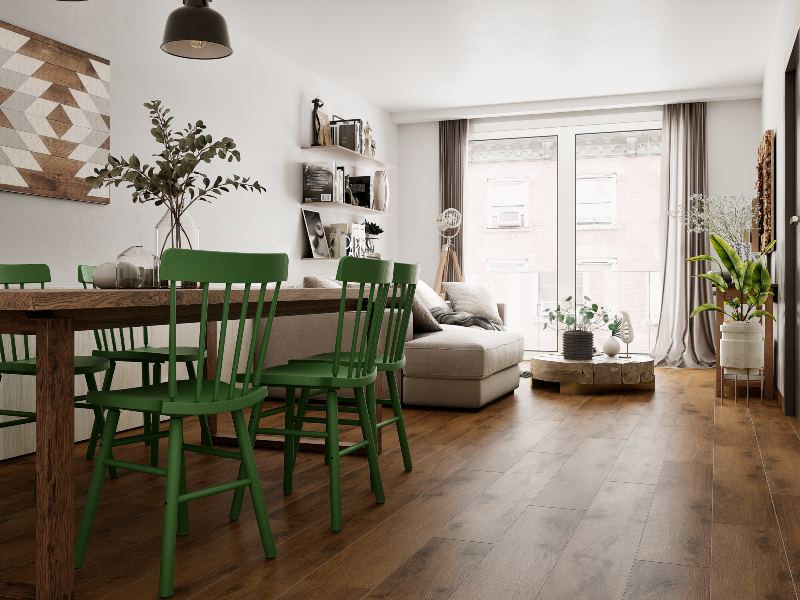

Learn how Laminate Expansion Gaps Kenya help prevent buckling, gaps, and movement as temperatures and humidity change throughout the year.
Laminate Expansion Gaps Kenya: Understanding Temperature and Movement
Laminate Expansion Gaps Kenya are an important part of correctly installing floating click-lock laminate floors because flooring materials can respond to changes in temperature and humidity. Providing the clearance required by the manufacturer allows the floor to accommodate normal movement without being trapped against walls or fixed structures.
Modern laminate flooring is designed to provide a practical combination of:
- Wood-inspired appearance
- Durability
- Easy maintenance
- Straightforward installation
- Consistent visual design
Click-lock systems have also made installation more efficient.
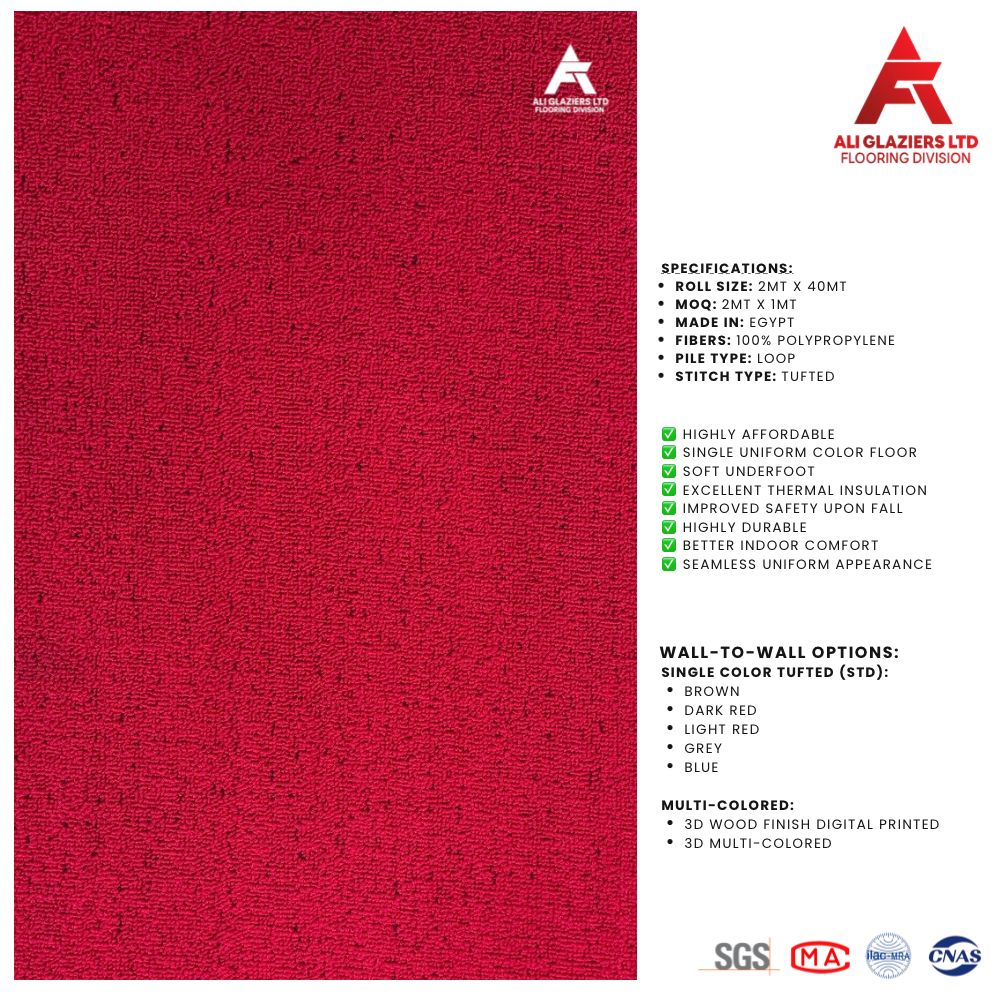
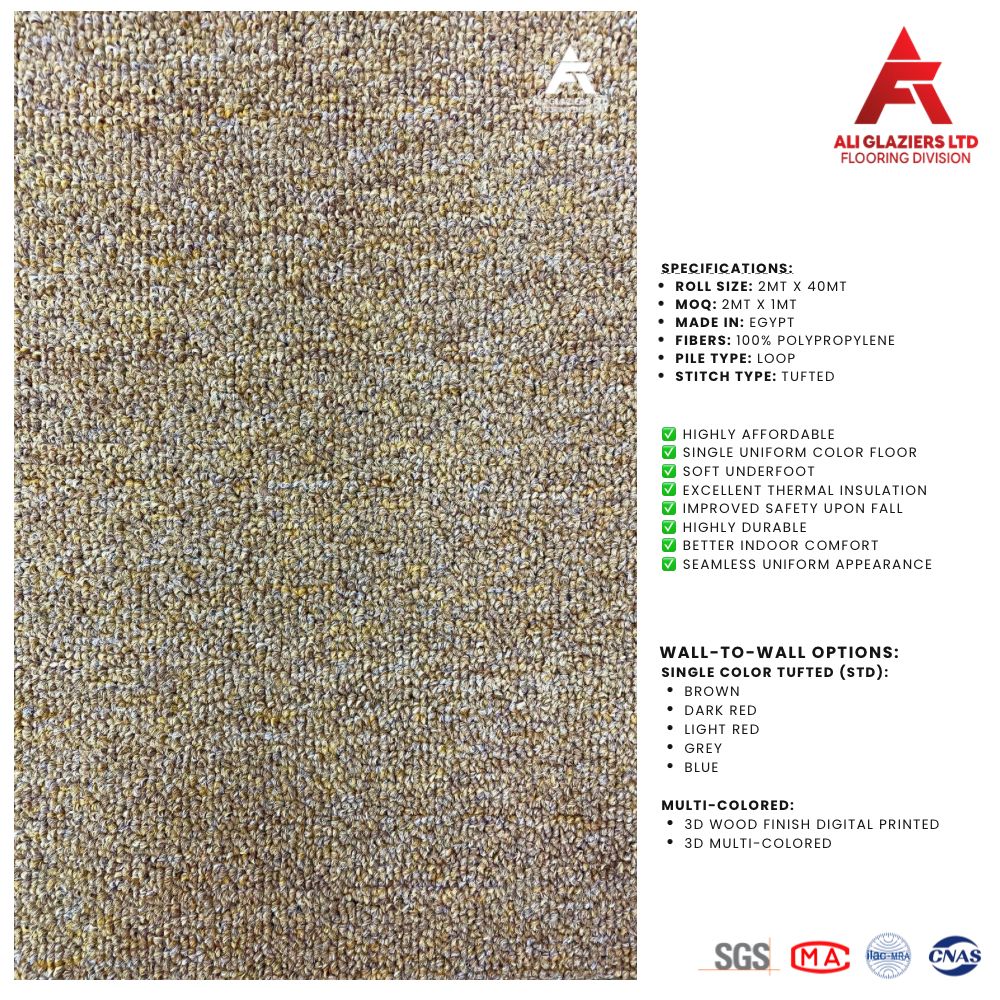
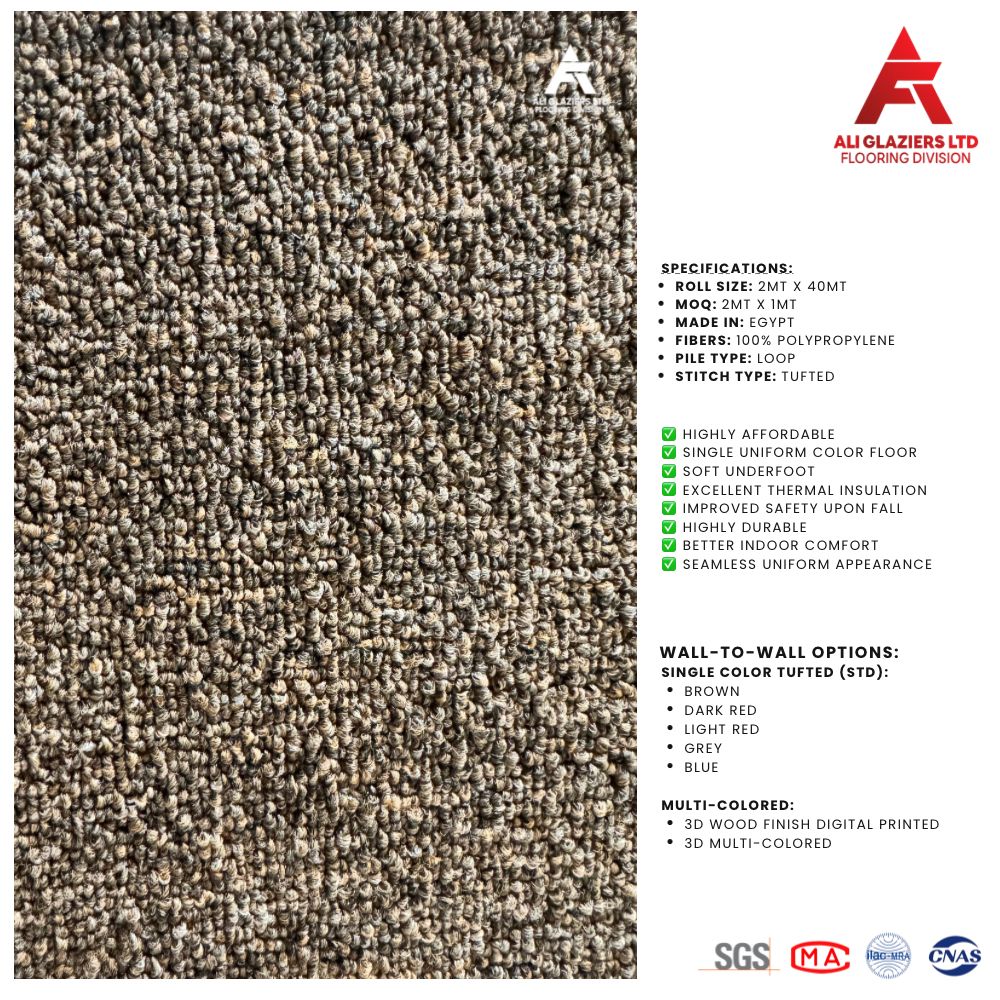
Shop Wall to Wall Carpets
View all Wall to Wall Carpets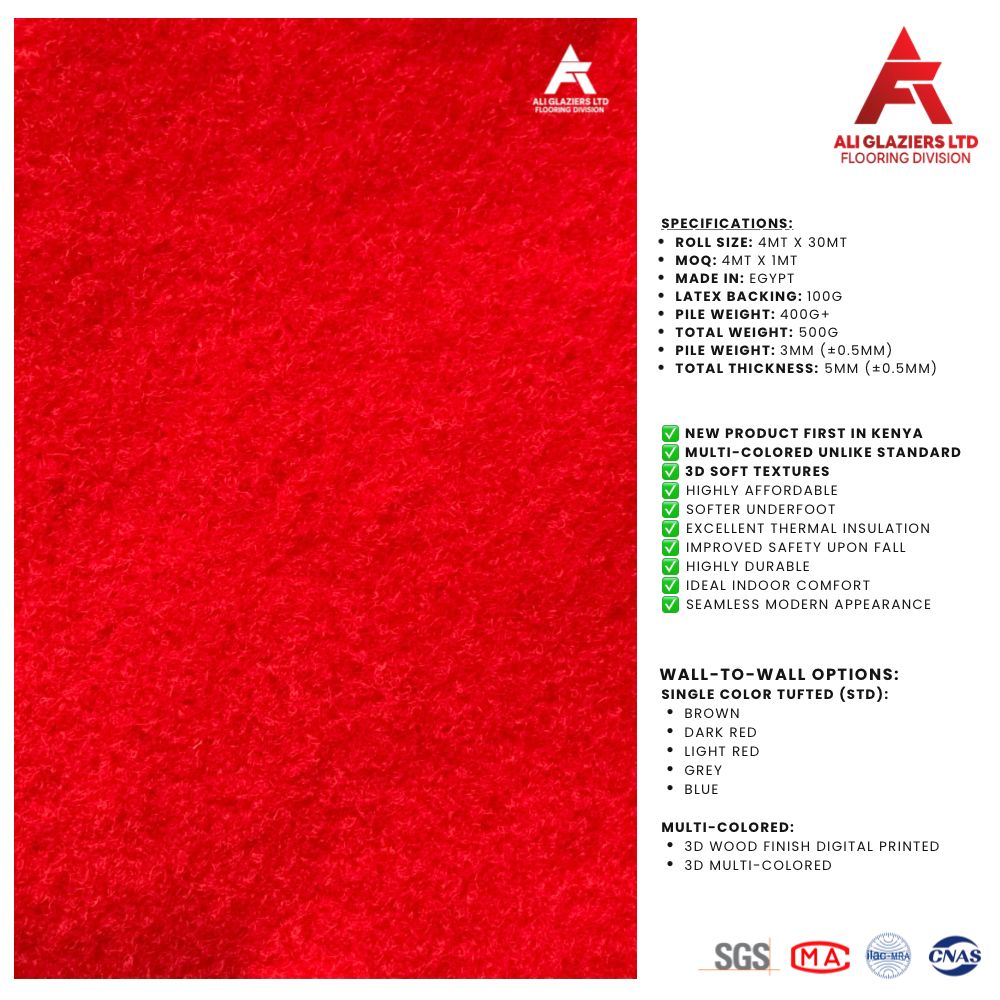
However, a floating floor is still a flooring system that needs room to accommodate environmental changes.
In Kenya, conditions can vary considerably between:
- Coastal and inland areas
- Highland and lowland regions
- Rainy and dry seasons
- Daytime and nighttime
- Well-ventilated and enclosed rooms
Understanding these variations helps explain why installation details such as expansion gaps matter.
Does Temperature Affect Laminate Flooring?
Temperature and humidity changes can influence flooring materials, although the amount of movement depends on the specific laminate construction, room conditions, installation method, and manufacturer requirements.
Laminate is a composite flooring product rather than a single solid piece of timber.
Its construction commonly includes:
- Protective overlay
- Decorative layer
- Fibreboard-based core
- Balancing or backing layer
The core contains wood-based fibres, which means environmental moisture conditions can be particularly relevant.
Temperature changes can also influence the overall indoor environment and relative humidity.
Therefore, both factors should be considered during installation.
Why Humidity Matters Alongside Temperature
Temperature should not be considered in isolation because relative humidity can have a significant influence on wood-based flooring materials.
Warm air can hold more moisture than cool air.
As indoor conditions change, the moisture content of materials can also change.
This is why professional installers consider:
- Temperature
- Relative humidity
- Subfloor moisture
- Ventilation
- Product specifications
The manufacturer's installation instructions should establish the acceptable conditions for the particular laminate product.
What Is a Floating Click-Lock Floor?
A floating laminate floor is not normally fixed directly to the subfloor across its entire surface; instead, compatible boards are connected through their locking system and allowed to sit over the prepared substrate.
This installation method can provide several benefits.
It can be:
- Efficient
- Clean
- Suitable for renovation projects
- Easier to repair than some permanently bonded systems
But floating installation also means the floor needs appropriate perimeter clearance.
The floor must not be tightly trapped between walls.
What Is an Expansion Gap?
An expansion gap is a planned clearance between the flooring and fixed structures that allows the installed floor to accommodate movement under changing environmental conditions.
Gaps are typically required around:
- Walls
- Columns
- Door frames
- Fixed cabinets
- Other permanent structures
The exact size should come from the laminate manufacturer's installation instructions.
There is no single universal gap measurement that applies to every laminate product.
Why Expansion Gaps Are Important
Without sufficient perimeter clearance, a floating floor may have inadequate space to accommodate movement, potentially contributing to visible installation problems.
Depending on the product and conditions, inadequate clearance can contribute to:
- Buckling
- Raised sections
- Joint stress
- Gaps
- Movement
- Squeaking or clicking sounds
These symptoms do not always have the same cause.
A professional installer should investigate the entire installation rather than assuming that temperature alone caused the problem.
How Temperature Changes Affect a Room
Changes in outdoor temperature can influence indoor temperature and humidity, particularly where ventilation, air conditioning, or building insulation varies.
For example, an enclosed room may experience different conditions from:
- An open veranda
- A naturally ventilated room
- A fully air-conditioned office
- A coastal property
- A high-altitude home
The flooring should therefore be selected and installed according to the actual environment.
Kenya's Diverse Climate
Kenya's different climatic zones mean that flooring installations may experience very different environmental conditions depending on location and building design.
Coastal areas can experience higher humidity.
Highland regions can experience cooler temperatures.
Some areas experience substantial seasonal rainfall variations.
Urban buildings can also have controlled indoor environments through:
- Air conditioning
- Heating
- Ventilation
- Insulation
These factors can influence the conditions surrounding a flooring installation.
Coastal Areas and Laminate Flooring
Coastal environments require careful consideration of humidity because wood-based flooring products can respond to moisture conditions.
Before installation in coastal locations, consider:
- Indoor humidity
- Ventilation
- Subfloor moisture
- Product specifications
- Storage conditions
The floor should not be installed based simply on the fact that the room appears dry.
Proper site assessment is important.
Highland Conditions
Cooler highland environments can present different temperature and humidity conditions from coastal locations, so flooring installation should still follow the product-specific requirements.
Areas around Nairobi and other highland locations may experience:
- Cooler nights
- Warm daytime conditions
- Seasonal changes
- Different indoor humidity levels
These changes do not automatically make laminate unsuitable.
They simply reinforce the importance of correct installation and environmental assessment.
The Importance of Acclimatisation
Where the laminate manufacturer requires acclimatisation, flooring materials should be stored in the installation environment under the specified conditions before installation.
Acclimatisation requirements can differ between products.
Therefore, installers should check:
- Recommended duration
- Temperature range
- Relative humidity
- Packaging instructions
- Storage position
Do not rely on a generic acclimatisation period if the product manufacturer provides different instructions.
Store Laminate Correctly
Incorrect storage can expose laminate boards to conditions that may affect their installation performance before the flooring even reaches the floor.
Store materials according to the manufacturer's instructions.
Avoid exposing unopened flooring to:
- Rain
- Direct moisture
- Extreme temperature
- Uncontrolled outdoor conditions
The storage area should be suitable for the product.
Subfloor Moisture and Laminate
The condition of the subfloor is just as important as the room's temperature because excessive moisture beneath laminate can create serious installation concerns.
Concrete and screed should be assessed before installation.
Potential sources of moisture include:
- New construction
- Ground moisture
- Plumbing leaks
- Poor drainage
- Damp concrete
Moisture testing should follow the requirements specified for the particular flooring system.
Uneven Subfloors Can Worsen Problems
Temperature and humidity are not the only causes of flooring movement because an unsuitable or uneven substrate can also contribute to installation problems.
Before installation, inspect for:
- High spots
- Low spots
- Cracks
- Dust
- Loose materials
- Surface contamination
The subfloor should meet the manufacturer's required flatness and preparation standards.
Expansion Gaps Around Walls
The perimeter of the room must provide the clearance specified by the manufacturer so the floating floor is not compressed against the walls.
This clearance is normally hidden after installation by:
- Skirting
- Baseboards
- Suitable profiles
The visible finished floor can therefore appear continuous even though a small perimeter clearance exists beneath the finishing elements.
Door Frames Need Special Attention
Doorways can become problem areas when the required movement allowance is not properly incorporated into the installation.
Installers should plan how the laminate will pass around:
- Door frames
- Door thresholds
- Architraves
- Transition profiles
Cutting around these areas requires accuracy.
The objective is to maintain the required clearance while achieving a clean finished appearance.
How Buckling Can Develop
Buckling can occur when a floating laminate floor experiences movement but does not have sufficient space to accommodate that movement. Temperature and humidity changes can be contributing factors, but installation quality and substrate conditions must also be investigated.
A typical sequence might involve:
- Flooring is installed with insufficient perimeter clearance.
- Indoor environmental conditions change.
- The flooring system responds to those conditions.
- The available clearance is insufficient.
- Pressure develops within the installed floor.
- Sections may begin to lift or move.
This is why expansion clearance should be treated as a fundamental installation requirement rather than an optional finishing detail.
Humidity Changes Can Be Significant
For wood-based laminate products, changes in relative humidity can be particularly important because the core material can respond to changes in moisture conditions.
A building may experience different humidity levels because of:
- Seasonal weather
- Rainfall
- Ventilation
- Air conditioning
- Open windows
- Cooking
- Indoor drying activities
The effect will vary according to the product and environment.
Professional installation therefore considers the complete indoor climate rather than temperature alone.
Large Rooms Need Careful Planning
Large uninterrupted flooring areas require particular attention to the manufacturer's expansion and movement requirements because the total installed area can influence how the flooring system behaves.
A professional installer should check whether the product requires:
- Additional expansion gaps
- Movement joints
- Transition profiles
- Breaks between large areas
These requirements vary between laminate systems.
Never assume that one expansion-gap specification applies to every product.
Long Hallways and Continuous Areas
Long corridors and continuous floor runs can also require careful planning because the flooring may extend across a substantial distance without interruption.
Before installation, assess:
- Total floor length
- Doorways
- Room transitions
- Fixed structures
- Manufacturer requirements
Where a movement break or transition is required, it should be incorporated into the design before installation.
Transitions Between Rooms
Doorways and room transitions provide useful locations for managing changes in flooring direction, material, or installation area.
A transition profile can separate:
- Bedroom and hallway
- Living room and kitchen
- Corridor and office
- Different flooring materials
It can also provide a neat finishing point while accommodating the technical requirements of the flooring system.
Expansion Gaps and Skirting
Skirting boards can conceal the perimeter clearance required by floating laminate flooring while providing a finished appearance around the room.
The skirting should be installed in a way that does not restrict the flooring's required movement.
This is important.
If the finishing system effectively clamps the laminate tightly against the wall, the intended movement allowance may be compromised.
The flooring should remain free to move according to the manufacturer's installation design.
Fixed Cabinets Require Planning
Permanent cabinets and built-in furniture can create complications when laminate flooring is installed around or underneath them.
Before installation, determine:
- Which furniture is permanent
- Which furniture can move
- Where the flooring will terminate
- Whether the flooring system permits installation beneath the furniture
Floating flooring should not be trapped by fixed structures in a way that conflicts with the manufacturer's installation requirements.
Underlay and Temperature
Underlay does not replace expansion clearance, and the correct underlay should be selected according to the laminate manufacturer's specifications.
An appropriate underlay can provide functions such as:
- Acoustic improvement
- Minor cushioning
- Moisture protection where specifically designed for it
However, using an excessively soft or unsuitable underlay can affect the stability of some click-lock systems.
Always check compatibility before installation.
Air Conditioning and Indoor Conditions
Air conditioning can change indoor temperature and humidity, making environmental conditions relevant when installing laminate in modern homes and offices.
A room that remains continuously air-conditioned may experience a different indoor environment from a naturally ventilated room.
This is particularly relevant in:
- Offices
- Hotels
- Shopping spaces
- Luxury apartments
- Executive homes
The flooring should be selected and installed according to the expected operating environment.
Avoid Direct Water Exposure
Laminate flooring should not be treated as completely waterproof simply because some modern products have improved moisture resistance.
Protect the floor from unnecessary water exposure.
Clean spills promptly and follow the manufacturer's cleaning recommendations.
Areas that experience frequent water exposure should be evaluated carefully before selecting laminate.
For bathrooms, wet rooms, and other moisture-intensive spaces, a flooring product specifically designed for that environment may be more appropriate.
Protect Laminate From Abrasive Dirt
Sand and grit can contribute to surface wear, so controlling abrasive particles is an important part of maintaining laminate flooring.
Place suitable entrance mats at access points where appropriate.
Regularly remove:
- Dust
- Sand
- Small stones
- Dirt
This is especially useful in homes where people frequently move between outdoor and indoor areas.
Furniture Can Affect the Floor
Heavy furniture can place concentrated loads on flooring, making furniture placement and movement important considerations after installation.
Use suitable furniture protection where recommended.
When moving furniture:
- Lift rather than drag where possible.
- Protect the floor during relocation.
- Avoid dragging heavy objects across the surface.
Furniture protection should be compatible with the flooring product.
Common Installation Mistakes
Many laminate flooring problems attributed to temperature are actually associated with installation errors, unsuitable substrates, moisture, or incorrect product handling.
Common mistakes include:
No expansion clearance
The floor has insufficient space to accommodate movement.
Installing over an unsuitable subfloor
Unevenness can affect the finished installation.
Ignoring moisture
Excess moisture can create problems for wood-based flooring.
Incorrect underlay
An incompatible underlay can affect click-lock performance.
Poor storage
Flooring may be exposed to unsuitable environmental conditions before installation.
Rushing installation
Skipping preparation can create problems that become expensive to correct later.
Signs That a Laminate Floor Needs Inspection
Changes in the appearance or movement of a laminate floor should be investigated rather than immediately attributed to temperature fluctuations.
Potential warning signs include:
- Raised sections
- Unusual movement
- Gaps between boards
- Persistent clicking sounds
- Damaged locking joints
- Visible separation
- Moisture-related marks
The cause should be identified before repairs are attempted.
Can Buckled Laminate Simply Be Pressed Down?
A raised section should not simply be forced back into position without identifying why it occurred.
Possible causes include:
- Insufficient expansion clearance
- Moisture
- Subfloor irregularities
- Damaged boards
- Installation errors
Correcting the visible symptom without addressing the cause can result in the problem returning.
A professional inspection is preferable.
Repair or Replace?
Whether damaged laminate can be repaired depends on the location and extent of the problem as well as the flooring system used.
Individual boards in some click-lock systems can potentially be replaced.
However, if widespread movement is caused by incorrect installation or moisture, replacing one board may not solve the underlying issue.
The entire installation should be assessed.
A Practical Laminate Expansion Checklist
Use this checklist before installing click-lock laminate to reduce avoidable problems associated with environmental changes and incorrect installation.
Before installation
- Confirm the product's installation instructions.
- Check required temperature conditions.
- Check relative humidity requirements.
- Assess subfloor moisture.
- Inspect subfloor flatness.
- Confirm the correct underlay.
- Store materials correctly.
- Follow acclimatisation instructions where required.
During installation
- Maintain manufacturer-specified perimeter clearance.
- Plan door-frame details.
- Allow for appropriate transitions.
- Follow maximum installation-area requirements.
- Avoid trapping the floating floor beneath fixed structures.
- Maintain correct click-lock installation technique.
After installation
- Install skirting without restricting floor movement.
- Protect the floor during subsequent construction.
- Clean according to manufacturer recommendations.
- Remove spills promptly.
- Protect high-traffic entrances.
Professional Site Measurement Matters
Professional site measurement helps identify room dimensions, transition points, irregular areas, and installation challenges before laminate flooring is ordered and installed.
Measurement can also help determine:
- Required material quantity
- Cutting requirements
- Waste allowance
- Transition locations
- Doorway details
- Skirting requirements
Read more about professional site measurement for flooring projects.
Why Professional Installation Makes a Difference
Correct laminate installation involves much more than connecting click-lock boards; the installer must understand the product specifications, subfloor requirements, expansion provisions, transitions, and finishing details.
An experienced flooring team can identify potential issues before installation begins.
This can help prevent:
- Incorrect material calculations
- Poor transitions
- Insufficient expansion clearance
- Installation over unsuitable surfaces
- Unnecessary material waste
Choosing Laminate for Kenyan Homes
Laminate can be a practical choice for many residential interiors when the product is appropriate for the room and installed according to its technical requirements.
It can provide the appearance of timber-inspired flooring while offering a range of design choices.
Before selecting a product, consider:
- Room function
- Expected traffic
- Moisture exposure
- Cleaning requirements
- Design preference
- Installation conditions
Why Choose Ali Glaziers Flooring Solutions?
Ali Glaziers Flooring Solutions provides laminated flooring and other flooring categories for residential and commercial projects in Kenya.
The flooring range includes:
- Laminated flooring
- SPC flooring
- Vinyl flooring
- Carpets
- Artificial turf
- Other flooring solutions
Explore the laminated flooring collection to compare available wood-inspired designs.
You can also explore:
Final Thoughts on Laminate Expansion Gaps Kenya
Laminate Expansion Gaps Kenya are an essential part of planning a successful floating laminate installation, particularly where indoor temperature and humidity conditions can change over time.
The most important principle is not simply to leave a random gap.
It is to follow the specific clearance requirements provided by the flooring manufacturer.
A successful installation should consider:
- Temperature
- Relative humidity
- Subfloor moisture
- Subfloor flatness
- Product acclimatisation requirements
- Expansion clearance
- Room size
- Transitions
- Fixed structures
- Underlay compatibility
Kenya's varied climate means that flooring projects can encounter different environmental conditions depending on location and building design.
However, climate alone does not determine whether laminate flooring will perform well.
Correct product selection, proper subfloor preparation, appropriate environmental conditions, and professional installation all work together.
When these factors are handled correctly, click-lock laminate can provide an attractive and practical surface for many residential and commercial interiors.
Contact Ali Glaziers Flooring Solutions
Planning to install laminate flooring in your home, apartment, office, or development? Ali Glaziers Flooring Solutions can help you explore suitable flooring options and plan your project around the specific site conditions.
Visit: Funzi Road Branch, End of Funzi Road, Industrial Area, Ali Glaziers LTD Building, Nairobi, Kenya
Call / WhatsApp: +254 (0) 716 259 682, +254 (0) 722 522 452
Email: info@aliglaziers.com
Shop Online: Ali Glaziers Flooring Shop
Explore: Ali Glaziers Flooring Solutions