
Understand flooring warranty terms, exclusions and claim requirements in Kenya, including SPC warranties and common causes of voided coverage.
A flooring warranty can provide valuable protection when a product develops a manufacturing defect or fails to perform within the conditions promised by the manufacturer. However, a flooring warranty is not an unlimited guarantee against every type of damage, wear or installation problem.
For homeowners, contractors, developers, interior designers and commercial property managers in Kenya, understanding flooring warranty Kenya requirements before purchasing or installing a floor can prevent misunderstandings later.
A warranty normally comes with conditions. These may cover the product for a specified period while excluding damage caused by incorrect installation, unsuitable substrates, excessive moisture, misuse, accidents, poor maintenance or normal wear and tear.
Shop Vinyl Flooring
View all Vinyl Flooring
The distinction between a product warranty and an installation guarantee is particularly important. A manufacturer may guarantee the flooring material while the installer is responsible for workmanship. If a problem occurs, the party responsible for the defect needs to be identified before a claim can be assessed.
This guide explains common flooring warranty terms, how SPC warranty terms work, what can void a flooring guarantee, how commercial and residential warranties differ, what documentation to retain and how to approach a floor guarantee claim.
Important: Warranty periods and conditions vary by manufacturer and product. The specific warranty supplied with the flooring you purchase should always take precedence over general guidance in this article.
What Is a Flooring Warranty?
A flooring warranty is a manufacturer's or supplier's stated commitment covering specified product defects or performance conditions for a defined period, subject to stated terms and exclusions. It is not normally an unlimited promise that the floor will never become damaged.
A flooring warranty may cover issues such as:
- Manufacturing defects
- Premature wear under specified conditions
- Defective locking systems
- Delamination where specifically covered
- Certain surface defects
- Product performance within stated limits
The precise coverage depends on the product.
A residential SPC floor may have different warranty terms from a commercial SPC floor.
Similarly, a vinyl floor intended for light residential use should not automatically be expected to carry the same warranty as a heavy-duty commercial product.
Before purchasing, ask for the written warranty.
Do not rely solely on statements such as:
"This floor has a 15-year guarantee."
The important questions are:
- What does the 15 years cover?
- Is it residential or commercial?
- Who provides the warranty?
- What installation conditions apply?
- What maintenance is required?
- What exclusions apply?
- How is a claim made?
How Long Do Flooring Warranties Last?
Flooring warranties can vary substantially depending on the product, application and manufacturer. A longer warranty period does not necessarily mean that one flooring product is universally better than another.
Warranty periods can differ according to:
- Flooring type
- Residential or commercial application
- Traffic level
- Product construction
- Manufacturer
- Installation system
- Maintenance requirements
For example, a product may have:
- A longer residential warranty
- A shorter commercial warranty
- Separate structural and surface-wear coverage
- Different conditions for different applications
This is why the phrase SPC warranty terms should always be considered in the context of the specific product.
A floor intended for a family home may not be suitable for a busy supermarket simply because it has a long residential warranty.
Residential vs Commercial Flooring Warranties
Residential and commercial flooring warranties can differ because commercial environments generally expose flooring to greater traffic, cleaning, equipment movement and wear. Always confirm that the proposed product is warranted for the actual application.
A residential environment may include:
- Bedrooms
- Living rooms
- Dining rooms
- Private corridors
- Home offices
A commercial environment may include:
- Offices
- Retail shops
- Hotels
- Restaurants
- Schools
- Hospitals
- Public buildings
A commercial building can experience significantly higher traffic.
Therefore, a residential warranty may not apply if the same product is installed in a commercial environment.
This is one of the most important points to establish before purchasing.
What Are SPC Warranty Terms?
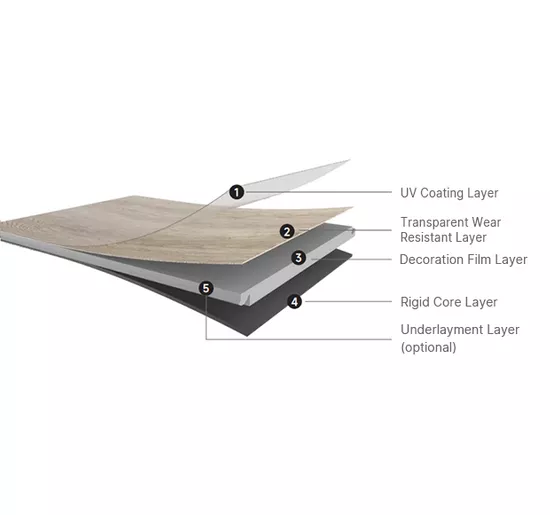
SPC warranty terms define the conditions under which the manufacturer will provide warranty coverage for a particular Stone Plastic Composite flooring product. These terms can include application, installation, maintenance, wear, moisture and documentation requirements.
SPC is popular because of its rigid construction, appearance and practical characteristics, but individual SPC products are not identical.
When reviewing SPC warranty terms, check:
- Approved applications
- Residential rating
- Commercial rating
- Warranty duration
- Wear-layer requirements
- Installation requirements
- Subfloor requirements
- Moisture limitations
- Expansion requirements
- Cleaning instructions
- Exclusions
- Claim procedure
The product's technical documentation should be reviewed alongside its warranty.
For more information about SPC, see SPC flooring as a heavy-duty flooring solution.
You can also explore SPC flooring products available through Ali Glaziers Flooring Solutions.
What Does a Flooring Warranty Usually Cover?
A flooring warranty generally covers specific manufacturing or performance defects identified within the warranty period, provided the product has been correctly selected, installed and maintained.
Depending on the manufacturer, covered problems may include:
Manufacturing defects
These can include defects present when the product was manufactured.
Premature wear
Some products provide wear warranties subject to specific conditions.
Product construction defects
A defect in the flooring structure may be covered if it meets the manufacturer's warranty criteria.
Locking-system defects
For click-lock flooring, certain defects in the locking mechanism may be covered.
Surface defects
Some visible product defects may be covered when reported according to the warranty procedure.
However, coverage varies.
A warranty should never be interpreted beyond the written terms supplied with the product.
What Does a Flooring Warranty Usually Exclude?
Most flooring warranties contain exclusions for damage caused by misuse, accidents, unsuitable installation conditions, excessive moisture, improper cleaning, neglect or circumstances outside the manufacturer's control.
Common exclusions can include:
- Normal wear and tear
- Scratches from misuse
- Dents caused by heavy objects
- Damage from furniture movement
- Water damage outside specified conditions
- Flooding
- Incorrect installation
- Poor subfloor preparation
- Failure to maintain the floor
- Incorrect cleaning chemicals
- Damage caused by pets
- Burns
- Impact damage
- Abuse
- Unauthorised modifications
The exact exclusions depend on the product.
This is why reading the warranty document before installation is important.
What Voids a Flooring Warranty?
A flooring warranty may be invalidated when the product is installed, used or maintained outside the manufacturer's specified conditions. Incorrect installation is one of the most common areas that can create warranty problems.
Potential warranty-voiding situations may include:
- Installing the product on an unsuitable substrate.
- Ignoring required moisture controls.
- Failing to follow installation instructions.
- Using incompatible adhesives or accessories.
- Removing or altering the product incorrectly.
- Using inappropriate cleaning products.
- Installing a residential product in an unapproved commercial environment.
- Failing to maintain required expansion gaps.
- Exposing the floor to conditions outside its intended use.
- Making unauthorised repairs or modifications.
The key principle is simple:
Follow the manufacturer's installation and maintenance instructions.
Incorrect Subfloor Preparation and Warranty Problems
A flooring warranty may not cover failures caused by an unsuitable or improperly prepared substrate. The subfloor should meet the flooring manufacturer's requirements before installation begins.
Potential problems include:
- Uneven concrete
- Cracks
- Moisture
- Dust
- Loose material
- Existing adhesive
- Contamination
- Structural movement
A rigid floor installed over an unsuitable substrate can develop problems such as:
- Movement
- Gaps
- Joint failure
- Unevenness
- Noise
- Premature wear
The flooring itself may not be defective.
This is why professional substrate assessment can be valuable before installation.
Moisture and Flooring Warranties
Excessive moisture can cause serious flooring problems, and warranty coverage may depend on the substrate and environmental conditions remaining within the manufacturer's stated limits. Moisture should therefore be assessed before installation where required.
Potential sources include:
- New concrete
- Ground moisture
- Plumbing leaks
- Flooding
- Wet cleaning
- Poor drainage
- External water ingress
Different flooring systems have different moisture tolerances.
A product marketed as water-resistant should not automatically be interpreted as immune to all moisture-related damage.
For example, a floor may resist surface spills while still requiring a suitable substrate and installation environment.
Does Water Damage Void an SPC Warranty?
Water damage does not automatically mean that every SPC warranty is void, but coverage depends on the product's stated water resistance, the source and duration of exposure, installation conditions and the specific warranty exclusions.
Consider the difference between:
- A short accidental spill
- Routine damp cleaning
- Standing water
- Flooding
- Water entering through the substrate
These are not necessarily treated in the same way.
The warranty document should be checked to establish the manufacturer's position.
Never interpret "water resistant" as "flood proof."
Installation and Flooring Warranty Claims
Correct installation is often a condition of warranty coverage. A product can be manufactured correctly but still fail because the installation method, substrate or accessories were unsuitable.
Installation requirements can include:
- Correct substrate
- Appropriate adhesive
- Expansion gaps
- Correct acclimatisation where required
- Proper locking
- Correct plank direction
- Suitable underlay
- Correct temperature conditions
- Proper perimeter finishing
For click-lock products, the installation instructions should be followed precisely.
For glue-down vinyl, the adhesive and substrate preparation can be particularly important.
For carpet, adhesive compatibility and substrate condition can affect the finished installation.
Professional Installation vs DIY and Warranty
DIY installation does not automatically mean that a flooring warranty is invalid, but the warranty may require installation according to specified instructions or by an approved or qualified installer. The actual warranty document determines the requirement.
Before choosing DIY installation, check:
- Does the manufacturer permit DIY installation?
- Are there approved installation methods?
- Is professional installation required?
- Is proof of installation required for a claim?
- Does the warranty cover workmanship?
- Who is responsible for installation defects?
A DIY installation can also make troubleshooting more difficult if a problem later appears.
For a practical comparison, see DIY or professional floor fitting.
Product Warranty vs Installation Guarantee
A product warranty and an installation guarantee are different forms of protection. The manufacturer may cover product defects while the installer may be responsible for workmanship and installation-related problems.
For example:
Manufacturer warranty
May cover:
- Manufacturing defects
- Specified wear
- Product performance
Installer guarantee
May cover:
- Installation workmanship
- Incorrect fitting
- Certain installation defects
- Defective workmanship
Suppose an SPC floor develops gaps because the required expansion allowance was not provided.
That may be an installation issue rather than a manufacturing defect.
The responsible party therefore needs to be identified.
Why Keep Your Flooring Documents?
Keeping the original purchase, product and installation documents can make a warranty claim easier because they provide evidence of what was purchased, where it was installed and under what conditions.
Keep:
- Invoice
- Receipt
- Product code
- Product packaging information
- Warranty document
- Installation instructions
- Product datasheet
- Installer details
- Installation invoice
- Photographs
- Maintenance records where relevant
For commercial projects, also retain:
- Approved samples
- Technical submittals
- Test documentation
- BOQ
- Material approval
- Handover documents
These records can become important if a dispute develops.
What Is a Floor Guarantee Claim?
A floor guarantee claim is a formal request for the responsible manufacturer, supplier or installer to investigate a suspected defect or covered failure. A strong claim should clearly document the product, installation, problem and supporting evidence.
The process commonly involves:
- Identify the problem.
- Stop actions that could worsen the damage.
- Gather purchase documents.
- Identify the product.
- Photograph the affected area.
- Contact the supplier or responsible party.
- Provide requested information.
- Allow an inspection where required.
- Follow the warranty assessment process.
Do not immediately remove the entire floor before the supplier has had an opportunity to inspect it unless urgent circumstances require removal.
Removing evidence can make diagnosis more difficult.
How to Make a Flooring Warranty Claim
A well-documented floor guarantee claim should describe the problem clearly and provide enough evidence for the supplier or manufacturer to establish whether the issue is covered.
A claim should ideally include:
Purchase information
Provide:
- Invoice number
- Purchase date
- Supplier
- Product name
- Product code
Installation information
Provide:
- Installation date
- Installer
- Installation method
- Substrate type
Problem description
Explain:
- What happened
- Where it happened
- When it was first noticed
- Whether the problem is spreading
- Whether the floor is still being used
Evidence
Attach:
- Clear photographs
- Videos where useful
- Product documentation
- Installation records
- Maintenance information
Avoid exaggerating the problem.
A factual description is more useful for technical investigation.
What Photographs Should You Take?
Clear photographs can help a supplier understand the nature and location of a flooring problem before an inspection. Take both close-up images and wider photographs showing the affected area in context.
Useful photographs include:
- Close-up of the defect
- Several affected planks or tiles
- Wider room view
- Room entrance
- Floor perimeter
- Expansion joints
- Substrate transition
- Areas near water sources
- Product label or packaging
For SPC flooring, photographs of the joints, edges and affected surface can be particularly useful.
Do not digitally alter photographs.
Normal Wear and Tear vs a Defect
Normal wear and tear is generally different from a manufacturing defect. Flooring naturally experiences some level of wear during its service life, and warranty coverage normally depends on the product's intended use and stated performance conditions.
Examples of potential wear-related issues include:
- Surface dulling
- Minor scratches
- Traffic patterns
- Gradual appearance changes
- Normal ageing
Whether a particular condition constitutes normal wear or a warranty defect depends on the product and warranty terms.
This distinction is especially important for commercial floors with heavy traffic.
Scratches and Flooring Warranties
Scratches are not automatically covered by a flooring warranty because many scratches result from use, furniture, grit, footwear or other external causes rather than manufacturing defects.
To reduce scratching:
- Use appropriate furniture protectors.
- Keep abrasive dirt off the floor.
- Lift rather than drag heavy furniture.
- Use suitable entrance mats.
- Follow manufacturer cleaning instructions.
- Use appropriate cleaning tools.
For pet owners considering SPC, see whether SPC flooring is scratch-proof for pet owners.
No flooring product should be described as completely immune to scratching.
Furniture Damage and Flooring Warranties
Heavy furniture, improper furniture feet and dragging objects across a floor can cause damage that is normally treated differently from a manufacturing defect. Protective measures should be used where recommended by the manufacturer.
Examples include:
- Chairs
- Tables
- Cabinets
- Beds
- Filing cabinets
- Display units
- Heavy equipment
Commercial environments can be particularly demanding because furniture and equipment may be moved regularly.
Where wheeled chairs are used, the flooring specification should consider the appropriate floor protection system.
Cleaning Products and Warranty Exclusions
Using cleaning products that are incompatible with the flooring can damage finishes and may affect warranty coverage. Always follow the manufacturer's approved cleaning and maintenance instructions.
Avoid assuming that a stronger chemical provides better cleaning.
Problems can arise from:
- Abrasive cleaners
- Harsh chemicals
- Excessive water
- Solvents
- Unapproved polishes
- Steam cleaning where prohibited
For vinyl flooring, see how to clean and maintain vinyl floors in Kenya.
The manufacturer's maintenance instructions should always take precedence over generic cleaning advice.
Commercial Flooring Warranties and Heavy Traffic
Commercial flooring warranties should be evaluated against actual traffic conditions rather than simply comparing warranty periods. A product with a long residential warranty may not be appropriate for a heavily trafficked commercial facility.
Consider the intended environment:
| ApplicationImportant considerations | |
| Home | Household traffic, cleaning, furniture |
| Office | Pedestrian traffic, chairs, cleaning |
| Retail | Heavy pedestrian traffic, display equipment |
| Hotel | Guests, luggage, cleaning frequency |
| Restaurant | Spills, grease, cleaning |
| School | Heavy traffic, dirt, maintenance |
| Hospital | Cleaning, hygiene, equipment movement |
The product's stated application should match the project.
Flooring Warranty for Institutional Projects
Institutional projects should document flooring approvals carefully because large installations may involve multiple parties, formal specifications and strict maintenance requirements.
A project file may contain:
- Approved product
- Product code
- Manufacturer
- Technical datasheet
- Warranty
- Sample approval
- Installation method
- Subfloor preparation records
- Test certificates
- Completion documentation
- Maintenance instructions
This creates a traceable record.
For tendered projects, the flooring specification should also identify required warranty conditions before procurement.
See the guide on institutional flooring tender compliance.
Warranty and Flooring BOQs
The BOQ should identify warranty requirements clearly enough for tenderers to understand what is included in their price. This helps prevent different contractors from making different assumptions about warranty duration and responsibility.
A flooring BOQ can state, where appropriate:
"Provide manufacturer's warranty for the flooring product for a minimum period of ___ years from the date specified in the contract, subject to manufacturer's terms and conditions."
If an installation guarantee is also required, it should be separately identified.
For a broader approach to flooring procurement, see how to specify flooring in a BOQ.
What Can Void a Commercial Flooring Warranty?
Commercial flooring warranties can be affected by using a product outside its approved application, failing to maintain it correctly or installing it contrary to the manufacturer's requirements.
Potential issues include:
- Excessive traffic beyond the product's classification
- Use of unsuitable cleaning chemicals
- Improper maintenance
- Unapproved modifications
- Incorrect installation
- Excessive moisture
- Poor substrate preparation
- Dragging heavy equipment
- Failure to use specified protective measures
Commercial buyers should establish these requirements before the project begins.
A facilities team should also receive the maintenance instructions at handover.
Does Moving Into a New Building Affect the Warranty?
Moving furniture and equipment into a newly installed building can damage flooring before the floor has been properly protected or before adhesives and other installation materials have fully cured. The manufacturer's installation and post-installation instructions should therefore be followed.
After installation:
- Protect the floor.
- Follow curing requirements.
- Avoid unnecessary traffic where instructed.
- Use suitable protective coverings.
- Do not drag equipment.
- Coordinate furniture installation.
This is particularly important in office fit-outs where flooring installation may occur before desks, cabinets and equipment are moved into place.
Flooring Warranty and Repairs
A warranty claim does not necessarily mean that an entire floor will be replaced. Depending on the terms and nature of the defect, the manufacturer or supplier may inspect, repair, replace affected material or provide another remedy permitted by the warranty.
The remedy can depend on:
- Extent of damage
- Cause
- Product availability
- Warranty terms
- Age of installation
- Whether the issue is covered
For click-lock flooring, replacement of individual planks may sometimes be possible.
For carpet tiles, affected tiles can potentially be replaced where matching stock is available.
This is one reason why retaining spare material can be useful.
Keep Spare Flooring After Installation
Keeping a reasonable quantity of spare flooring can make future repairs easier, particularly where products may later be discontinued or colours and batches may change.
For suitable projects, consider retaining:
- Spare SPC planks
- Spare vinyl planks or tiles
- Spare carpet tiles
- Matching skirting
- Matching trims
Store spare material according to the manufacturer's recommendations.
The product code and colour information should be retained with the spare stock.
Flooring Warranty Claims in Kenya: What Buyers Should Ask
Before buying flooring in Kenya, ask the supplier to explain the warranty conditions in writing rather than assuming that a stated warranty period covers every type of damage.
Ask:
- How long is the warranty?
- Is it residential or commercial?
- What exactly does it cover?
- What is excluded?
- Is professional installation required?
- What substrate conditions apply?
- Are there moisture limitations?
- What cleaning products are permitted?
- What documents should I retain?
- How do I make a claim?
- Who handles the claim?
- Is the warranty transferable?
- Are labour costs covered?
- Are replacement materials covered?
- Are there special conditions for high-traffic areas?
These questions can save considerable confusion later.
Flooring Warranties and Product Selection
The warranty should be considered as one part of product selection rather than the only measure of flooring quality. Product construction, intended application, technical performance, installation requirements, maintenance and supplier support should all be evaluated together.
For example, when comparing SPC products, consider:
- Thickness
- Wear layer
- Core construction
- Surface finish
- Slip resistance
- Fire performance
- Installation system
- Warranty
- Application rating
For vinyl:
- Construction
- Wear layer
- Installation method
- Slip resistance
- Maintenance
- Warranty
For carpet:
- Fibre construction
- Backing
- Traffic classification
- Cleaning
- Fire performance
- Warranty
The best product is one that fits the project.
Why Professional Advice Can Help
Professional flooring advice can help buyers match the product, installation system and maintenance requirements to the intended environment before the purchase is made. This can reduce avoidable installation and warranty problems.
This is especially useful for:
- Large homes
- Offices
- Hotels
- Schools
- Hospitals
- Retail shops
- Apartment developments
- Commercial fit-outs
An experienced flooring supplier can help identify practical considerations such as:
- Product suitability
- Quantity
- Accessories
- Installation method
- Subfloor requirements
- Maintenance
- Warranty documentation
For flooring options and project support, visit Ali Glaziers Flooring Solutions.
A Simple Flooring Warranty Checklist
Before accepting a flooring installation, buyers should create a small warranty file containing the purchase, product, installation and maintenance documents. This makes future warranty assessment much easier.
Before purchase
- Confirm intended application
- Request written warranty
- Read exclusions
- Confirm warranty period
- Confirm commercial/residential classification
- Check installation requirements
Before installation
- Inspect substrate
- Confirm moisture requirements
- Approve product
- Confirm installer
- Keep product documentation
- Photograph the installation area
During installation
- Follow manufacturer instructions
- Use approved accessories
- Record installation date
- Retain unused product labels
- Photograph key stages where appropriate
After installation
- Keep invoice
- Keep warranty
- Keep maintenance instructions
- Protect the finished floor
- Follow cleaning instructions
- Retain spare flooring where practical
Final Takeaway: Read the Warranty Before You Need It
A flooring warranty is most useful when the buyer understands its conditions before installation. Check the application, installation requirements, exclusions, maintenance instructions and claim procedure rather than focusing only on the number of years advertised.
For flooring warranty Kenya purchases, the most important principle is to match the warranty to the actual project.
A residential floor should not automatically be used in a commercial environment.
An SPC product should be installed according to its specific SPC warranty terms.
A suspected defect should be documented before repairs or removal.
And a floor guarantee claim should be supported by purchase, product and installation records wherever possible.
For commercial and institutional projects, warranty requirements should be established during specification and tendering rather than after the floor has already been installed.
A good flooring decision therefore considers four things together:
Product + installation + maintenance + warranty.
When all four are aligned, buyers have a much stronger foundation for getting the expected performance from their flooring investment.
Get Flooring Products and Warranty Guidance from Ali Glaziers Flooring Solutions
Ali Glaziers Flooring Solutions offers flooring options for homes, offices, retail spaces, hospitality projects and other applications in Nairobi and across Kenya.
Explore:
- SPC flooring
- Vinyl flooring
- Egyptian carpets
- Carpet tiles
- Wall-to-wall carpets
- Corridor runners
- Artificial turf
For product-specific warranty information, buyers should request the applicable warranty documentation for the exact product before purchase and installation.
Contact Ali Glaziers Flooring Solutions
Why choose Ali Glaziers Flooring Solutions?
- Wide range of flooring solutions
- SPC, vinyl, laminated wood and Egyptian carpets
- Options for residential and commercial projects
- Product selection guidance
- Installation advice
- Flooring solutions for Nairobi and across Kenya
Visit Us: Funzi Road Branch, End of Funzi Road, Industrial Area, Ali Glaziers LTD Building, Nairobi, Kenya
Call / WhatsApp: +254 (0) 716 259 682, +254 (0) 722 522 452
Email: info@aliglaziers.com
Shop Online: flooring.aliglaziers.com/shop
Request a Quote: Contact Ali Glaziers Flooring Solutions
Before you buy flooring, ask for the written warranty. Before you install it, understand the exclusions. Before making a claim, keep your documents.