Learn how SPC wear layer microns are measured, how claims can be overstated, and how to verify the flooring specification before buying.
SPC Wear Layer Microns: How to Verify Thickness Before Buying Flooring
When comparing SPC flooring, SPC wear layer microns are one of the specifications buyers should understand before choosing a product. A wear layer helps protect the decorative surface from everyday abrasion, traffic, stains, and general use, but the number printed on a quotation or product description does not always tell the whole story.
Some flooring products may be advertised with a wear-layer thickness that is unclear, inconsistently measured, or difficult to verify from the available technical documentation. For homeowners, contractors, developers, offices, hotels, and retailers in Kenya, understanding how to check the specification can help prevent expensive purchasing mistakes.
A product described simply as “0.5 mm wear layer” may sound straightforward. However, buyers should establish whether the stated measurement refers to the actual protective wear layer, another part of the flooring construction, or a marketing description that has not been properly supported.
Shop Vinyl Flooring
View all Vinyl Flooring
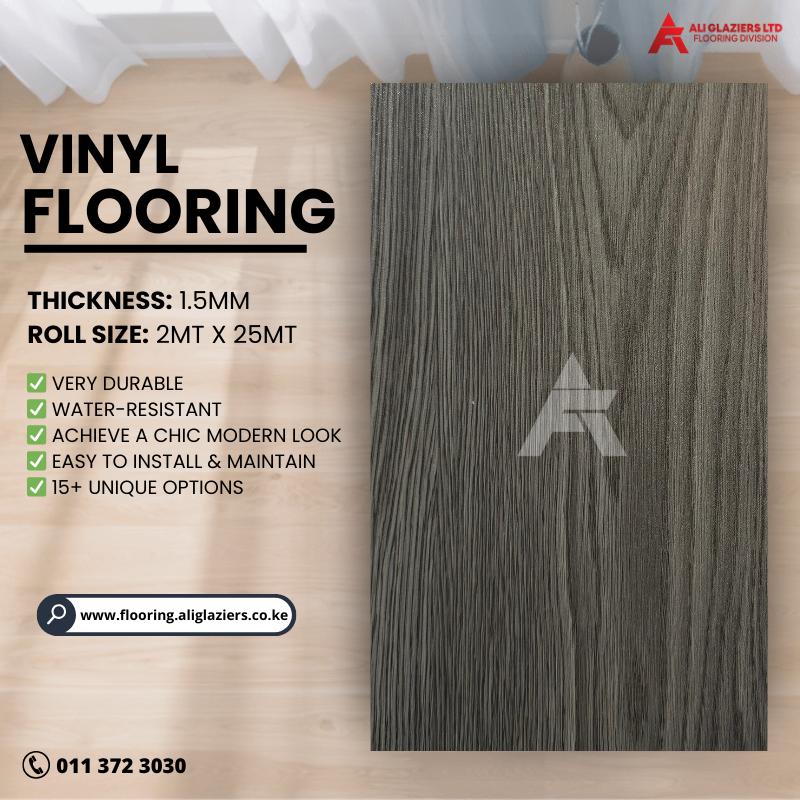
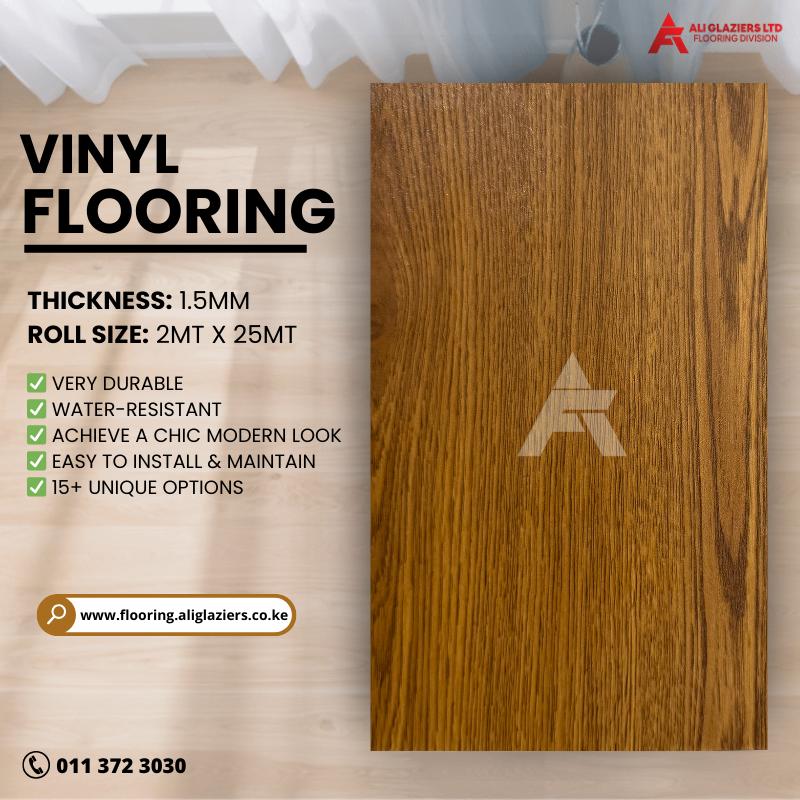
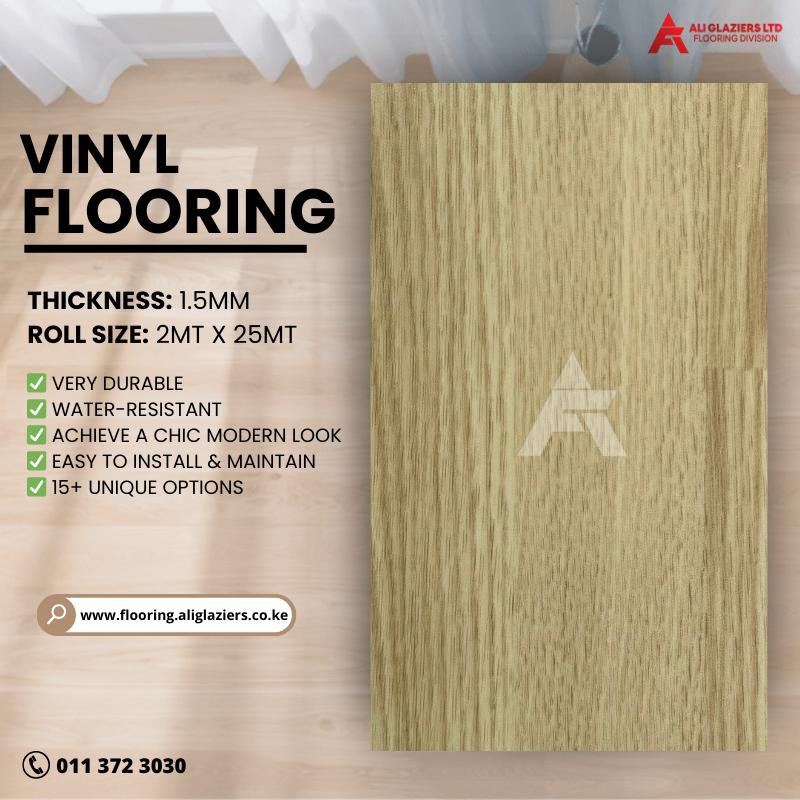
This guide explains SPC wear layer microns, how wear layers are measured, why specifications can be misunderstood or overstated, what documents to request, and how Kenyan flooring buyers can make more informed purchasing decisions.
What Are SPC Wear Layer Microns?
SPC wear layer microns describe the thickness of the protective surface layer, with one micron equal to one-thousandth of a millimetre. Understanding the unit makes it easier to compare flooring specifications accurately.
The conversion is:
- 100 microns = 0.10 mm
- 200 microns = 0.20 mm
- 300 microns = 0.30 mm
- 400 microns = 0.40 mm
- 500 microns = 0.50 mm
- 600 microns = 0.60 mm
- 700 microns = 0.70 mm
- 1,000 microns = 1.00 mm
This means a supplier stating that an SPC floor has a 500-micron wear layer is referring to approximately 0.50 mm, assuming the measurement represents the actual wear layer.
That distinction is important.
A product's total thickness is not the same thing as its wear-layer thickness.
For example, an SPC plank might have an overall thickness of several millimetres while having a much thinner protective wear layer.
Why Wear Layer Thickness Matters
The wear layer protects the visible surface of flooring from everyday use, so its specification can be particularly important in areas with significant foot traffic. However, a thicker wear layer should not automatically be treated as the only indicator of flooring quality.
The wear layer can influence the flooring's ability to withstand:
- Foot traffic
- Surface abrasion
- Everyday scuffing
- Furniture movement
- Cleaning
- General commercial use
The appropriate specification depends on where the flooring will be installed.
A bedroom does not experience the same conditions as a hotel corridor.
Likewise, a private home office does not receive the same traffic as a retail shop.
When choosing SPC flooring, consider the complete product specification rather than focusing on one number.
SPC Wear Layer Microns vs Total Flooring Thickness
SPC wear layer microns measure a specific protective layer, while total flooring thickness measures the complete plank or tile construction. Confusing these two measurements can lead buyers to believe that a product has a thicker wear layer than it actually does.
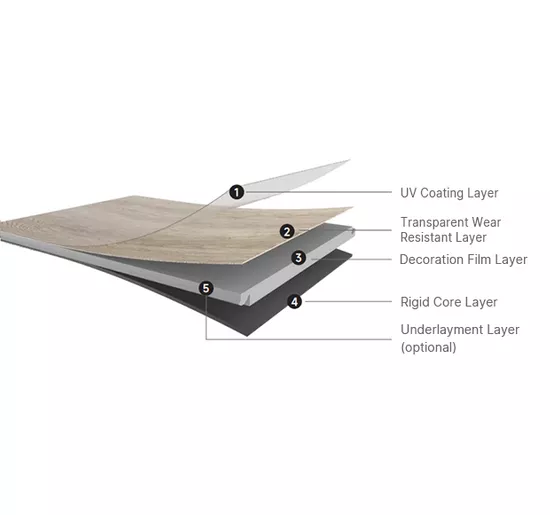
An SPC product may contain several layers, including:
- Protective surface layer
- Decorative film
- SPC core
- Stabilizing or backing layer
The exact construction varies between manufacturers.
If a product is advertised as 5 mm thick, that does not mean it has a 5 mm wear layer.
Similarly, a 0.5 mm wear layer does not mean the entire product is only 0.5 mm thick.
This is why technical specifications should identify the individual layers where relevant.
How Many Microns Should an SPC Wear Layer Have?
There is no single wear-layer thickness that is automatically right for every flooring application; the appropriate specification depends on traffic, product construction, manufacturer recommendations, and the intended environment.
You may encounter SPC products advertised with wear layers such as:
- 100 microns
- 200 microns
- 300 microns
- 400 microns
- 500 microns
- 600 microns
- 700 microns or more
These figures should not be interpreted as a simple “higher is always better” ranking.
Instead, ask:
What level of surface protection is appropriate for this application?
For a low-traffic residential room, a different specification may be appropriate from a busy commercial entrance.
For example:
| ApplicationWhat to Consider | |
| Bedroom | Moderate residential traffic |
| Living room | Regular residential traffic |
| Home office | Furniture and chair movement |
| Office | Continuous foot traffic |
| Retail shop | Heavy customer traffic |
| Hotel | High traffic and frequent cleaning |
| School | Heavy daily use |
| Reception area | High visibility and traffic |
The correct choice should be based on the product's complete technical specification.
How Wear-Layer Measurements Can Be Misunderstood
Wear-layer specifications can be misunderstood when suppliers use millimetres, microns, total thickness, or generic product descriptions without clearly identifying what is actually being measured.
Consider these examples.
A supplier says:
“This floor is 5 mm thick.”
That describes overall thickness, not necessarily the wear layer.
Another supplier says:
“This is 500 microns.”
You should ask:
500 microns of what?
If the answer is “wear layer,” request supporting technical information.
A third product may be described as:
“0.5 mm protection.”
Again, clarification is necessary.
The buyer should establish whether 0.5 mm refers to the actual wear layer or another surface component.
What Does 500 Microns Mean in SPC Flooring?
A 500-micron wear layer corresponds to 0.50 mm, but buyers should verify that the manufacturer's specification actually identifies 500 microns as the wear-layer thickness.
The mathematical conversion is simple:
500 microns ÷ 1,000 = 0.50 mm
Likewise:
300 microns ÷ 1,000 = 0.30 mm
and:
600 microns ÷ 1,000 = 0.60 mm
This is useful when comparing supplier quotations.
If one supplier quotes microns and another quotes millimetres, converting the values to the same unit makes comparison easier.
However, the unit conversion does not verify whether the original measurement is accurate.
That requires documentation or testing.
How to Check an SPC Wear Layer Before Buying
A proper flooring wear layer check starts with the manufacturer's technical specification and then compares that information with the product, packaging, sample, and available test documentation.
Before purchasing, follow these steps.
Request the Technical Data Sheet
Ask for the manufacturer's official technical data sheet.
It should identify the product and provide relevant specifications.
Look for:
- Total thickness
- Wear-layer thickness
- Dimensions
- Core construction
- Surface finish
- Installation system
- Recommended application
- Performance characteristics
- Warranty
A quotation alone may not provide enough information.
Confirm the Unit
Check whether the wear layer is stated in:
- Microns
- Millimetres
- Mil or another measurement
Do not assume that similar-looking numbers represent the same measurement.
Convert the Measurement
If necessary, convert the specification.
For example:
400 microns = 0.40 mm
500 microns = 0.50 mm
600 microns = 0.60 mm
This makes supplier comparisons easier.
Compare the Product Code
Make sure the technical sheet refers to the exact product code being supplied.
This is particularly important when a supplier has multiple SPC collections.
Check the Packaging
The packaging should identify the product sufficiently for you to compare it with the quotation and technical documentation.
Ask for Test Evidence Where Appropriate
For large projects, request relevant testing or third-party verification where appropriate.
Keep the Documentation
Keep copies of:
- Quotations
- Technical data sheets
- Test reports
- Product photographs
- Product codes
- Invoices
- Delivery documents
- Warranty information
This creates a procurement record.
Can You Measure the Wear Layer Yourself?
A buyer can perform basic checks on flooring samples, but accurately determining the thickness of a thin wear layer may require appropriate laboratory or specialist measurement equipment.
A normal ruler or tape measure is not suitable for accurately distinguishing a 300-micron layer from a 400-micron layer.
Remember:
300 microns = 0.30 mm
The difference is only 0.10 mm.
A casual visual inspection cannot reliably establish that difference.
A vernier caliper may help with overall plank thickness, but it does not automatically isolate the wear layer.
For precise verification, a suitable test method and trained technician may be required.
This is especially relevant when a project involves thousands of square metres of flooring.
Why a Vernier Caliper Is Not Enough
A vernier caliper can measure the overall thickness of a flooring sample, but it cannot by itself prove the thickness of the separate wear layer.
Suppose a plank measures 5 mm overall.
A caliper can help confirm that the plank is approximately 5 mm thick.
But the plank may contain:
- Surface protection
- Decorative layer
- Core
- Backing
The caliper does not automatically tell you how much of that 5 mm is the wear layer.
This distinction is critical when performing a flooring wear layer check.
For basic procurement, technical documentation may be sufficient.
For a dispute or high-value project, professional testing can provide stronger evidence.
How Some SPC Specifications Can Be Overstated
Wear-layer claims can become misleading when the advertised measurement is presented without explaining the measurement method, layer being measured, product code, or supporting technical evidence.
Potential problems include:
Confusing Total Thickness With Wear Layer
A 5 mm plank may be advertised in a way that makes inexperienced buyers believe the entire thickness represents surface protection.
It does not.
Using Rounded Marketing Numbers
A supplier may describe a product as “500 microns” while the manufacturer's technical specification provides a different figure.
Always compare the claim with the original product documentation.
Switching Units
A specification may appear impressive simply because the number is expressed in microns.
For example:
500 microns sounds larger than 0.5 mm, but they are the same thickness.
This is why buyers should compare like with like.
Applying One Product's Specification to Another
A supplier may have several similar-looking SPC products.
The technical data for one product should not automatically be assumed to apply to another.
Using Generic Supplier Descriptions
A catalogue description may say “commercial grade” or “heavy duty” without providing the actual technical parameters needed to evaluate the claim.
Ask for measurable specifications.
What Is a Fake SPC Product?
The phrase “fake SPC Kenya” is often used by buyers to describe flooring that appears inconsistent with its advertised specification, but not every low-quality or incorrectly described product is necessarily counterfeit.
There are several different situations.
A product may be:
- Genuine but low specification
- Genuine but incorrectly advertised
- A different model from the one quoted
- Poorly documented
- Manufactured by an unknown supplier
- Counterfeit
- Missing required documentation
These situations should not be treated as identical.
If you suspect that a product is counterfeit or materially different from what you purchased, preserve the packaging, invoice, product sample, photographs, and documentation.
For a significant commercial dispute, professional technical assessment may be appropriate.
Warning Signs When Buying SPC Flooring in Kenya
Unclear specifications, unusually low prices, inconsistent product information, and refusal to provide technical documentation are reasons to investigate further before purchasing SPC flooring.
Watch for these warning signs:
- No product code
- No identifiable manufacturer
- No technical data sheet
- Wear-layer claim without supporting specification
- Different thicknesses quoted verbally and in writing
- Product packaging that does not match the quotation
- Generic claims such as “premium commercial grade”
- No warranty information
- No installation instructions
- Large price difference without a clear explanation
- Supplier unwilling to provide a sample
- Certificate or test report that does not identify the actual product
One warning sign does not automatically prove that a product is fake.
However, several warning signs together should encourage additional verification.
Why the Wear Layer Should Not Be Your Only Buying Criteria
SPC wear layer thickness is important, but it should not be used as the sole measure of flooring quality because construction, core performance, surface treatment, dimensional stability, installation, and application also matter.
Imagine comparing two SPC products.
Product A has a thicker stated wear layer.
Product B has a slightly thinner wear layer but better overall construction, reliable technical documentation, suitable installation characteristics, and a stronger warranty.
The thicker wear layer alone does not automatically make Product A the better purchase.
Other factors include:
Core Quality
The core contributes to the flooring's structure and stability.
Dimensional Stability
The product should be suitable for the expected environmental conditions when installed according to manufacturer instructions.
Surface Finish
The finish affects appearance, cleaning, and the way everyday wear is perceived.
Click System
For click SPC flooring, the locking system can affect installation quality and long-term performance.
Subfloor Preparation
An unsuitable subfloor can cause problems regardless of the flooring specification.
Installation
Correct installation is essential.
Maintenance
Cleaning products and maintenance methods should follow manufacturer recommendations.
Choosing SPC Flooring for Residential Homes
Residential SPC flooring should be selected according to household traffic, room conditions, design preferences, maintenance expectations, and the manufacturer's recommended application.
SPC can be suitable for areas such as:
- Living rooms
- Bedrooms
- Corridors
- Dining spaces
- Home offices
- Selected renovation projects
Homeowners should still check:
- Wear layer
- Total thickness
- Installation method
- Underlay or backing
- Subfloor requirements
- Warranty
- Cleaning instructions
For homeowners exploring different designs, Ali Glaziers Flooring Solutions provides a range through its SPC flooring category.
Available styles can include wood-inspired finishes such as SPC Flooring Smoked Cherry and SPC Flooring Pristine Oak.
Choosing SPC for Offices and Commercial Spaces
Commercial SPC flooring requires more careful specification because offices, retail shops, hotels, and institutions can expose floors to considerably higher traffic than residential rooms.
When buying for a commercial project, ask:
- What is the expected daily traffic?
- Is furniture regularly moved?
- Will office chairs roll across the surface?
- How frequently will the floor be cleaned?
- Will customers walk across the area continuously?
- Is the flooring exposed to entrance dirt and grit?
- What maintenance products will be used?
For larger projects, ask the supplier to recommend a product based on the actual application rather than simply selecting the product with the highest micron figure.
SPC Flooring Accessories and Installation
The performance of an SPC floor also depends on compatible accessories and proper installation, so wear-layer verification should form part of a broader flooring specification.
Useful accessories can include:
- Skirtings
- Reducers
- T-mouldings
- Adhesives
- Sealants
Ali Glaziers Flooring Solutions provides flooring skirtings, reducers, T-mouldings, and adhesives and sealants.
The correct accessory depends on the flooring system and installation design.
How to Compare Two SPC Products Properly
The best way to compare SPC products is to create a specification-based comparison instead of choosing the product with the biggest advertised micron number.
For example:
| Specification | Product A | Product B |
| Total thickness | 5 mm | 5 mm |
| Wear layer | 400 microns | 500 microns |
| Core | Verify | Verify |
| Surface finish | Verify | Verify |
| Installation | Click | Click |
| Warranty | Verify | Verify |
| Application | Residential | Commercial |
| Technical documentation | Available | Available |
This comparison immediately shows that wear layer is only one part of the decision.
A good supplier should be able to help you understand the differences.
What Contractors Should Put in the Purchase Order
Contractors and developers can reduce specification disputes by writing the agreed flooring characteristics into the purchase order rather than relying on verbal promises.
A flooring purchase order can identify:
- Product name
- Product code
- Manufacturer
- Colour
- Total thickness
- Wear-layer thickness
- Quantity
- Installation method
- Accessories
- Warranty
- Approved sample
- Required documentation
If the project specification requires a particular wear layer, write the value and unit clearly.
For example:
Wear layer: 500 microns (0.50 mm), subject to applicable product documentation.
This is much clearer than writing:
Premium SPC flooring.
How to Handle a Suspected Wear-Layer Discrepancy
If the delivered flooring appears to have a different specification from what was purchased, stop relying on assumptions and compare the product against the original quotation, technical data sheet, packaging, and delivery documentation.
A sensible process is:
- Keep the original quotation.
- Photograph the packaging.
- Record the product code.
- Photograph the flooring sample.
- Check the technical data sheet.
- Compare the stated wear layer.
- Contact the supplier in writing.
- Request clarification.
- If necessary, arrange independent testing.
Avoid cutting or disposing of large quantities of flooring before a potential quality dispute has been investigated.
A representative sample can be valuable evidence.
SPC Wear Layer Microns: Questions to Ask Before Paying
A few precise questions can reveal much more about an SPC product than simply asking whether it is “good quality.”
Ask the supplier:
- What is the exact wear-layer thickness?
- Is it expressed in microns or millimetres?
- What is the total plank thickness?
- Can I see the manufacturer's technical data sheet?
- What is the product code?
- Who is the manufacturer?
- What application is the product designed for?
- What testing supports the performance claims?
- What warranty applies?
- What installation method is required?
- What subfloor conditions are required?
- Are accessories available?
- Is the same product currently in stock?
- Can I inspect a physical sample?
- Can the specification be included on the quotation or purchase order?
A supplier who provides clear answers makes it easier for the buyer to compare products objectively.
Where to Shop for SPC and Other Flooring in Kenya
Working with a flooring supplier that provides product information, samples, accessories, and installation guidance can make the buying process easier and reduce specification confusion.
Ali Glaziers Flooring Solutions provides flooring products for homeowners, contractors, businesses, developers, and other customers in Nairobi and across Kenya.
You can browse the Ali Glaziers Flooring shop to explore available products.
For additional flooring information, the Ali Glaziers Flooring knowledge base provides further guidance on flooring products and maintenance.
You can also review the company's vinyl flooring collection if you are comparing SPC with other resilient flooring options.
Final Thoughts: Verify the Number, Not Just the Claim
SPC wear layer microns are useful when comparing flooring products, but buyers should verify what the number actually represents before relying on it. A stated figure such as 500 microns should correspond to a clearly identified wear layer and, where necessary, be supported by credible technical documentation or testing.
Remember the basic conversion:
500 microns = 0.50 mm.
But the more important question is:
Does the product you are receiving actually have the specification you were promised?
That is why a proper flooring wear layer check should include the product code, manufacturer information, technical data sheet, packaging, quotation, and appropriate test evidence where required.
For homeowners, contractors, developers, offices, hotels, schools, and retail businesses, the safest approach is to compare flooring based on wear layer, total construction, application, installation, warranty, documentation, and overall value.
If you are concerned about a fake SPC Kenya listing or an unclear wear-layer claim, ask for the technical specification before making payment and request clarification whenever the documentation does not match the product description.
Get Expert Flooring Guidance From Ali Glaziers Flooring Solutions
Whether you are renovating a home, fitting out an office, developing apartments, or specifying flooring for a commercial project, Ali Glaziers Flooring Solutions can help you compare available options and understand the specifications before purchase.
Shop: Ali Glaziers Flooring Solutions
Contact: Speak to Ali Glaziers Flooring Solutions
Explore SPC: SPC Flooring Collection
Choose flooring based on verified specifications—not simply the biggest number printed on a quotation.