Learn what flooring VOC certification means, how to verify emissions and formaldehyde documentation, and what certificates to request before buying.
Flooring VOC Certification: Formaldehyde, Emissions and Indoor Air Quality
When choosing flooring for a home, office, hotel, school, hospital, or commercial building, appearance and durability are important, but indoor air quality also deserves attention. Flooring VOC certification can help buyers understand whether a flooring product or its associated materials have been tested for emissions of volatile organic compounds (VOCs) and other substances relevant to indoor environments.
Flooring can involve more than the visible surface. SPC, vinyl, laminate, carpets, adhesives, underlays, coatings, and sealants can all form part of an installed floor system. Depending on the product and manufacturing process, some materials may emit chemicals into indoor air, particularly when new.
This does not mean that every flooring product creates a significant indoor-air-quality problem. Rather, buyers should understand what emissions information actually means and how to distinguish a genuine certification or test report from a vague marketing claim.
Shop Vinyl Flooring
View all Vinyl Flooring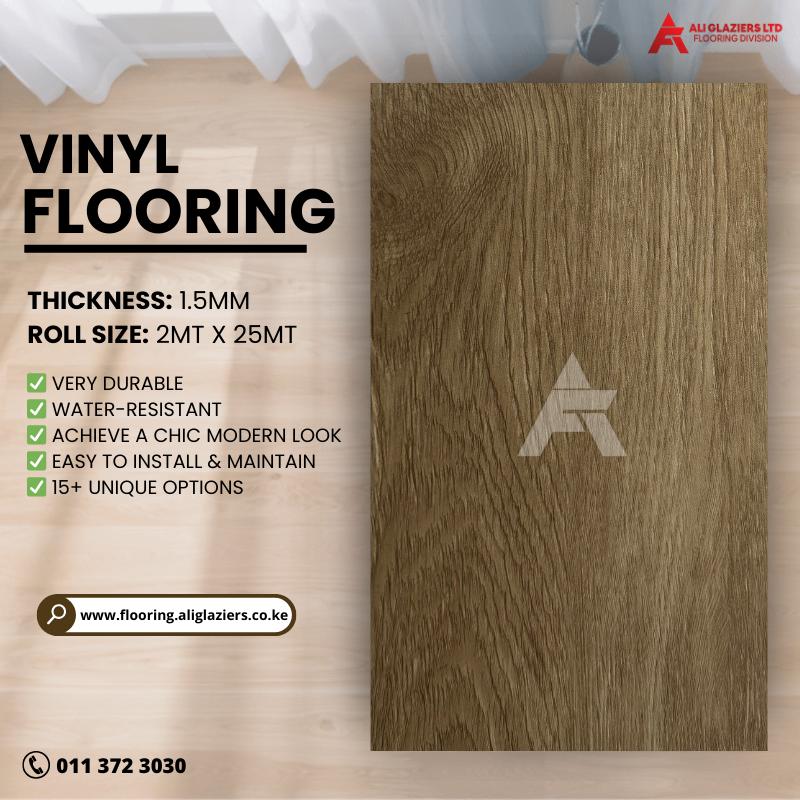
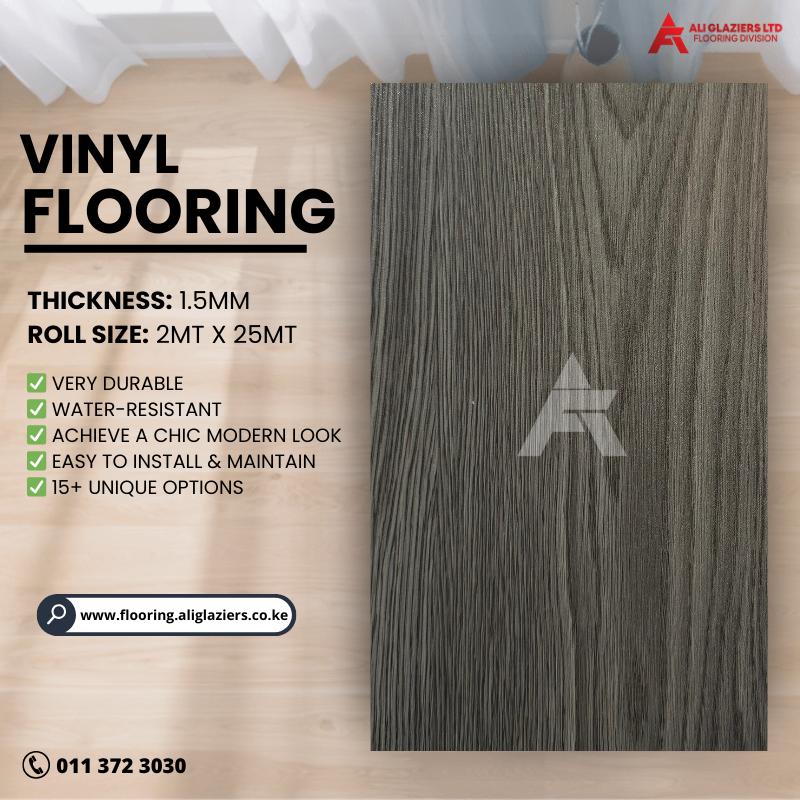
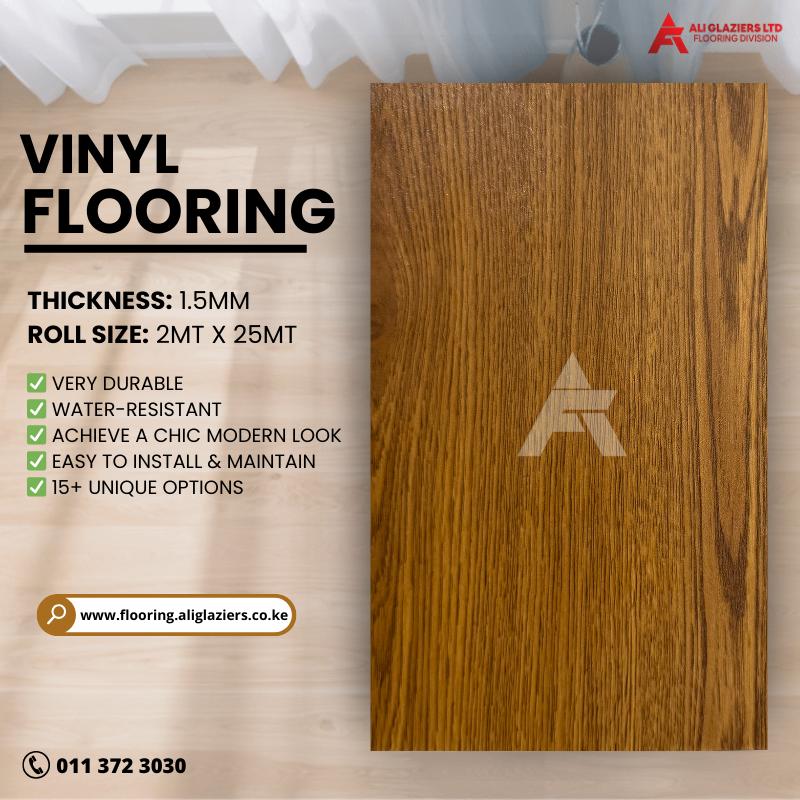
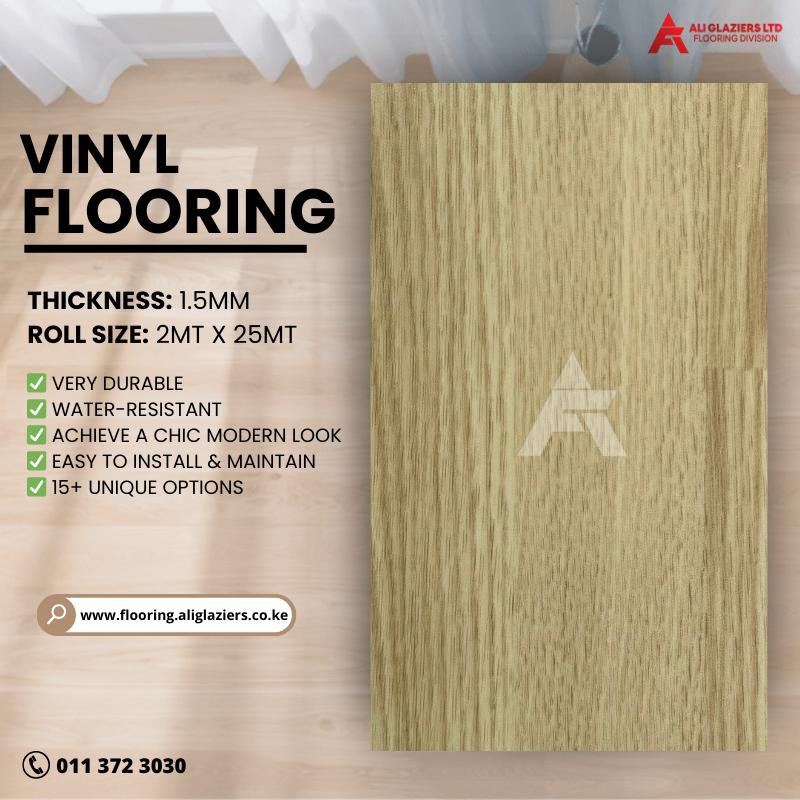
For Kenyan homeowners, contractors, architects, interior designers, developers, offices, schools, hotels, and healthcare facilities, asking for the right documentation before purchasing flooring can support better product selection.
This guide explains flooring VOC certification, formaldehyde flooring requirements, emissions testing, indoor air quality considerations, and the documents you should ask a supplier for before making a major flooring purchase.
What Is Flooring VOC Certification?
Flooring VOC certification refers to certification, testing, or emissions assessment that provides information about volatile organic compound emissions from a flooring product or flooring system. The exact certification scheme, test method, limits, and scope depend on the product and the certification programme involved.
VOC stands for volatile organic compounds.
These are organic chemicals that can evaporate into the air under normal indoor conditions. Some VOCs occur naturally, while others are associated with manufactured products, coatings, adhesives, cleaning products, furnishings, and construction materials.
In flooring, VOC-related considerations can apply to:
- Vinyl flooring
- SPC flooring
- Laminate flooring
- Carpets
- Carpet adhesives
- Flooring adhesives
- Sealants
- Coatings
- Underlays
- Installation products
The important point is that there is no single universal “VOC certificate” that automatically proves that every flooring product is suitable for every indoor environment.
The buyer needs to know what was tested, how it was tested, which standard or certification programme was used, and what the result means.
Why Indoor Air Quality Flooring Matters
Indoor air quality flooring is important because flooring materials and installation products can contribute to the overall chemical emissions inside a building. Choosing products with credible emissions information can therefore be part of a broader indoor-air-quality strategy.
People can spend many hours inside:
- Homes
- Offices
- Schools
- Hotels
- Restaurants
- Retail stores
- Hospitals
- Places of worship
In a tightly enclosed building, indoor pollutants can accumulate when ventilation is inadequate.
Flooring is only one potential source.
Indoor air quality can also be affected by:
- Paints
- Furniture
- Cleaning products
- Adhesives
- Building materials
- Air fresheners
- Combustion sources
- Outdoor pollution entering the building
- Poor ventilation
Therefore, flooring should be considered as part of the complete indoor environment rather than viewed in isolation.
What Are VOCs in Flooring?
VOCs are volatile chemicals that can be released into indoor air, and some flooring materials or installation products may emit VOCs after installation.
The quantity and type of emissions depend on factors such as:
- Product composition
- Manufacturing process
- Adhesive used
- Surface treatment
- Temperature
- Humidity
- Ventilation
- Age of the product
- Installation method
A new floor may have a noticeable smell immediately after installation, but odour alone cannot tell you whether a product meets a particular emissions requirement.
This is an important distinction.
You cannot determine VOC compliance simply by smelling the flooring.
A product that has little odour is not automatically certified, and a product with a noticeable new-product smell is not automatically unsafe.
Objective testing is more useful than smell-based assessment.
What Is Formaldehyde in Flooring?
Formaldehyde is a chemical that can be present in some manufactured materials and may be released into indoor air, making formaldehyde emissions an important consideration for certain flooring products.
Formaldehyde can be associated particularly with composite wood products and materials that use certain resin systems.
This makes it especially relevant when evaluating:
- Laminate flooring
- Wood-based flooring
- Composite boards
- Furniture
- Cabinets
- Other engineered wood products
For vinyl and SPC products, the relevant emissions profile depends on the specific product construction and manufacturing process.
Therefore, buyers should not assume that a generic statement about “formaldehyde-free” applies to every component of an installed flooring system.
If formaldehyde performance is important to the project, ask for product-specific documentation.
Formaldehyde Flooring: Why Certification Matters
Formaldehyde flooring documentation can help buyers determine whether a product has been assessed against specified emissions requirements rather than relying on an unsupported “low formaldehyde” claim.
When purchasing laminate or engineered wood flooring, ask whether the manufacturer provides:
- Formaldehyde emission classification
- Test report
- Applicable standard
- Laboratory information
- Product identification
- Date of testing
- Certification details where applicable
The exact requirement depends on the product and market.
For a major commercial or institutional project, the project consultant may specify a particular emissions standard or maximum allowable level.
That requirement should be included in procurement specifications before the flooring is ordered.
What Does “Low VOC” Actually Mean?
“Low VOC” is not, by itself, a complete certification statement because the term can mean different things depending on the product, standard, testing method, and certification programme.
This is one of the most common areas of confusion.
A supplier might advertise flooring as:
- Low VOC
- Low emissions
- Eco-friendly
- Green
- Non-toxic
- Indoor-air-quality friendly
These descriptions may be useful marketing information, but buyers should ask what evidence supports them.
A stronger question is:
“Which emissions standard or certification programme supports this claim?”
Then request the relevant documentation.
What VOC Certificates Should Flooring Buyers Ask For?
The appropriate certificate depends on the flooring product and project requirements, so buyers should ask for product-specific emissions documentation rather than demanding one generic certificate for every type of floor.
Depending on the market and certification scheme, buyers may encounter programmes or standards such as:
GREENGUARD Gold
GREENGUARD Gold is an emissions certification programme associated with stringent limits on emissions from products used indoors.
Where a flooring manufacturer claims certification under such a programme, buyers should verify:
- Product name
- Manufacturer
- Certification status
- Product identification
- Certification scope
A certificate for one product should not automatically be assumed to cover every product from the same manufacturer.
FloorScore
FloorScore is an indoor-air-quality certification programme commonly associated with hard-surface flooring and related products.
If a flooring supplier presents FloorScore certification, check the specific product and certification information rather than accepting a generic company-level claim.
CRI Green Label Plus
For carpets and carpet-related products, CRI Green Label Plus is an emissions-focused programme buyers may encounter.
The relevant certification should correspond to the exact carpet or product being specified.
Manufacturer Test Reports
A manufacturer may also provide emissions testing from an appropriate laboratory.
A test report is not necessarily the same thing as third-party certification.
That distinction should be clearly understood.
Certification vs Test Report: What Is the Difference?
A test report provides results from testing, while a certification generally indicates that a product has been assessed under the rules of a specific certification programme. Buyers should not use the terms interchangeably.
For example, a supplier may give you a laboratory report showing VOC emissions.
That can be useful evidence.
However, if the project specification requires a particular third-party certification, a laboratory report may not satisfy the requirement by itself.
Ask:
- Who performed the test?
- What test method was used?
- What product was tested?
- What emissions were measured?
- What were the results?
- What standard or certification programme was used?
- Is the document current?
- Does it cover the exact product being supplied?
This approach makes the documentation much easier to evaluate.
How to Verify a Flooring VOC Certification
To verify flooring VOC certification, compare the certificate or test report with the exact product, manufacturer, product code, certification scope, and validity information.
Use the following process.
Step 1: Identify the Product
Record:
- Manufacturer
- Product name
- Product code
- Flooring type
- Collection
- Colour or design
Step 2: Ask for the Original Documentation
Request the relevant certificate or emissions report from the supplier.
Avoid relying on screenshots or cropped images that do not show the full document.
Step 3: Check the Certification Body
Identify who issued the certification.
A credible certification programme should have identifiable rules, requirements, and verification information.
Step 4: Check Product Coverage
Make sure the exact flooring product is covered.
A certificate for one vinyl collection does not automatically certify a different SPC collection.
Step 5: Check Dates
Review:
- Issue date
- Expiry date where applicable
- Certification status
- Testing date
Step 6: Check the Test Method
The report should identify how emissions were evaluated.
Different methods can produce results that are not directly interchangeable.
Step 7: Keep the Documentation
For commercial projects, retain the certificates and reports with the project procurement records.
Why Adhesives Matter for Indoor Air Quality Flooring
The adhesive can be just as important as the flooring when evaluating indoor emissions because an otherwise low-emission floor can be installed with a product that introduces additional chemical emissions.
This is especially relevant to glued-down:
- Vinyl flooring
- Sheet flooring
- Carpet
- Carpet tiles
- Rubber flooring
- Other resilient flooring systems
When selecting adhesive, ask for:
- VOC information
- Recommended flooring compatibility
- Installation instructions
- Safety information
- Relevant emissions documentation
- Manufacturer information
Do not assume that a low-emission flooring product automatically makes the complete installed system low-emission.
The floor, adhesive, underlay, primer, and other installation products can all contribute to the final indoor environment.
Can SPC Flooring Have VOCs?
SPC flooring can have emissions characteristics that vary by manufacturer and product construction, so buyers should evaluate product-specific emissions information rather than assuming that all SPC flooring has the same VOC profile.
SPC generally consists of a composite core with decorative and protective layers.
Different manufacturers can use different formulations, coatings, backing materials, inks, and production processes.
Therefore, two SPC products can have different emissions characteristics even when they look almost identical.
When purchasing SPC, ask for:
- Technical data sheet
- Material composition information where available
- VOC emissions documentation
- Relevant certification
- Installation requirements
- Warranty
- Manufacturer details
Ali Glaziers Flooring Solutions offers a selection of SPC products through its SPC flooring category.
Buyers can also review specific products such as SPC Flooring Natural Oak and SPC Flooring Truffle Wood when comparing available styles.
Vinyl Flooring and Indoor Emissions
Vinyl flooring should be evaluated using product-specific emissions information because vinyl formulations, surface treatments, backing materials, and installation methods can vary considerably.
Vinyl can be used in:
- Homes
- Offices
- Retail stores
- Hotels
- Schools
- Commercial spaces
For glued vinyl, the adhesive becomes an additional consideration.
For click-installation products, the flooring itself and any associated underlay or accessories may form a different emissions profile.
This is why simply asking whether “vinyl is safe” is not enough.
The better question is:
What emissions information is available for this particular vinyl product and installation system?
Ali Glaziers Flooring Solutions provides several vinyl options through its vinyl flooring collection.
Formaldehyde and Laminate Flooring
Laminate flooring deserves particular attention to formaldehyde emissions because many laminate products incorporate wood-based materials and resin systems in their construction.
When comparing laminated wood floors, ask the supplier or manufacturer for the relevant emissions classification or test documentation.
Do not rely solely on phrases such as:
- European quality
- Premium laminate
- Eco laminate
- Green flooring
- Low formaldehyde
These descriptions need supporting evidence.
Ali Glaziers Flooring Solutions also offers a laminated flooring collection for customers comparing laminate with SPC and vinyl.
Carpet and Indoor Air Quality
Carpet can influence indoor air quality through both the carpet material and installation products, making emissions information relevant when specifying carpets for enclosed spaces.
This is particularly important in:
- Offices
- Hotels
- Schools
- Bedrooms
- Meeting rooms
- Hospitality areas
Carpet can also collect dust and other particles, making regular cleaning and maintenance important.
When purchasing carpet, consider:
- Fibre type
- Backing
- Adhesive
- Underlay
- Emissions information
- Cleaning requirements
- Traffic level
For carpet products, Ali Glaziers Flooring Solutions offers carpet tiles and wall-to-wall carpets.
Indoor Air Quality Flooring for Schools
Schools require careful consideration of flooring emissions because classrooms and learning areas can be occupied for many hours each day by children and staff.
When specifying flooring for schools, procurement teams can consider:
- Low-emission materials
- Adhesive emissions
- Cleaning requirements
- Durability
- Slip characteristics
- Maintenance
- Acoustic performance
- Warranty
- Applicable standards
Where the project specification includes indoor-air-quality requirements, the required certification should be stated before procurement.
This prevents suppliers from offering products that meet appearance and price requirements but fail to satisfy the project's emissions criteria.
Indoor Air Quality Flooring for Offices
Office flooring should balance indoor-air-quality considerations with durability, appearance, maintenance, acoustic needs, and traffic requirements.
Modern offices may combine:
- SPC
- Vinyl
- Carpet tiles
- Rubber flooring
- Laminated flooring
Each product has different characteristics.
For example, carpet tiles may be selected for acoustic and design reasons, while SPC may be preferred for particular reception or circulation areas.
The flooring specification should therefore be based on the function of each space.
Flooring for Hotels and Hospitality Spaces
Hotels and hospitality spaces benefit from flooring specifications that consider emissions, traffic, cleaning, aesthetics, durability, and guest comfort at the same time.
A hotel project can involve:
- Guest rooms
- Corridors
- Reception
- Restaurants
- Conference rooms
- Offices
- Back-of-house areas
Each area may require a different flooring system.
For a large hotel project, it can be useful to specify emissions requirements at the tender stage.
This gives suppliers a clear target.
What to Put in a Flooring Specification
A detailed flooring specification should identify the required product characteristics, including emissions requirements where indoor-air-quality performance is important.
Instead of writing:
Premium low-VOC flooring.
Use a more specific requirement such as:
- Flooring type
- Manufacturer or approved equivalent
- Product code
- Colour
- Thickness
- Wear layer where applicable
- Installation method
- Applicable emissions requirement
- Required certification
- Adhesive requirements
- Warranty
- Maintenance requirements
This makes procurement more transparent.
It also gives contractors and suppliers a clear basis for comparison.
How to Spot Weak VOC Certification Claims
A weak emissions claim often lacks product identification, certification details, testing information, or a clearly identified certification body.
Be cautious when you see statements such as:
- “100% VOC-free”
- “Completely non-toxic”
- “Zero emissions”
- “Hospital grade”
- “Eco-certified”
- “Green product”
These statements require context.
A supplier should be able to explain what evidence supports the claim.
In particular, ask:
“Can you provide the certificate or test report for this exact product?”
If the supplier cannot provide any supporting information, do not treat the marketing statement as equivalent to certification.
Does a VOC Certificate Mean the Flooring Is Completely Risk-Free?
No. A VOC or emissions certification does not mean that a building has zero indoor pollutants or that a flooring product is completely risk-free under every condition.
Indoor air quality depends on many factors.
These include:
- Ventilation
- Temperature
- Humidity
- Other building materials
- Cleaning products
- Furniture
- Occupancy
- Outdoor air quality
- Installation products
Certification can provide useful evidence about a product's emissions under defined testing conditions.
It should not be interpreted as a guarantee about the entire indoor environment.
Ventilation Still Matters After Flooring Installation
Even when low-emission flooring is selected, good ventilation remains important because indoor air quality depends on more than flooring materials alone.
After installation, follow the manufacturer's instructions regarding:
- Ventilation
- Occupancy
- Cleaning
- Curing time
- Adhesive drying
- Temperature
- Humidity
Where adhesives are used, allow the system to cure according to manufacturer instructions before normal occupancy.
Do not attempt to accelerate curing by ignoring recommended installation conditions.
Questions to Ask a Flooring Supplier
Asking specific questions before purchasing flooring makes it easier to distinguish genuine emissions documentation from generic marketing claims.
Ask:
- Does this product have VOC emissions certification?
- Which certification programme applies?
- Can I see the certificate?
- Does the certificate identify this exact product?
- Who issued the certification?
- When was it issued?
- Is it currently valid?
- What testing method was used?
- Are formaldehyde emissions reported?
- Is the adhesive covered?
- Is the underlay covered?
- What installation conditions apply?
- What ventilation is recommended after installation?
- Can you provide the technical data sheet?
- Is the documentation applicable to the Kenyan market and project requirements?
These questions are especially useful for large projects.
How Ali Glaziers Flooring Solutions Can Help
Choosing flooring becomes easier when product selection includes technical specifications, application requirements, installation considerations, and appropriate product information rather than relying only on appearance.
Ali Glaziers Flooring Solutions provides flooring products for residential and commercial applications in Nairobi and across Kenya.
Customers can browse the Ali Glaziers Flooring shop to compare available flooring products.
The company also provides a flooring knowledge base with additional information for customers researching flooring options.
For customers who need assistance with product selection or installation requirements, the Ali Glaziers contact page provides a direct way to request information.
A Practical VOC and Formaldehyde Flooring Checklist
Before approving flooring for an indoor project, verify the product identity, emissions documentation, installation materials, certification scope, and project requirements.
Use this checklist:
- Identify the exact flooring product and manufacturer.
- Request the technical data sheet.
- Ask for applicable VOC emissions certification.
- Request formaldehyde emissions information where relevant.
- Check the certification body's name.
- Verify that the certificate covers the exact product.
- Check certification dates and status.
- Review the test method.
- Ask whether the adhesive has emissions documentation.
- Check underlay requirements.
- Confirm installation conditions.
- Review ventilation requirements.
- Keep copies of all certificates and test reports.
- Confirm that the documentation meets the project's specification.
For large developments, the architect, consultant, procurement team, or project manager should review the documents before final product approval.
Final Thoughts on Flooring VOC Certification
Flooring VOC certification can provide useful evidence when selecting materials for healthier and better-controlled indoor environments, but buyers need to understand exactly what has been tested and certified.
The most important lesson is that “low VOC,” “eco-friendly,” and “formaldehyde-free” are not complete answers by themselves.
Ask for evidence.
Check the exact product.
Verify the certification scope.
Understand whether the document is a test report or a third-party certification.
Consider adhesives and other installation materials.
And remember that flooring is only one component of indoor air quality.
Whether you are choosing SPC for a home, vinyl for an office, laminate for an apartment, carpet for a hotel, or flooring for a school or commercial development, product documentation can help you make a more informed decision.
Ali Glaziers Flooring Solutions can assist customers in comparing flooring options and selecting products suitable for different applications.
Contact Ali Glaziers Flooring Solutions
Ready to select flooring for your next project?
Shop: Ali Glaziers Flooring Solutions
Explore SPC: SPC Flooring
Explore Vinyl: Vinyl Flooring
Contact: Ali Glaziers Flooring Solutions
Choose flooring for more than appearance. Check the specification, verify the emissions documentation, and make indoor air quality part of the purchasing decision.