
Which flooring types can you install yourself? Compare DIY vs professional floor fitting for SPC, vinyl, laminate, carpet and turf in Kenya.
Installing a new DIY flooring can completely change the appearance, comfort and value of a home or commercial space. But while some flooring products are designed to make installation relatively straightforward, others require specialist preparation, tools and experience. Knowing where DIY flooring in Kenya makes sense—and where professional floor fitting is the safer option—can save you money in the long run.
For many homeowners, the attraction of DIY flooring is obvious: you can potentially reduce labour costs, work at your own pace and enjoy the satisfaction of completing the project yourself. Click-lock flooring, in particular, has made some installations more accessible to confident DIY renovators. However, easy-to-install does not necessarily mean impossible to install incorrectly.
The real question is not simply whether you can install a floor yourself. It is whether you can prepare the subfloor correctly, follow the manufacturer's installation requirements, make accurate cuts, manage expansion gaps and achieve a finish that will remain stable under everyday use.
Shop Wall to Wall Carpets
View all Wall to Wall Carpets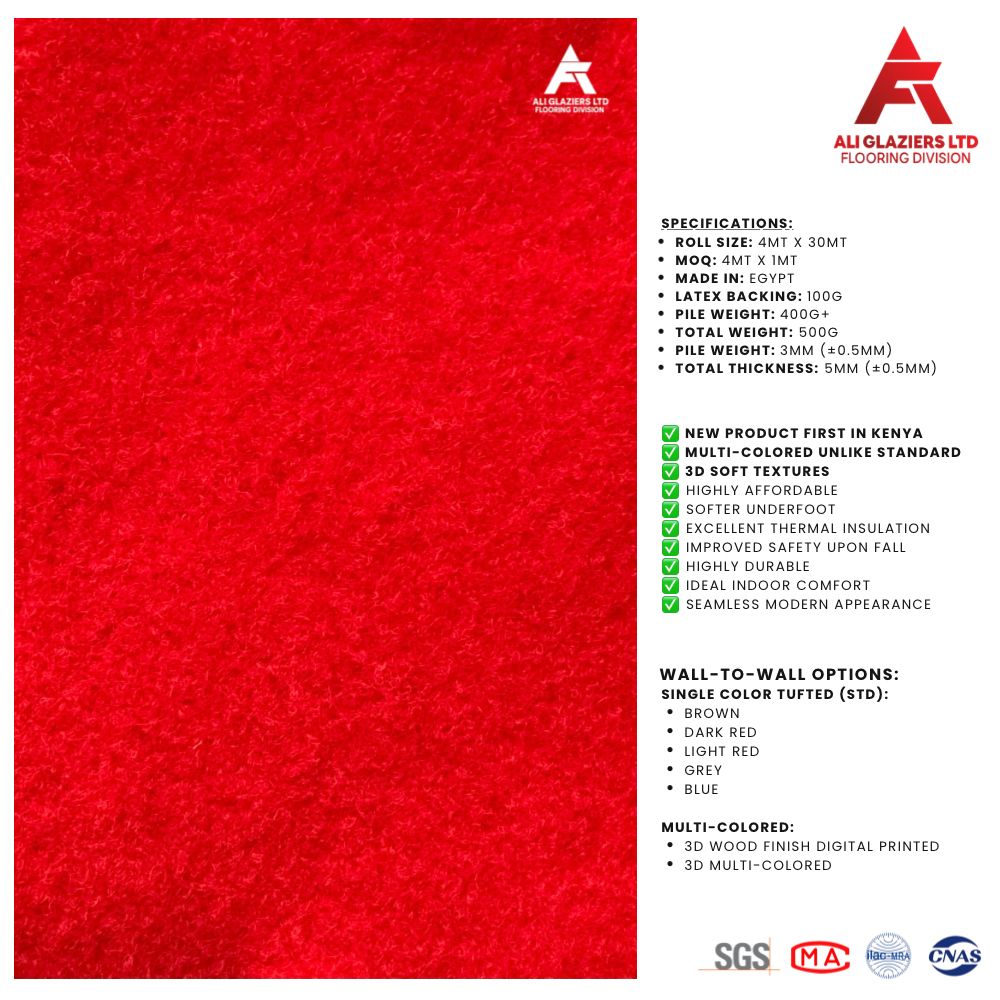
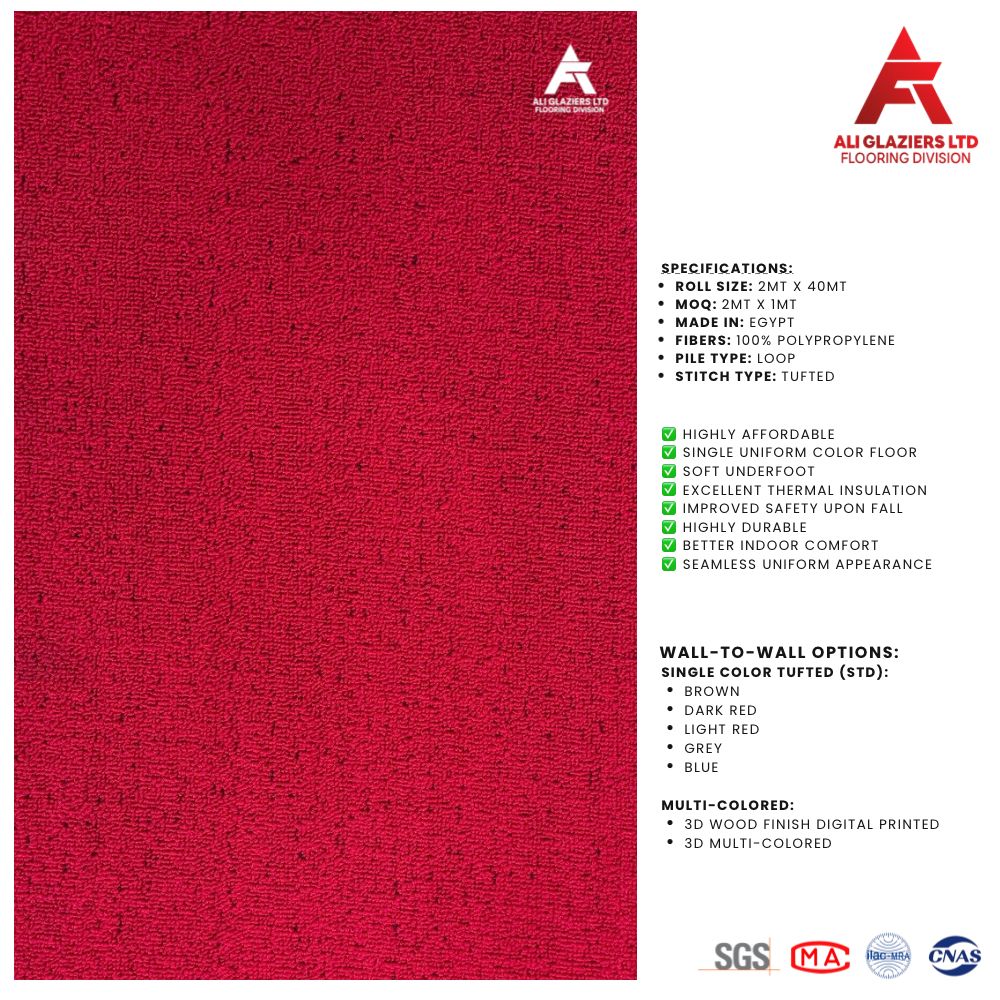
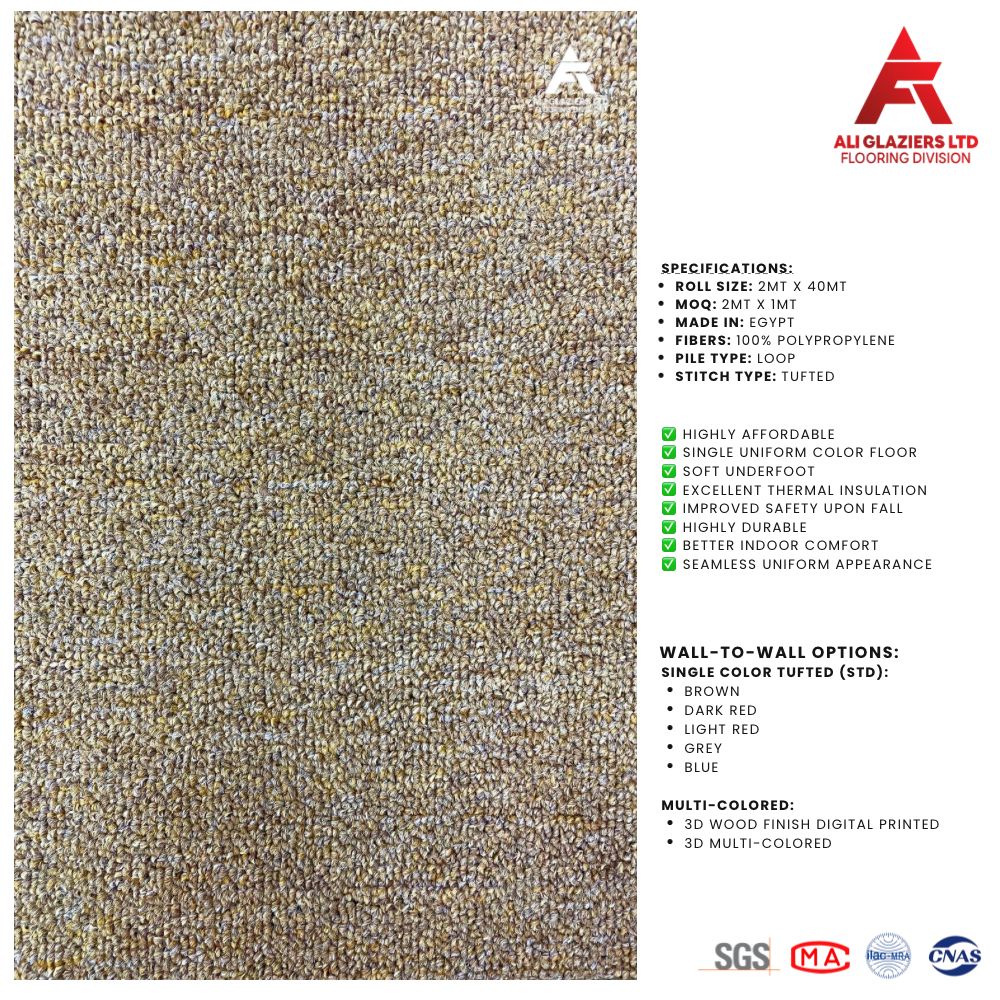
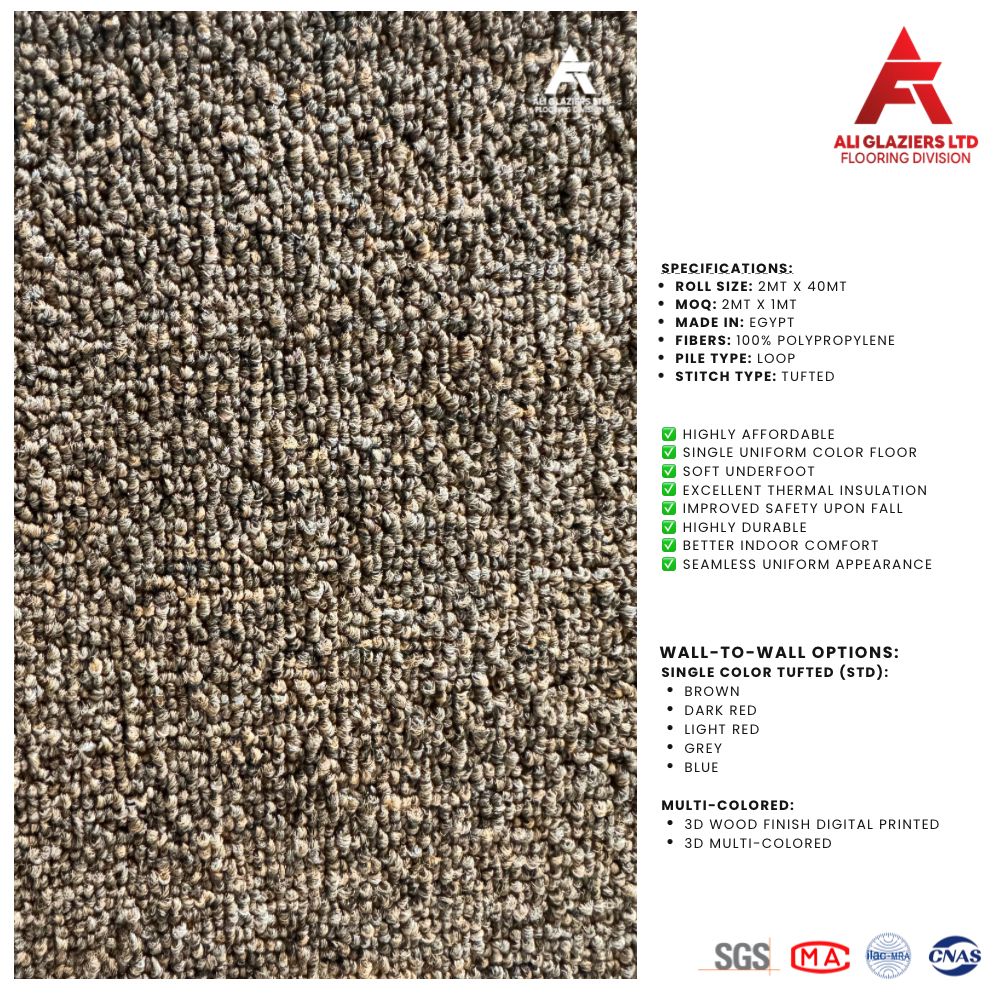
This guide assesses DIY suitability by floor type, including SPC flooring, vinyl flooring, laminated wood, Egyptian carpets and artificial turf. It also explains when professional floor fitting in Kenya is worth paying for and how a poor installation can become more expensive than the labour you originally hoped to save.
Is DIY Flooring in Kenya Really Cheaper?
DIY flooring can reduce labour costs, but the saving disappears quickly when mistakes damage flooring or require professional removal and reinstallation. The total cost should include tools, preparation materials, wastage, transport and the possibility of correcting mistakes.
A flooring quotation usually contains more than the visible floor covering. Depending on the material and project, costs can include:
- Flooring material
- Underlay or adhesive
- Skirting or finishing accessories
- Subfloor preparation
- Installation labour
- Cutting and fitting around corners
- Door trimming
- Waste and offcuts
- Transportation
- Removal of existing flooring
DIY primarily allows you to reduce the labour component. That can be worthwhile for a small bedroom, home office or simple renovation where the existing floor is already level and suitable.
However, labour is only one part of the installation process.
Suppose you purchase click-lock flooring and discover halfway through the project that the subfloor has uneven sections. Installing the new flooring over those areas may cause movement, gaps or premature damage. You may then need to remove the flooring, correct the subfloor and start again.
That means the original labour saving has created an additional cost.
The Hidden Cost of a DIY flooring Installation
A DIY installer may also need tools such as:
- Measuring tape
- Carpenter's square
- Utility knife
- Cutting saw
- Spacers
- Rubber mallet
- Tapping block
- Level
- Straight edge
- Adhesive equipment
- Knee protection
- Safety equipment
Some of these tools may already be available at home. Others may need to be purchased or hired.
There is also the cost of mistakes.
A professional installer works with the material regularly and can generally identify problems before they become expensive. An inexperienced installer may not notice an unsuitable subfloor until the flooring has already been installed.
For a broader look at flooring costs, see the guide to flooring prices in Kenya.
Which Flooring Is Best for DIY Installation?
Click-lock SPC and laminate flooring are among the more DIY-friendly options because their installation systems are relatively straightforward. Vinyl, carpets and artificial turf can also be installed without professional help in some situations, but the difficulty increases when the subfloor, room shape or finishing requirements become complicated.
There is no universal answer to whether flooring is DIY-friendly. The same product can be easy to install in one room and difficult in another.
Consider these factors before deciding:
- Is the subfloor level?
- Is the room rectangular or irregular?
- Does the flooring require adhesive?
- Are there moisture concerns?
- Will the flooring need to continue into other rooms?
- Are doors and skirting boards already installed?
- Do you have the necessary tools?
- Can you accurately measure and cut the material?
- Does the manufacturer require specific installation procedures?
- What will happen if you make a mistake?
Your answers can change the recommendation considerably.
SPC Flooring: One of the Better DIY Options
SPC flooring is one of the more DIY-friendly flooring options when it uses a click-lock system and the subfloor is properly prepared. However, the ease of connecting boards should not be confused with a complete installation skill set.
SPC, or Stone Plastic Composite flooring, is popular because it combines a rigid core with attractive decorative finishes and practical performance characteristics.
Many SPC products use a click-lock installation system. Individual planks are designed to connect together without traditional wet adhesive installation.
This makes the basic process easier to understand:
- Prepare the room.
- Measure the area.
- Plan the plank layout.
- Start from the correct position.
- Connect the planks.
- Cut pieces around obstacles.
- Maintain required expansion clearances.
- Complete the edges and transitions.
The biggest challenge is often preparation rather than clicking the planks together.
When SPC Can Work as a DIY Project
SPC can be suitable for DIY installation when:
- The room is relatively small.
- The subfloor is sound and reasonably level.
- The installer can measure accurately.
- The room has simple geometry.
- The product has a suitable click-lock system.
- No major moisture or structural problems exist.
- The installer is comfortable making straight and angled cuts.
For homeowners considering SPC, the SPC flooring heavy-duty flooring guide provides useful background on the material and its applications.
When Professional SPC Installation Is Better
Professional fitting becomes more advisable when:
- The subfloor requires substantial correction.
- Several rooms are being connected.
- There are unusual angles.
- The installation includes stairs.
- There are complicated doorways.
- Existing tiles need assessment.
- The room has significant moisture concerns.
- The project is commercial.
- You need a highly consistent finish.
The SPC flooring FAQ can also help answer common questions before you decide whether to install the material yourself.
Click-Lock DIY Flooring: What Beginners Often Get Wrong
Click-lock flooring is designed to simplify installation, but poor alignment, inadequate expansion gaps, damaged locking edges and unsuitable subfloors can still cause problems. The locking mechanism reduces installation complexity; it does not eliminate the need for careful workmanship.
One of the most common misconceptions about click-lock flooring is that the installation is simply a matter of joining pieces together.
In reality, the first row is extremely important.
If the first row is not straight, the error can carry across the entire room. By the time the installer reaches the opposite wall, the floor may appear increasingly misaligned.
Another problem is forcing planks together.
A damaged locking edge may prevent boards from fitting correctly later. Excessive force can also damage the connection system.
Common Click-Lock Mistakes
Watch for:
- Starting without measuring the final row
- Ignoring the manufacturer's installation instructions
- Installing over an unsuitable subfloor
- Failing to leave required expansion space
- Using damaged planks
- Making inaccurate cuts
- Forgetting transition profiles
- Installing around doors without proper planning
- Allowing debris underneath planks
- Mixing installation methods without checking compatibility
DIY is therefore most suitable for someone willing to treat the project as a technical installation rather than simply a weekend decorating exercise.
Vinyl Flooring: DIY Depends on the Product
Vinyl flooring can be DIY-friendly when the product is designed for simple installation, but sheet vinyl and adhesive-backed systems can be much less forgiving than click-lock products. Subfloor preparation and accurate cutting are particularly important.
Vinyl flooring comes in different forms, including:
- Vinyl planks
- Vinyl tiles
- Click vinyl
- Glue-down vinyl
- Sheet vinyl
These products should not all be treated as equally easy to install.
Click vinyl can be relatively accessible to a confident DIY installer. Glue-down vinyl requires much greater attention to adhesive coverage, working time, alignment and subfloor preparation.
Sheet vinyl presents another challenge because a large continuous piece must be measured and cut accurately. A mistake can result in visible gaps or excessive waste.
When DIY Vinyl Installation Makes Sense
DIY may be appropriate for:
- Small rooms
- Straightforward layouts
- Experienced DIY renovators
- Products with simple installation instructions
- Well-prepared subfloors
Professional installation becomes more attractive when the room has multiple corners, built-in cabinets, complicated edges or a large continuous sheet.
If you already have vinyl flooring, the guide to cleaning and maintaining vinyl floors in Kenya can help you protect the finished installation.
Laminated Wood Flooring: DIY-Friendly but Not Foolproof
Laminated wood flooring is another flooring type that can suit DIY installation, particularly when it uses a click system. The biggest risks are poor subfloor preparation, incorrect expansion allowances and badly planned cuts around doors and walls.
Laminate flooring is often chosen for bedrooms, living rooms, offices and other dry areas because it can create the appearance of timber without the installation requirements of traditional hardwood.
Click-lock laminate can be installed without specialist adhesive in many applications.
However, the floor still needs to be installed according to the product requirements.
The subfloor should be assessed before installation. Uneven areas can cause movement or stress in the joints. Moisture should also be considered, particularly where the flooring is being installed over concrete.
Another issue is acclimatisation.
Some flooring products have specific storage and acclimatisation requirements before installation. These should always be checked against the manufacturer's instructions rather than relying on general internet advice.
For a more detailed comparison, see laminate vs hardwood vs SPC flooring.
Laminated Wood Flooring in Nairobi: When to Hire a Professional
Professional fitting is particularly valuable for larger laminated wood projects where several rooms, complex layouts, stairs or high-end finishing are involved. A professional can also identify installation problems before they become visible after completion.
For a simple bedroom, an experienced DIY installer may manage laminate successfully.
A whole-house installation is different.
You may need to coordinate:
- Expansion gaps
- Door frames
- Room transitions
- Skirting
- Stair nosing
- Different floor heights
- Direction of plank installation
- Lighting and visual flow
The bigger the project, the more opportunities there are for small errors to become noticeable.
If your project is in Nairobi, the laminated wood flooring in Nairobi guide is useful when comparing installation and material considerations.
Egyptian Carpets: Leave Professional Fitting to the Experts
Carpet installation is generally less suitable for DIY than click-lock hard flooring because achieving a smooth, secure and professionally finished carpet requires accurate measurement, specialised tools and proper edge treatment.
Carpet can transform a bedroom, office, hotel or lounge, but the installation process is more technical than simply rolling out the material.
Depending on the carpet system, installation may involve:
- Accurate measurement
- Cutting
- Joining
- Edge preparation
- Adhesive or other fixing methods
- Seam management
- Stretching
- Trimming
- Finishing around doors and walls
A carpet that is poorly fitted can develop visible seams, wrinkles or loose edges.
These problems are not always easy to correct without removing sections of the installation.
For homeowners comparing styles, explore Egyptian carpets and runner flooring and the guide on how to choose Egyptian carpets.
Carpet Is Particularly Unsuitable for Casual DIY
Professional installation is strongly worth considering for:
- Wall-to-wall carpet
- Large offices
- Hotels
- Restaurants
- Corridors
- Staircases
- Rooms with multiple angles
- Projects requiring visible seams to be minimised
The larger the carpeted area, the more important accurate measurement and finishing become.
Artificial Turf: DIY for Small Areas, Professional for Large Installations
Artificial turf can be a practical DIY project for small balconies, compact gardens and simple decorative areas. Larger outdoor installations require more preparation because drainage, ground stability, joining and edge fixing affect the final result.
Artificial turf is increasingly used for:
- Balconies
- Terraces
- Gardens
- Play areas
- Outdoor lounges
- Commercial landscaping
- Decorative spaces
A small balcony can be relatively straightforward.
A larger garden requires more preparation.
The installer may need to remove unsuitable material, establish a stable base, address drainage, level the surface and secure the turf correctly.
Poor preparation can create:
- Uneven surfaces
- Water pooling
- Visible seams
- Raised edges
- Movement
- Premature wear
Before deciding, compare the practical differences between natural and synthetic surfaces in real grass vs artificial turf.
Can You Install Flooring Over Existing Tiles?
Sometimes, but the answer depends on the condition, level and suitability of the existing tiles and the flooring product being installed. Covering an unsuitable surface can transfer existing problems into the new floor.
This is an area where professional assessment can prevent unnecessary expense.
Existing tiles may have:
- Cracked sections
- Loose tiles
- Uneven joints
- Height differences
- Moisture problems
- Contamination
- Significant surface irregularities
Click-lock SPC may be suitable over certain existing tile surfaces when the conditions meet the product requirements.
But "flooring can go over tiles" should never be interpreted as "flooring can go over any tiles."
For more information, read can you install SPC flooring over old tiles?.
What Happens When DIY Floor Installation Goes Wrong?
The cost of a botched flooring installation can exceed the labour you originally intended to save because damaged material, removal, subfloor correction and professional reinstallation may all become necessary. The cheapest installation method is therefore not always the cheapest overall project.
Consider a hypothetical bedroom installation.
You purchase the flooring, attempt the installation yourself and discover that the first rows have gradually moved out of alignment.
You have two choices.
You can continue and accept the increasingly visible problem, or you can dismantle the installation and correct it.
If the locking edges have already been damaged, some material may no longer be reusable.
Now the project may require:
- Removing the incorrectly installed floor.
- Purchasing replacement material.
- Correcting the installation problem.
- Paying professional labour.
- Disposing of damaged material.
- Spending additional time completing the project.
The original labour saving has effectively disappeared.
Common Signs of a Botched Installation
Look for:
- Gaps between planks
- Uneven plank alignment
- Raised edges
- Buckling
- Excessive movement
- Visible adhesive
- Wrinkles in vinyl or carpet
- Poorly joined seams
- Uneven transitions
- Exposed edges
- Inconsistent spacing
Some problems are cosmetic. Others can affect the lifespan of the floor.
DIY vs Professional Floor Fitting: A Practical Comparison
DIY is most suitable for straightforward projects using easy-install products, while professional floor fitting is better for technically demanding installations, large spaces and projects where the finish must be consistent. The decision should be based on risk, not just labour cost.
| Flooring typeDIY suitabilityMain challengeProfessional fitting | |||
| Click-lock SPC | High for experienced DIYers | Subfloor and cutting | Recommended for complex projects |
| Click-lock laminate | High | Alignment and expansion | Useful for larger projects |
| Click vinyl | Moderate to high | Accurate fitting | Recommended for complex layouts |
| Glue-down vinyl | Moderate to low | Adhesive and subfloor | Recommended |
| Sheet vinyl | Low to moderate | Measuring and cutting | Recommended |
| Egyptian carpet | Low | Seams and finishing | Strongly recommended |
| Wall-to-wall carpet | Low | Stretching and edges | Strongly recommended |
| Artificial turf | Moderate | Base and drainage | Recommended for large areas |
This table is a starting point rather than a substitute for assessing the actual installation conditions.
When DIY Flooring Is a Good Idea
DIY flooring can be a sensible choice when the room is small, the product is easy to install, the subfloor is ready and the installer has the time and tools to work carefully. It is particularly attractive for simple click-lock installations.
DIY may be suitable if you:
- Enjoy practical projects.
- Have basic measuring and cutting skills.
- Have enough time.
- Can follow technical instructions.
- Have a simple room layout.
- Have a suitable subfloor.
- Are installing a click-lock product.
- Are comfortable accepting some learning time.
A small home office or bedroom can be a good first flooring project.
However, avoid making your first DIY flooring attempt on an expensive whole-house renovation.
Starting small allows you to develop the necessary skills while limiting the financial consequences of mistakes.
When Professional Floor Fitting Is the Better Choice
Professional installation becomes the stronger option when the project is large, expensive, technically complex or dependent on a flawless finish. It is also preferable when subfloor preparation, moisture management or specialised installation techniques are involved.
Choose professional floor fitting when:
- The subfloor needs repair.
- The room is unusually shaped.
- Several flooring types meet.
- You are installing wall-to-wall carpet.
- The flooring requires adhesive.
- The installation involves stairs.
- The project is commercial.
- The flooring is expensive.
- The room needs detailed finishing.
- You cannot afford significant installation errors.
Professionals can also save time.
For a business, this matters because flooring work may require temporarily closing an office, shop, restaurant or other commercial area.
The cost of professional installation should therefore be considered alongside the value of your time and the cost of disruption.
How to Prepare Before Hiring a Flooring Installer
A successful professional installation begins before the installer arrives. Confirm the flooring type, room measurements, subfloor condition, required accessories and installation expectations before work begins.
Ask the installer or flooring supplier:
- What preparation does the floor require?
- Is underlay needed?
- Does the product require acclimatisation?
- What happens to existing skirting?
- Are doors likely to require trimming?
- How will transitions be finished?
- What happens to furniture?
- Is removal of the existing floor included?
- Is waste included?
- What installation warranty is provided?
- Which areas require additional preparation?
Having these questions answered in advance reduces misunderstandings.
Choosing the Right Flooring for Your Room
The best flooring is not necessarily the cheapest or the easiest to install; it should match the room's moisture exposure, traffic, appearance requirements, maintenance expectations and installation conditions.
For example, a family living room may prioritise durability and appearance.
A busy office may prioritise wear resistance and easy maintenance.
A bedroom may place greater emphasis on warmth and comfort.
A balcony or outdoor area requires a completely different approach.
For design decisions, the guide to light vs dark flooring solutions can help you evaluate how floor colour affects the appearance of a room.
Likewise, modern living room ideas and matching flooring can help when coordinating flooring with walls, furniture and interior finishes.
DIY Flooring Mistakes That Are Most Expensive to Fix
The most expensive DIY flooring mistakes are usually not simple cutting errors; they are failures involving the subfloor, moisture, layout, installation method or damaged materials. These problems often require partial or complete removal of the finished floor.
The biggest risks include:
Installing Over an Unsuitable Subfloor
The new floor may look acceptable initially but develop movement or other problems later.
Ignoring Moisture
Moisture can be particularly damaging when the selected product is not designed for the conditions.
Incorrect Measurements
Ordering too little flooring can create delays, while excessive wastage increases the project cost.
Poor Layout Planning
Starting from one wall without calculating the final row can result in extremely narrow pieces at the opposite end.
Damaging Locking Systems
Forcing click-lock planks together can damage the connection.
Poor Finishing
The main floor may look good while doorways, edges and transitions reveal the quality of the installation.
Using the Wrong Adhesive
Adhesive-based products require the correct adhesive and application method.
These are precisely the areas where professional experience can make a difference.
Should You DIY or Hire a Professional?
If you are installing a simple click-lock SPC or laminate floor in a small, well-prepared room, DIY can be reasonable. For carpet, glue-down flooring, complex layouts, large commercial projects or problematic subfloors, professional floor fitting is usually the safer investment.
A useful decision rule is:
Choose DIY when the installation is simple and the consequences of a mistake are manageable. Choose professional installation when the material, room or subfloor makes mistakes expensive.
Do not let the phrase "DIY-friendly" make the decision for you.
A flooring product can be easy to connect but difficult to install correctly.
The distinction matters.
Why Professional Installation Can Be Part of the Flooring Investment
Professional installation is not simply an additional labour charge; it can protect the material investment by ensuring the flooring is installed according to its requirements. For expensive flooring and large projects, correct installation can be more valuable than the initial labour saving.
Flooring is a long-term purchase.
If you spend significant money on SPC, vinyl, laminate or carpet, the installation deserves the same attention as the material itself.
This is particularly important for:
- New homes
- High-end renovations
- Rental properties
- Offices
- Retail stores
- Hotels
- Restaurants
- Schools
- Hospitals
- Other commercial spaces
In commercial environments, appearance and durability matter because hundreds or thousands of people may interact with the floor over its service life.
Where to Find Flooring Solutions in Nairobi and Kenya
Ali Glaziers Flooring Solutions provides flooring materials for residential and commercial applications, including SPC flooring, vinyl flooring, laminated wood, Egyptian carpets and artificial turf. Professional advice can help you choose a product and installation approach that suits your project rather than simply choosing the easiest material to install.
Whether you are planning a small bedroom renovation or a larger commercial project, start by evaluating the room rather than choosing the flooring based solely on appearance.
Consider:
- Traffic
- Moisture
- Cleaning requirements
- Expected lifespan
- Budget
- Design
- Installation complexity
- Maintenance
- Availability of replacement material
You can browse the SPC flooring collection, explore vinyl flooring or compare Egyptian carpets before making a decision.
For outdoor projects, explore the artificial turf and grass range.
Final Verdict: DIY or Professional?
DIY flooring is not automatically a bad idea, but it is best reserved for products and rooms where installation is genuinely straightforward. Click-lock SPC and laminate can be suitable for capable DIY installers, while carpets, glue-down products and complex installations are generally better handled by professionals.
The biggest mistake is focusing only on the labour cost.
A successful flooring project involves the material, preparation, installation and finishing working together.
If you have the right skills, a simple room and a suitable click-lock product, DIY can save money and provide a satisfying result.
If the project involves expensive flooring, a complicated room, substantial subfloor preparation or a demanding finish, professional floor fitting may provide better value.
In other words, DIY is not about whether you can put flooring down. It is about whether you can install it correctly, efficiently and without creating a more expensive problem later.
For expert advice on flooring materials, installation and suitable options for your space, contact Ali Glaziers Flooring Solutions. The team can help homeowners, contractors, interior designers, businesses and developers choose practical and attractive flooring solutions for projects in Nairobi and across Kenya.
Shop Flooring Solutions
Explore the Ali Glaziers Flooring Solutions online shop for flooring materials and accessories.
You can also contact Ali Glaziers Flooring Solutions to discuss your flooring requirements and installation needs.
Why choose Ali Glaziers Flooring Solutions?
- Expert flooring advice and installation support
- Wide selection of SPC, vinyl, laminated wood and carpets
- Egyptian carpets and runners for residential and commercial spaces
- Artificial turf for outdoor and decorative applications
- Flooring solutions for homes, offices, retail and hospitality spaces
- Professional guidance on material selection and installation
Ali Glaziers Flooring Solutions
Funzi Road Branch, End of Funzi Road, Industrial Area, Ali Glaziers LTD Building, Nairobi, Kenya
Call / WhatsApp: +254 (0) 716 259 682, +254 (0) 722 522 452
Email: info@aliglaziers.com
Shop Online: flooring.aliglaziers.com/shop
Request a Quote: Contact Ali Glaziers Flooring Solutions