Discover what determines artificial turf prices in Kenya. Learn how pile height, density, backing quality, installation and measurements affect your cost per square metre.
Artificial Turf Grass Price has become a practical flooring and landscaping option for homeowners, property developers, schools, hotels and businesses across Kenya. It provides a consistently green appearance without the regular mowing, watering and weeding required by natural grass. However, before purchasing, one important question comes up: what is the turf grass price in Kenya per square metre?
The cost of artificial turf depends on several factors, including pile height, fibre density, backing quality, material durability and the intended application. Installation requirements also affect the total project budget. A small balcony, for example, may need a different type of artificial grass from a residential garden, children's play area or commercial landscaping project.
At Ali Glaziers Flooring Solutions, customers can explore different artificial turf options for residential and commercial applications. Understanding the available specifications makes it easier to select suitable grass, calculate the required quantity and request an accurate quotation.
Shop Artificial Turf Grass
View all Artificial Turf Grass


This guide explains what determines artificial grass prices in Kenya, how to calculate the amount you need and what to consider before ordering.
Turf Grass Price in Kenya: What Changes the Cost per Square Metre
Artificial Turf Grass Price is commonly sold by the square metre. The price varies depending on the product specification, quality and intended use.
Shorter artificial grass is generally suitable for decorative applications and areas with lighter foot traffic. Taller, denser options can provide a fuller appearance and a softer surface underfoot.
The following specifications are useful when comparing products:
| Turf specificationTypical application | |
| 15–20 mm | Balconies, decorative spaces and light-use areas |
| 25 mm | Residential gardens, walkways and general landscaping |
| 30–35 mm | Gardens, terraces and outdoor recreational spaces |
| 40 mm | Fuller residential landscaping and premium decorative applications |
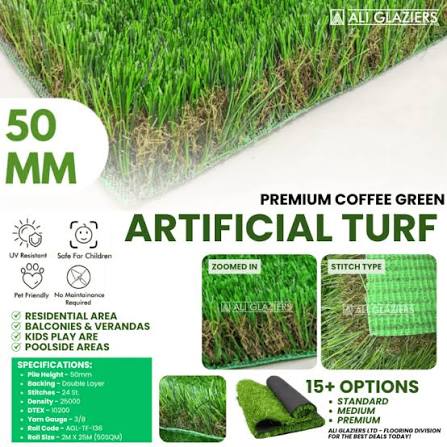
| 50 mm | Selected premium landscaping and specialised applications |
These are general application guidelines, not fixed product classifications. The right choice depends on fibre construction, density, backing and expected use.
When comparing the turf grass price in Kenya, check whether the quotation covers the grass material only or includes installation, transportation and ground preparation.
A low material price does not necessarily mean a lower completed project cost.
6 Factors That Affect Turf Grass Price in Kenya
Artificial Grass Pile Height
Pile height refers to the length of the artificial grass fibres measured from the backing to the fibre tips.
It is one of the most visible differences between artificial turf products.
Shorter options, such as 15 mm, 20 mm and 25 mm, create a neat, closely trimmed appearance. They can work well on balconies, walkways and decorative outdoor spaces.
Longer options, including 30 mm, 35 mm, 40 mm and 50 mm, create a fuller appearance. They are often considered for gardens, landscaped outdoor areas and selected recreational applications.
However, taller grass is not automatically better. The intended use, density and quality of construction should also influence your decision.
For a detailed comparison, read our existing guide on 50mm vs 25mm artificial grass: choosing the best turf thickness in Kenya.
Fibre Density and Stitch Rate
Density describes how closely the artificial grass fibres are arranged across the backing.
A denser product generally has more fibres covering the same surface area. This can create a fuller appearance and improve how the grass looks when viewed from different angles.
Stitch rate is another important specification. It describes how frequently the fibres are stitched into the backing.
When comparing artificial grass, consider:
- Number of stitches per unit area.
- Fibre thickness and construction.
- Overall coverage and appearance.
- How well the fibres recover after being compressed.
- Whether the product is suitable for the expected foot traffic.
Two artificial grass products with the same pile height may have noticeably different appearances and prices because their density and construction differ.
Backing Quality
The backing is the material that holds the artificial grass fibres in place.
It supports the structure of the turf and contributes to its stability during installation and everyday use.
Quality backing is important because artificial grass may be exposed to sunlight, moisture, temperature changes and regular movement.
Before purchasing, ask about:
- Primary and secondary backing materials.
- Fibre retention and construction.
- Drainage openings.
- Resistance to moisture and outdoor conditions.
- Suitability for the proposed installation surface.
A product with suitable backing can provide better long-term performance than one selected on appearance alone.
Fibre Material and UV Resistance
Artificial Turf Grass Price fibres are commonly manufactured using synthetic materials such as polyethylene, polypropylene or nylon.
Each material has different characteristics relating to softness, resilience and durability.
Polyethylene is commonly used for landscaping turf because it can provide a softer, natural-looking surface. Polypropylene is used in different turf constructions, while nylon can offer greater resilience in selected applications.
UV resistance is particularly important in Kenya because outdoor turf is regularly exposed to sunlight.
Ask whether the artificial grass has UV protection and whether the manufacturer provides information about expected performance under outdoor conditions.
The quality of the fibres can influence the overall turf grass price in Kenya, particularly when comparing economy and premium products.
Colour, Texture and Appearance
Artificial Turf Grass Price is available in different shades of green, fibre shapes and surface textures.
Some products have a single green shade, while others combine different green and brown tones to imitate natural grass.
The appearance you choose can affect the product specification and price.
For example, a premium decorative turf may have multiple fibre colours and a fuller construction. An economy option may have a simpler appearance suitable for basic landscaping.
When possible, compare physical samples rather than relying entirely on online photographs.
Quantity and Project Size
The total quantity required affects the overall cost of an artificial grass project.
A small balcony may require only a few square metres, while a residential garden, school compound or commercial landscaping project may require a much larger order.
Larger projects may also require additional materials, specialised installation and more extensive preparation.
When requesting a quotation, provide accurate measurements and explain whether the space has an existing concrete surface, soil or another flooring material.
Artificial Turf Prices: 25mm vs 50mm
One common purchasing decision is whether to choose 25 mm or 50 mm artificial grass.
Both options can be useful, but they serve different aesthetic and practical requirements.
| Feature25 mm artificial turf50 mm artificial turf | ||
| Appearance | Neat and closely trimmed | Fuller and longer |
| General feel | Relatively firm | Generally softer, depending on density |
| Suitable spaces | Balconies, walkways and gardens | Selected premium landscaping |
| Maintenance | Easy to brush and clean | May need more frequent brushing |
| Budget | Often an economical option | Can cost more depending on construction |
| Best consideration | Practical everyday use | Fuller decorative appearance |
A 25 mm product can be a good choice where a neat finish and practical budget are priorities.
A 50 mm product may be more appropriate where the desired result is a fuller, longer grass appearance.
However, compare density, backing and fibre quality before making a final decision.
How to Calculate the Artificial Grass You Need
Before asking about the turf grass price in Kenya, establish the size of your installation area.
Artificial grass is generally sold per square metre, making accurate measurements important.
Use this simple formula:
Area = Length × Width
For example, if your garden measures 6 metres long and 4 metres wide:
6 × 4 = 24 square metres.
You will need approximately 24 square metres of artificial grass before allowing for cutting, joins and edges.
For a more practical order estimate, allow an additional amount depending on the shape of the space and the installation layout.
Measuring Different Spaces
Rectangular gardens
Measure the longest length and widest width, then multiply the two measurements.
Balconies and terraces
Measure the usable floor area, including corners and sections that may need separate cuts.
Irregularly shaped gardens
Divide the space into smaller rectangles or squares, calculate each section and add the measurements together.
Large commercial spaces
For schools, hotels, playgrounds and recreational areas, arrange a proper site assessment before ordering materials.
Accurate measurements help minimise wastage and avoid delays caused by ordering insufficient turf.
Does Artificial Turf Installation Affect the Price?
Yes. Installation is an important part of the overall artificial grass project budget.
The cost of laying artificial grass depends on the condition of the existing surface, the size of the area and the preparation required.
Installation on Concrete
Installing artificial grass on an existing concrete surface may require less groundwork than installing it directly over soil.
The installer should check that the concrete is stable, reasonably level and has suitable drainage.
The grass may then be cut to size and secured using appropriate adhesives or fixing methods.
Installation on Soil
Installing artificial grass over soil usually requires more preparation.
The process may involve:
- Removing existing grass, weeds and loose vegetation.
- Excavating or levelling the surface where necessary.
- Preparing and compacting a suitable base.
- Providing appropriate drainage.
- Rolling out the artificial turf.
- Cutting and joining the sections.
- Securing the edges and finishing the installation.
The preparation requirements will depend on the soil condition, drainage and intended use of the area.
Joining and Finishing
Where the installation requires multiple turf sections, the joins should be properly aligned and secured.
Poorly finished seams can affect the appearance and durability of the installation.
Edges should also be secured appropriately to prevent lifting or movement.
When requesting the artificial grass price in Kenya, ask whether the quotation includes these installation activities.
Where Can You Use Artificial Grass in Kenya?
Artificial turf is suitable for various residential and commercial applications.
Residential Gardens
Artificial grass can create an attractive outdoor space without the regular mowing and watering associated with natural lawns.
It is useful for homeowners who want a consistently green garden with simpler routine maintenance.
Balconies and Rooftop Terraces
Apartment balconies and rooftop terraces can benefit from artificial grass because it adds a green appearance to otherwise hard surfaces.
Before installation, check drainage, waterproofing requirements and the suitability of the existing floor.
Schools and Children's Play Areas
Schools and recreational facilities may use selected artificial turf products to improve the appearance and usability of outdoor spaces.
The product should be chosen according to expected activity, impact requirements and applicable safety standards.
Hotels, Restaurants and Commercial Properties
Hotels, restaurants, offices and commercial developments can use artificial grass for decorative landscaping, outdoor seating areas and selected walkways.
The specification should reflect the level of foot traffic and maintenance requirements.
Sports and Recreational Areas
Artificial turf is also available for specialised sporting applications.
However, landscaping grass should not automatically be treated as suitable for football pitches or professional sports surfaces. Sports installations require products designed for the specific activity, together with suitable base construction and performance specifications.
Artificial Grass vs Natural Grass: Which Is More Affordable?
The initial purchase and installation costs of artificial grass can be higher than establishing a natural lawn.
However, the long-term maintenance requirements are different.
| ConsiderationArtificial grassNatural grass | ||
| Watering | No routine lawn watering | Regular watering may be necessary |
| Mowing | Not required | Requires periodic mowing |
| Weeding | Occasional cleaning and weed control around edges | Regular weed management |
| Fertiliser | Not required for the turf itself | May require fertilising |
| Appearance | Consistently green, depending on product quality | Changes with weather and maintenance |
| Initial installation | Requires turf and suitable preparation | Requires soil preparation and planting |
| Drainage | Depends on turf and base construction | Depends on soil and lawn condition |
Artificial grass can be a practical option for people looking to reduce regular lawn maintenance.
However, it still needs cleaning, occasional brushing and proper drainage. It can also become hot under direct sunlight.
The best choice depends on your budget, available water, intended use and preferred outdoor appearance.
What to Check Before Buying Artificial Turf in Kenya
Before placing an order, consider the following:
- Pile height: Select a height that suits the space and intended use.
- Density: Compare the fullness and construction of different products.
- Backing: Check the quality and drainage characteristics.
- UV protection: Ask about suitability for prolonged outdoor exposure.
- Colour: Compare samples to find a suitable shade.
- Quantity: Measure the space accurately and allow for cutting.
- Installation: Establish whether professional fitting is included.
- Delivery: Confirm transportation arrangements and charges.
- Availability: Check the current stock and specifications.
- Warranty: Ask about applicable product warranties and their conditions.
A proper quotation should separate the cost of the grass from installation, preparation and delivery where applicable.
This makes it easier to compare suppliers and understand the full project budget.
Where to Buy Artificial Turf in Kenya
If you are searching for artificial grass in Kenya, Ali Glaziers Flooring Solutions offers artificial turf options for residential, commercial and landscaping applications.
The available range includes different pile heights and product specifications for customers looking to improve gardens, balconies, walkways, recreational spaces and other outdoor areas.
Whether you need a practical 25 mm option or a fuller premium turf, it is important to select a product that matches the requirements of your project.
Explore the artificial turf and flooring solutions at Ali Glaziers to review available products.
You can also view the artificial grass product listing and enquire about current specifications, stock and pricing.
When requesting a quotation, share your approximate measurements, installation location and preferred pile height. This helps the team recommend a suitable option and establish the likely project cost.
Get a Quote for Artificial Turf in Kenya
Choosing artificial grass involves more than comparing the price per square metre. The pile height, fibre density, backing quality, installation surface and total area all influence the final investment.
Before purchasing, measure your space and compare the available specifications. Ask for a quotation that clearly separates material costs from installation, preparation and delivery.
Ali Glaziers Flooring Solutions can help you explore artificial turf options for your residential or commercial project.
Visit Ali Glaziers Flooring Solutions to explore the range and enquire about the current turf grass price in Kenya.
Make an informed choice and give your outdoor space a neat, green finish with artificial turf suited to your needs.
Frequently Asked Questions About Turf Grass Price in Kenya
What is the turf grass price in Kenya per square metre?
The turf grass price in Kenya depends on pile height, fibre density, backing quality and overall product construction. Installation, delivery and ground preparation may also affect the total cost. Contact the supplier for current product prices and stock availability.
What is the price difference between 25 mm and 50 mm artificial grass?
The difference depends on the product's construction, density and quality. A 50 mm product may cost more than a standard 25 mm option, but pile height alone does not determine price. Compare the complete specifications before purchasing.
How much artificial grass do I need for a 20-square-metre garden?
A 20-square-metre garden requires approximately 20 square metres of turf before allowing for cutting, joins and edges. The final quantity depends on the garden's shape and installation layout.
Is artificial grass sold per square metre in Kenya?
Yes. Artificial grass is commonly sold per square metre. Some suppliers also sell it in rolls or specify minimum order dimensions. Confirm the selling unit and minimum order quantity before purchasing.
Which artificial grass thickness is best for a home garden?
Options around 25 mm to 40 mm can work for residential gardens, depending on the desired appearance, softness and expected use. Consider density, fibre quality and backing alongside pile height.
Is 50 mm artificial grass better than 25 mm?
Not necessarily. A 50 mm product creates a longer, fuller appearance, while 25 mm turf provides a shorter and neater finish. The best option depends on your preferences and the intended application.
Can artificial grass be installed directly on concrete?
Yes, provided the concrete surface is stable and suitable for installation. Drainage, surface condition, adhesive selection and edge finishing should be considered before fitting.
Does artificial grass require maintenance?
Artificial grass requires less maintenance than a natural lawn, but it is not maintenance-free. Occasional brushing, removing leaves and debris, and cleaning the surface help maintain its appearance.
Does artificial grass fade in the Kenyan sun?
Artificial grass can experience colour deterioration over time, depending on fibre quality and exposure. Choose a product with suitable UV protection and ask the supplier about its outdoor performance and warranty.
Where can I buy artificial grass in Kenya?
You can explore artificial turf options through Ali Glaziers Flooring Solutions. Review the available products and enquire about current prices, specifications, stock and delivery arrangements before placing an order.