Understand R9 to R13 anti-slip flooring ratings, including R11 flooring, and learn how to specify slip-resistant floors for Kenya.
Choosing commercial Anti Slip Rating Flooring is about much more than colour, texture and price. In areas where floors may become wet, contaminated or heavily trafficked, slip resistance should be part of the specification from the beginning.
Terms such as R9, R10, R11, R12 and R13 frequently appear in flooring specifications, particularly for commercial, hospitality, industrial and public environments. These ratings are associated with a recognised slip-resistance test method and are intended to help designers and buyers compare flooring products for particular applications.
However, an R rating should not be treated as a simple "safe" or "unsafe" label. The right floor depends on the conditions in which it will be used. A dry office corridor has different requirements from a hotel entrance exposed to rain, while a commercial kitchen presents different risks again because the floor may be contaminated by water, grease or food residues.
Shop Vinyl Flooring
View all Vinyl Flooring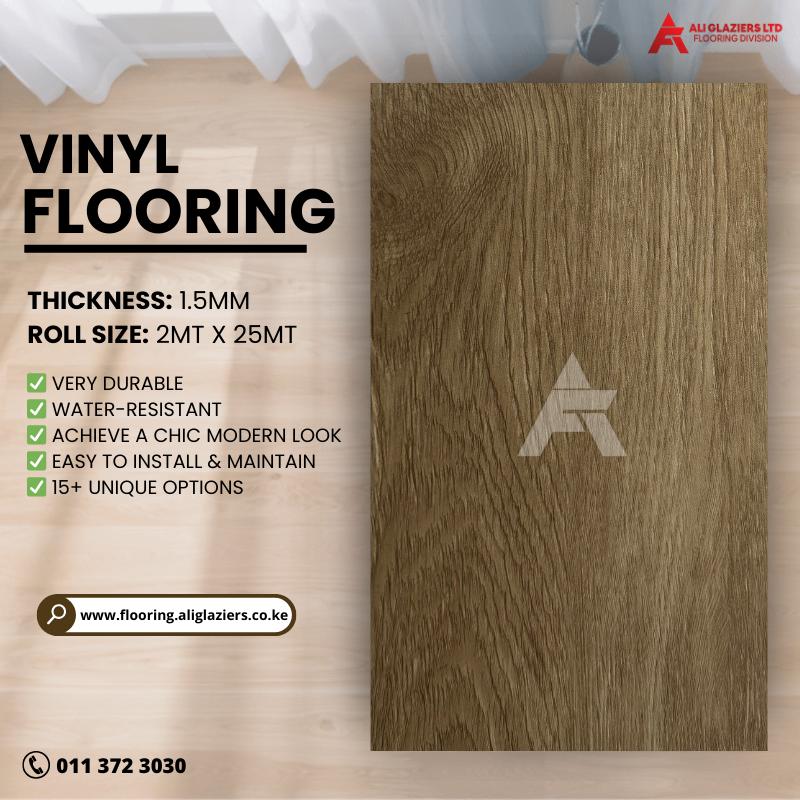
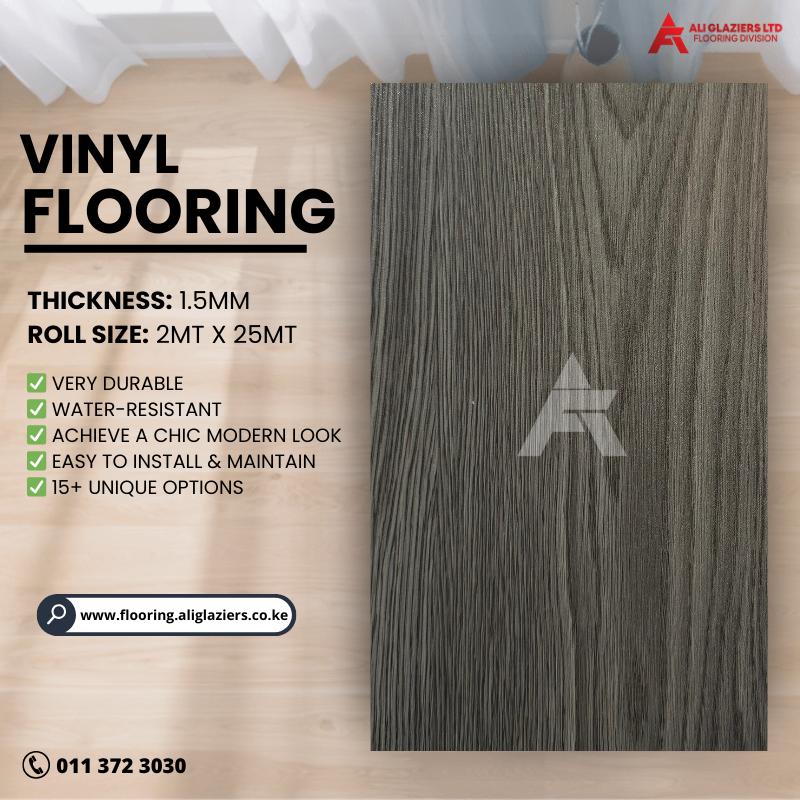
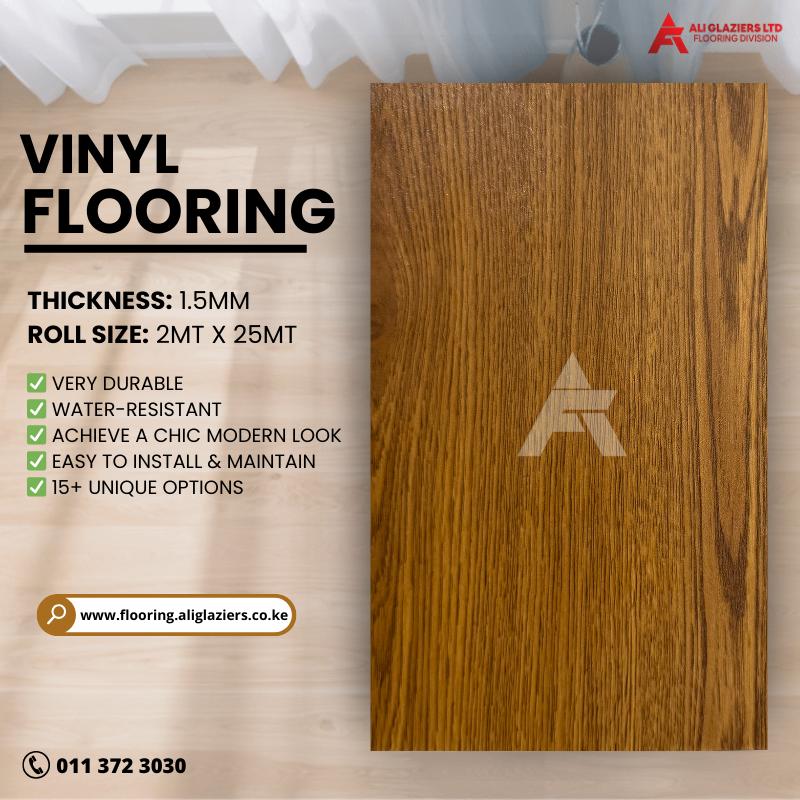
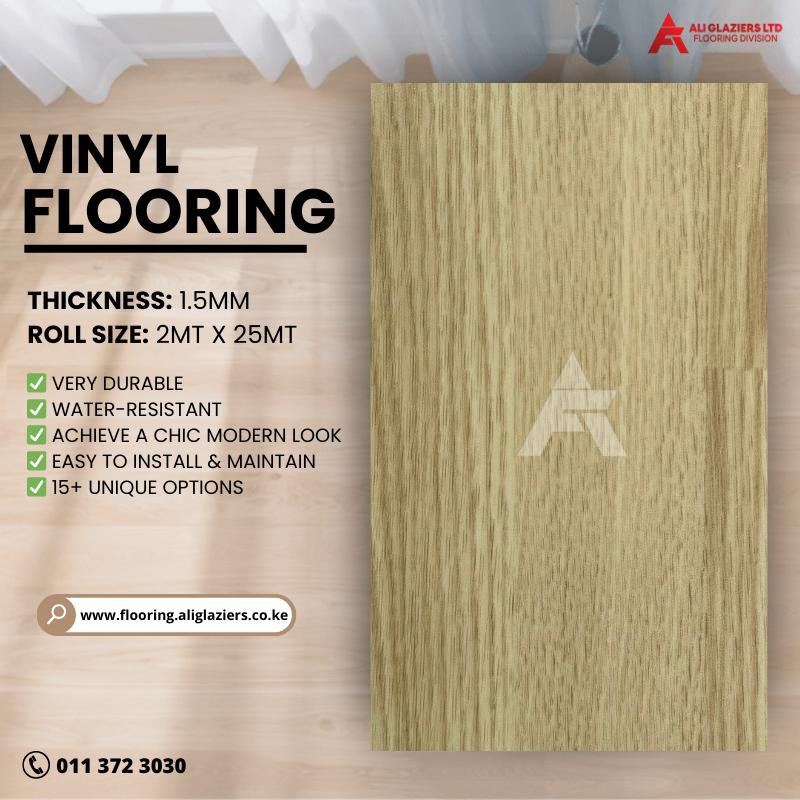
For projects in Kenya, the climate, building use, cleaning practices, drainage, footwear, pedestrian traffic and maintenance regime can all influence flooring selection.
This guide explains what anti-slip R ratings mean, how R9 to R13 are generally understood, where R11 flooring may be appropriate, and what architects, contractors, developers, facilities managers and homeowners should consider when specifying slip-resistant flooring.
What Is an Anti Slip Rating Flooring?
An R rating is a classification associated with slip resistance measured using a ramp test under defined conditions. R9 represents a lower classification than R10, R11, R12 and R13, with higher classifications generally indicating greater slip resistance under the test conditions.
The R classification is commonly encountered in European flooring specifications and product technical documentation.
The commonly referenced classes are:
- R9
- R10
- R11
- R12
- R13
The rating does not mean that a product is completely slip-proof.
Instead, it provides a standardised classification based on specified test conditions.
This distinction is important because real-world slip risk can depend on factors beyond the flooring itself.
For example:
- Water may be present.
- Oil or grease may contaminate the surface.
- Dirt may accumulate.
- Cleaning chemicals may affect surface conditions.
- Footwear may vary.
- Drainage may be poor.
- The slope of the floor may change.
- Pedestrian traffic may be heavy.
Consequently, choosing flooring based only on the R number is not enough for a complete safety assessment.
What Do R9 to R13 Mean?
R9 to R13 represent progressively higher slip-resistance classifications within the relevant ramp-test system. R9 is generally associated with lower-risk dry applications, while higher ratings such as R11, R12 and R13 are considered for areas where greater slip resistance is needed.
A simplified guide is:
| RatingGeneral application tendency | |
| R9 | Lower-risk internal areas, generally dry |
| R10 | Areas with some increased slip exposure |
| R11 | Areas with greater wet or traffic-related risk |
| R12 | Higher-risk areas with significant contamination or moisture |
| R13 | Very high-risk environments requiring particularly strong slip resistance |
These descriptions are useful for preliminary product selection, but they should not replace a project-specific risk assessment.
An architect or safety consultant may specify a particular rating based on the use of the space and the conditions expected during normal operation.
What Is R9 Flooring?
R9 is commonly considered for relatively low-risk areas where floors are predominantly dry and contamination is limited. Typical applications can include general commercial interiors where significant wet-floor exposure is not expected.
Examples may include:
- Dry office areas
- General corridors
- Retail interiors
- Reception areas
- Meeting rooms
- Some residential applications
However, an entrance exposed to rain may require a different approach even if the interior space itself is normally dry.
In Nairobi and other parts of Kenya, rainwater can be carried into commercial buildings by customers, employees and visitors.
This makes entrance areas a particularly important consideration.
A floor that is perfectly adequate in a dry office may not provide the same practical level of safety at a doorway where water accumulates during rainy weather.
What Is R10 Flooring?
R10 provides a higher slip-resistance classification than R9 and may be considered where there is a moderate increase in slip risk. It can be suitable for certain commercial areas where occasional moisture or contamination is expected.
Potential applications can include:
- Commercial corridors
- Retail environments
- Building entrances with controlled exposure
- General hospitality areas
- Utility areas
- Some public circulation spaces
The exact suitability depends on the product, environment and project specification.
For example, an R10 floor may be reasonable for an indoor commercial area that occasionally receives moisture but may not be the right choice for a commercial kitchen where grease and liquids are routinely present.
What Is R11 Flooring?
R11 flooring provides a higher slip-resistance classification than R9 and R10 and is commonly considered for areas where moisture, contamination or higher pedestrian risk is expected. It is often relevant to hospitality, commercial and service environments.
R11 flooring is frequently discussed for areas such as:
- Hotel entrances
- Commercial kitchens, where the product is specifically suitable
- Wet service areas
- Outdoor-covered areas
- Swimming-pool surrounds, depending on the full specification
- Busy commercial spaces
- Areas exposed to rain or water
However, R11 does not automatically make a product suitable for every wet environment.
A commercial kitchen, for example, can involve grease and oils that create a very different slip risk from clean water.
The product should therefore be selected according to the actual contamination conditions.
R12 Flooring: When Is More Slip Resistance Needed?
R12 is a higher slip-resistance classification intended for environments where the risk is greater than typical R11 applications. It may be considered for areas exposed to substantial moisture or contamination, subject to the project's risk assessment and flooring manufacturer's recommendations.
Potential applications can include:
- Food-production areas
- Certain commercial kitchens
- Wet industrial areas
- Areas with substantial contamination
- Some loading or service environments
- Heavy-duty commercial spaces
The higher rating can provide useful performance characteristics, but there may be trade-offs.
A highly textured surface can sometimes:
- Be more difficult to clean
- Trap dirt
- Increase maintenance requirements
- Affect wheeled traffic
- Feel less comfortable under certain footwear
- Require more frequent cleaning
Therefore, "higher R rating" should not automatically mean "better floor."
The objective is to choose an appropriate floor for the specific operating environment.
What Is R13 Flooring?
R13 is the highest of the commonly referenced R9-R13 classifications and is associated with very high slip-resistance requirements under the applicable test conditions. It is generally considered for demanding environments where contamination and slip risk are particularly significant.
Potential applications may include specialist industrial environments and areas where substantial wet or contaminating substances are present.
R13 should not be specified simply because it is the highest number.
A floor needs to balance:
- Slip resistance
- Cleanability
- Durability
- Pedestrian traffic
- Equipment movement
- Maintenance
- Drainage
- Hygiene
- Comfort
For a normal office, an R13 floor could be unnecessary and potentially inconvenient.
For a specialist industrial environment, however, a much higher level of slip resistance may be appropriate.
Which R Rating Is Best for Commercial Flooring?
There is no single R rating that is best for every commercial building. The appropriate rating depends on the expected wetness, contamination, traffic, slope, cleaning practices and activities taking place in the space.
Consider these examples.
Office
A typical dry office may not require a highly textured R12 or R13 surface.
Retail Shop
A retail shop may have moderate slip exposure, particularly around entrances, washrooms and cleaning areas.
Hotel
Hotels have multiple environments, from dry bedrooms to wet pool areas and food-service spaces.
Restaurant
Dining areas and kitchens have different slip risks. Kitchen flooring may need greater resistance to water and grease.
School
Entrances, washrooms, kitchens and external walkways may require different flooring approaches.
Hospital
Healthcare facilities need to balance slip resistance with hygiene, cleaning, infection-control requirements and movement of wheeled equipment.
This illustrates why specifying one R rating throughout an entire building can be inappropriate.
Anti Slip Rating Flooring for Wet Areas
Wet areas require more careful flooring selection because water can reduce traction between footwear and the floor surface. The flooring should be selected alongside drainage, falls, cleaning procedures and the expected type of contamination.
Common wet areas include:
- Bathrooms
- Shower areas
- Pool surrounds
- Hotel wet zones
- Commercial kitchens
- Laundry areas
- Changing rooms
- Outdoor entrances
- Service areas
Water is not the only concern.
In a kitchen, grease may create a greater hazard than water alone.
In an outdoor entrance, mud and rainwater may be involved.
In a bathroom, soap residues may affect surface conditions.
Therefore, the product's documented performance should be considered in relation to the actual environment.
R11 Flooring for Commercial Kitchens
Commercial kitchens require flooring selected for wet, greasy and heavily trafficked conditions, not simply a high R number. R11 may be appropriate for some applications, but the exact flooring system should be assessed against the kitchen's contamination, drainage, cleaning and operational requirements.
Commercial kitchens can be demanding environments.
Floors may be exposed to:
- Water
- Cooking oils
- Grease
- Food residues
- Cleaning chemicals
- Heavy equipment
- Frequent foot traffic
- Temperature changes
A suitable kitchen floor may therefore need to combine:
- Slip resistance
- Durability
- Easy cleaning
- Chemical resistance
- Moisture resistance
- Appropriate drainage
- Hygienic surface characteristics
This is why product selection should involve the flooring supplier, architect or relevant technical professional rather than relying on a generic "R11 recommended for kitchens" statement.
Anti Slip Rating Flooring for Hotel and Restaurant Areas
Hotels and restaurants contain multiple risk zones, so the appropriate flooring can change from one area to another. Entrance areas, dining spaces, kitchens, washrooms, pool surrounds and service corridors should not necessarily receive the same flooring specification.
A hotel entrance may need a floor that handles:
- Rainwater
- Dirt
- High pedestrian traffic
- Luggage wheels
- Frequent cleaning
A restaurant dining room may place greater emphasis on:
- Appearance
- Comfort
- Stain resistance
- Cleanability
- Moderate slip resistance
A kitchen has different requirements.
A pool area has different requirements again.
This zone-by-zone approach is more useful than simply selecting one flooring product for the whole building.
Anti Slip Rating Flooring in Kenya: Why Climate Matters
Kenyan weather can influence slip risk, particularly at entrances, outdoor walkways and semi-open areas where rainwater can be brought onto the floor. Flooring selection should therefore consider the local environment as well as the building's internal activities.
In Nairobi and other parts of Kenya, commercial buildings can experience periods of heavy rainfall.
Rainwater may enter through:
- Main entrances
- Parking connections
- Loading areas
- Balconies
- Covered walkways
- Outdoor stairs
- Pool areas
This means flooring that performs adequately under dry conditions may need additional consideration at building thresholds.
Good design can reduce the problem through:
- Entrance mats
- Canopies
- Proper drainage
- Suitable floor gradients
- Drainage channels
- Appropriate surface selection
- Regular cleaning
Flooring is therefore only one part of slip-risk management.
R Ratings and Floor Slope
Floor slope can affect slip risk because liquids may move differently across a level or inclined surface. The R rating should therefore be considered alongside the gradient and drainage design rather than treated as an isolated specification.
A floor that allows water to remain on its surface can create a different risk from one that drains efficiently.
This is particularly relevant in:
- Showers
- Wet rooms
- Commercial kitchens
- Pool decks
- Outdoor walkways
- Service areas
A high-slip-resistance surface does not eliminate the need for effective drainage.
R Rating vs Other Slip-Resistance Tests
R ratings are only one method of evaluating flooring slip resistance. Other tests and classifications may be relevant depending on the product, jurisdiction and project specification, so procurement teams should not assume that an R rating is the only required measure.
This matters when working with architects, international consultants or multinational clients.
A project specification might reference:
- Ramp-test classifications
- Pendulum test results
- Wet slip resistance
- Barefoot slip testing
- Manufacturer-specific performance data
- Local standards
- Client standards
Different tests measure different aspects of slip performance.
Therefore, if a consultant specifies a particular test method, suppliers should provide evidence using the requested method rather than substituting another classification without approval.
What Should a Flooring Specification Include?
A professional flooring specification should identify the required slip-performance criteria, intended location, environmental conditions and supporting documentation. Simply stating "anti-slip flooring" leaves too much room for interpretation.
A useful specification may include:
- Flooring type
- Location
- Required R rating
- Applicable test method
- Wet or dry conditions
- Expected contaminants
- Traffic level
- Cleaning requirements
- Drainage conditions
- Installation method
- Substrate requirements
- Product certification or test documentation
For larger projects, these details should be agreed before procurement.
How to Check an Anti Slip Rating Flooring Product
Do not rely solely on packaging or sales descriptions when selecting commercial anti-slip flooring. Ask for technical documentation showing the tested classification of the specific product and confirm that it matches the intended application.
Before ordering, check:
Product name
Make sure the documentation relates to the exact product.
R classification
Confirm the stated R rating.
Test information
Identify the test standard or method used.
Application
Confirm that the product is recommended for the environment.
Installation
Check whether installation materials or methods affect performance.
Cleaning
Confirm that the recommended cleaning regime does not compromise the surface.
Maintenance
Consider how the texture will perform over time.
This documentation becomes particularly important for commercial projects where material approval is required.
Does a Higher R Rating Always Mean a Better Floor?
No. A higher R rating can provide greater slip resistance under the relevant test conditions, but an unnecessarily high rating may introduce maintenance or usability disadvantages. The best floor is the one whose performance matches the actual risk.
For example, an R13 floor may be excessive for a clean, dry office.
A highly textured floor can also be more difficult to clean.
In areas where wheeled equipment is used, excessive surface texture may affect movement.
The correct principle is:
Specify for the risk, not for the highest available number.
This approach can provide a better balance between safety, maintenance and usability.
How Cleaning Affects Slip Resistance
A floor's practical slip performance can be affected by dirt, grease, soap, waxes and cleaning residues. Regular maintenance is therefore essential even when a flooring product has a documented anti-slip classification.
Cleaning should remove rather than redistribute contaminants.
Problems can arise when:
- Grease accumulates
- Soap residues remain
- Incorrect cleaning products are used
- Floor polish creates an unsuitable surface
- Dirt fills textured areas
- Spillages are left unattended
The maintenance regime should therefore be considered when selecting flooring.
For example, a heavily textured floor may offer useful traction but require more intensive cleaning to maintain its intended performance.
Anti Slip Rating Flooring for High-Traffic Areas
High pedestrian traffic increases the importance of durable flooring and effective maintenance, particularly at entrances and circulation routes. The selected product should maintain its intended performance while withstanding the expected level of use.
High-traffic areas can include:
- Shopping centres
- Supermarkets
- Hotels
- Airports
- Schools
- Hospitals
- Office buildings
- Churches and other public facilities
- Restaurants
- Transport facilities
In these environments, flooring may experience thousands of pedestrian movements.
The selection should therefore consider:
- Wear resistance
- Slip resistance
- Cleanability
- Appearance retention
- Maintenance
- Replacement requirements
A floor that initially performs well but deteriorates rapidly may not provide good lifecycle value.
Anti Slip Rating Flooring for Entrances and Corridors
Building entrances deserve particular attention because they are transition zones where outdoor contaminants such as rainwater, mud and dust can enter the building. A combination of appropriate flooring, entrance matting and drainage can reduce the risk.
An effective entrance strategy can include:
- Covered entrance areas
- Suitable external surfaces
- Entrance mats
- Mat wells where appropriate
- Drainage
- Regular cleaning
- Appropriate internal flooring
The first few metres inside a building can be particularly important during rainy weather.
Using suitable entrance matting can reduce the amount of water and dirt transferred onto interior flooring.
Can SPC Flooring BeAnti Slip Rating Flooring?
SPC flooring can have surface characteristics that provide slip resistance, but suitability should be determined from the manufacturer's documented test results rather than assuming all SPC products have the same performance.
SPC is available in different constructions and finishes.
When considering it for a commercial project, ask for:
- Slip-resistance data
- Product technical sheet
- Recommended applications
- Cleaning requirements
- Installation requirements
- Warranty conditions
The same principle applies to vinyl, laminate and other flooring categories.
The material name alone does not establish the product's anti-slip performance.
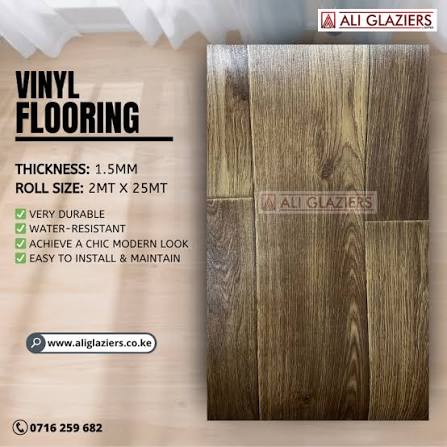
What About Vinyl Flooring?
Vinyl flooring can be an attractive commercial option where easy maintenance, design flexibility and practical performance are required, but slip resistance varies between products. Select a vinyl product based on its documented performance and intended use.
Vinyl is available in many finishes and constructions.
Commercial buyers should consider:
- Slip resistance
- Wear layer
- Cleaning requirements
- Moisture exposure
- Traffic level
- Installation method
- Fire performance
- Warranty
For available options, browse the Ali Glaziers vinyl flooring collection.
For maintenance considerations, see the guide to cleaning and maintaining vinyl floors in Kenya.
Anti-Slip Flooring for Schools and Healthcare Facilities
Schools and healthcare facilities require careful flooring selection because many occupants use shared circulation areas, washrooms and service spaces. Slip resistance should be balanced with hygiene, cleaning, comfort and movement of people or equipment.
Schools may experience:
- High pedestrian traffic
- Wet weather
- Mud
- Food spills
- Frequent cleaning
Healthcare facilities can add:
- Trolleys
- Wheelchairs
- Cleaning chemicals
- Infection-control requirements
- Frequent sanitation
A highly textured floor is not automatically the best choice if it creates cleaning or mobility problems.
The specification should therefore be developed around the complete operating environment.
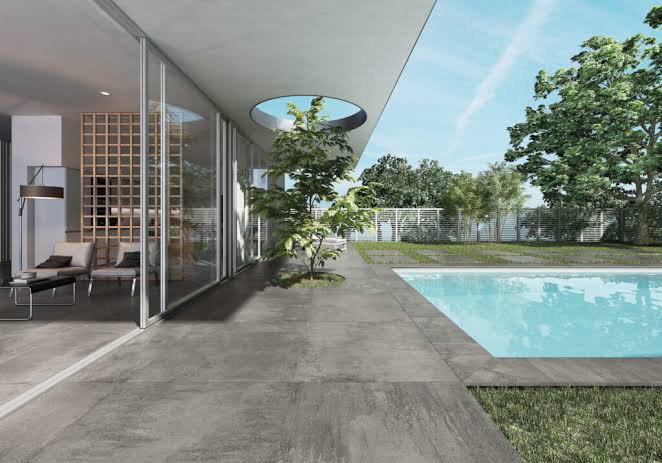
Anti-Slip Flooring for Outdoor and Semi-Outdoor Areas
Outdoor and semi-outdoor areas can require greater attention to slip resistance because they may be exposed to rain, dirt and changing weather conditions. Flooring should be selected together with drainage and the expected type of pedestrian traffic.
Applications may include:
- Balconies
- Covered walkways
- Pool surrounds
- Outdoor restaurants
- Terraces
- Entrance steps
- Service yards
Artificial turf may be appropriate for some decorative outdoor applications, but it should not be assumed to solve every outdoor slip-risk problem.
For outdoor design options, explore the artificial turf and grass range.
Common Mistakes When Selecting Anti-Slip Flooring
Most flooring slip-resistance mistakes occur when buyers focus on the rating alone and ignore the actual environment, installation, drainage and maintenance. A product should be selected as part of a complete floor-safety strategy.
Avoid these common mistakes:
Choosing the highest R rating automatically
Higher is not always more practical.
Assuming all R11 products are identical
Product construction and surface characteristics can differ.
Ignoring wet conditions
A dry-floor specification may not suit a wet environment.
Forgetting contamination
Oil, grease, soap and dirt can alter real-world slip conditions.
Ignoring drainage
Standing water can create problems regardless of the flooring specification.
Selecting flooring based only on appearance
A beautiful floor still needs to perform safely.
Failing to request documentation
A technical specification should be supported by evidence.
R Ratings for Different Commercial Spaces
The appropriate slip-resistance rating should be selected according to the specific use of each space rather than applying one rating across an entire commercial building.
A simplified planning framework might look like this:
| Area | Typical risk | Flooring approach |
| Dry office | Low | R9 or project-specified equivalent |
| General retail | Low to moderate | R9–R10 depending on conditions |
| Building entrance | Moderate to high | R10–R11 depending on exposure |
| Hotel corridors | Moderate | R9–R10 depending on conditions |
| Restaurant dining area | Moderate | R10 may be considered |
| Commercial kitchen | High | R11–R12 or project-specific requirement |
| Pool surround | High | Specialist wet-area flooring |
| Industrial wet area | High to very high | R12–R13 or specialist specification |
These are general guidance ranges, not mandatory classifications. The correct specification should come from the project's risk assessment, applicable standards and professional advice.
How to Balance Safety, Cost and Appearance
The best commercial flooring specification balances safety with durability, maintenance, aesthetics and lifecycle cost. Selecting a highly specialised floor for every area can unnecessarily increase project costs without improving performance where the risk is low.
For example, a building could use different flooring solutions for:
- Reception
- Office areas
- Washrooms
- Kitchens
- Entrances
- Corridors
- Outdoor areas
This zoning approach allows each space to receive a product appropriate to its conditions.
It can also create a more visually interesting interior.
The result is a flooring strategy rather than simply a flooring purchase.
Choosing Anti-Slip Flooring in Nairobi and Kenya
Commercial flooring in Nairobi and across Kenya should be selected with local operating conditions in mind, including rainfall, pedestrian traffic, cleaning practices, building use and the requirements of the project consultant.
Ali Glaziers Flooring Solutions provides a range of flooring products for homes, offices, retail spaces, hospitality projects and other applications.
You can explore the Ali Glaziers Flooring Solutions online shop and review options such as:
If you are working from an architectural or contractor specification, share the required performance criteria before selecting the final product.
Final Verdict: How Should You Choose an R Rating?
R9 to R13 ratings provide useful information when comparing flooring slip resistance, but the correct rating depends on the conditions in which the floor will operate. R11 flooring can be suitable for many higher-risk commercial applications, but wet, greasy, industrial or specialist areas may require a different specification.
The most important questions are:
- Will the floor normally be dry or wet?
- What contaminants are likely to be present?
- How much pedestrian traffic will the area receive?
- Is the area exposed to rain?
- How effective is drainage?
- How will the floor be cleaned?
- Will wheeled equipment use the surface?
- What R rating does the project specification require?
- Is supporting test documentation available?
- Does the flooring system suit the actual application?
Do not select flooring simply because a product is labelled "anti-slip."
Instead, identify the actual risk and specify the appropriate performance.
For commercial projects, this approach can produce flooring that is safer, easier to maintain and better suited to the building's long-term requirements.
Get Flooring Advice from Ali Glaziers Flooring Solutions
For expert guidance on flooring selection, product suitability and installation for residential and commercial projects, contact Ali Glaziers Flooring Solutions.
Why choose Ali Glaziers Flooring Solutions?
- Wide range of flooring solutions
- Expert product guidance
- Options for residential and commercial spaces
- SPC, vinyl, laminated wood and Egyptian carpets
- Artificial turf for selected outdoor applications
- Flooring solutions for Nairobi and projects across Kenya
- Installation advice and support
Visit Us: Funzi Road Branch, End of Funzi Road, Industrial Area, Ali Glaziers LTD Building, Nairobi, Kenya
Call / WhatsApp: +254 (0) 716 259 682, +254 (0) 722 522 452
Email: info@aliglaziers.com
Shop Online: flooring.aliglaziers.com/shop
Request a Quote: Contact Ali Glaziers Flooring Solutions
When selecting commercial flooring, choose the R rating for the risk—not simply the highest number available.