A level, stable subfloor is essential for a successful click-lock flooring installation. Learn how to check subfloor flatness tolerance, identify uneven areas, use levelling compound in Kenya, and choose the right uneven floor fix before laying SPC, laminate or other click-lock floors.
Subfloor Flatness Tolerance: How Level Is Level Enough?
A beautiful click-lock floor can still develop problems if the surface underneath it has not been properly prepared.
Before installing SPC, laminate or another floating flooring system, installers need to consider subfloor flatness tolerance. A floor does not necessarily need to be perfectly level across the entire room, but it does need to meet the requirements of the flooring manufacturer's installation instructions.
The important distinction is between level and flat.
Shop SPC Flooring
View all SPC Flooring



A surface can have a slight overall slope while remaining relatively flat. Conversely, a floor can appear generally level but contain local humps, depressions or abrupt changes that create problems for click-lock flooring.
For anyone looking for an uneven floor fix, the correct approach is to identify the type and extent of the irregularity before choosing a repair method.
Ali Glaziers' own click-lock installation guidance recommends preparing a surface that is clean, dry and level before installation.
What Is Subfloor Flatness Tolerance?
Subfloor flatness tolerance describes how much variation is acceptable across the surface before a particular flooring product is installed.
The exact allowable tolerance is product-specific. It should therefore not be invented or assumed to be the same for every flooring system.
For example, an SPC manufacturer's installation instructions may specify a particular maximum variation over a defined measurement distance.
The installer should check the technical documentation for the exact product being installed.
This is especially important with click-lock floors because the joints need a sufficiently stable and consistent base.
Ali Glaziers' SPC installation information states that the subfloor should be clean, dry and level before installation.
Flat Does Not Always Mean Perfectly Level
One common misunderstanding is that the entire room must be perfectly horizontal.
In practical flooring preparation, the bigger concern is often whether the surface contains unacceptable local variations.
A floor may have a gradual slope while still providing a sufficiently consistent surface for a particular flooring system.
However, a local hump or depression can create a more serious problem because the flooring may flex or move over that point.
Therefore, when assessing subfloor flatness tolerance, installers should look for both:
- Overall changes in floor elevation
- Localised uneven areas
- Humps
- Depressions
- Broken sections
- Loose areas
- Cracks
- Abrupt changes between surfaces
Why Subfloor Flatness Matters for Click-Lock Flooring
Click-lock flooring depends on the boards fitting together securely.
If the underlying surface is significantly uneven, the flooring may move when walked on. This can place additional stress on the locking joints.
Possible consequences include:
- Movement underfoot
- Clicking sounds
- Gaps between boards
- Joint separation
- Uneven finished appearance
- Stress on locking mechanisms
- Premature installation problems
Ali Glaziers notes that uneven floors can contribute to plank movement, clicking sounds and locking-system failure, making floor preparation an important part of SPC installation.
This is why an uneven floor fix should be completed before the finished flooring is installed.
How to Check subfloor flatness tolerance
Before deciding whether levelling is required, inspect and measure the floor.
A basic assessment can begin with:
- Clean the surface.
- Remove loose debris.
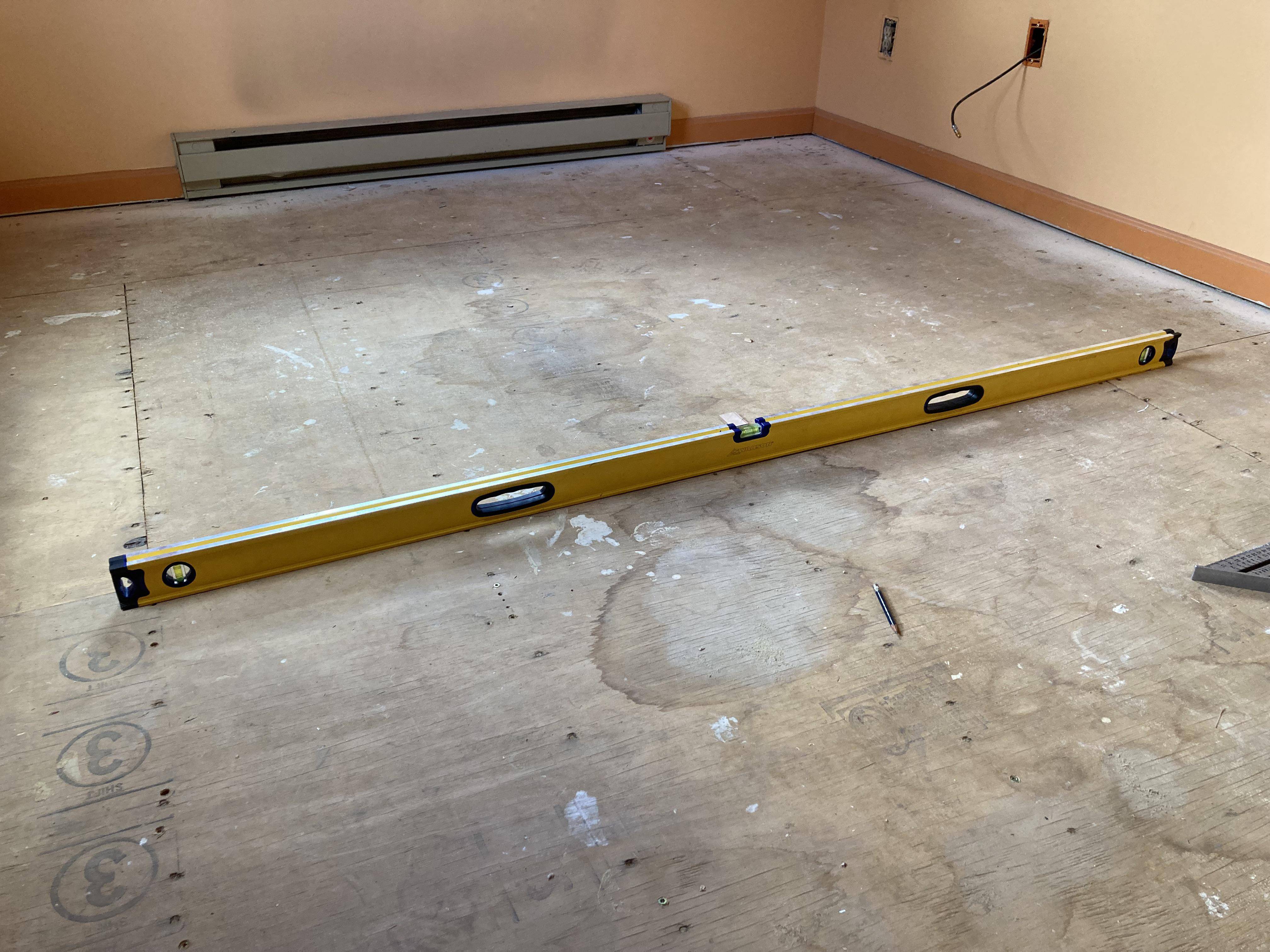
- Place a suitable straightedge across the floor.
- Check for visible gaps beneath the straightedge.
- Move the straightedge across multiple areas.
- Mark obvious high and low points.
- Measure the variation.
- Compare the result with the flooring manufacturer's requirements.
The exact measuring equipment and tolerance should be appropriate for the flooring system and project.
For commercial projects, more detailed surveying may be appropriate.
High Spots and Low Spots
Not all uneven floors require the same treatment.
High Spots
A high spot is an area that rises above the surrounding surface.
Depending on the subfloor material, correction may involve suitable grinding, removal or other preparation methods.
Low Spots
A depression may require a suitable levelling or smoothing product.
This is where levelling compound Kenya projects can become relevant.
A levelling compound can help correct suitable surface irregularities when used according to the product manufacturer's instructions.
Cracked or Damaged Areas
Cracks, loose sections or structurally unstable areas should be assessed and repaired appropriately before applying a levelling product.
Simply covering a damaged area with compound does not necessarily solve the underlying problem.
When Is Levelling Compound Appropriate?
Levelling compound Kenya installations should be specified according to the condition of the subfloor and the flooring system being installed.
A suitable compound may be used to smooth or correct certain irregularities before flooring installation.
However, the compound itself must be appropriate for:
- The substrate
- The depth of correction required
- The intended flooring
- Moisture conditions
- The manufacturer's installation requirements
The installer should follow the compound manufacturer's preparation, mixing, application and curing instructions.
The goal is not simply to make the floor look smooth. The finished substrate must provide the required performance for the flooring system.
Levelling Compound Is Not a Universal Uneven Floor Fix
A common mistake is assuming that levelling compound can solve every subfloor problem.
It cannot.
If the floor has significant structural movement, moisture problems, loose sections or unsuitable existing materials, those issues need to be addressed first.
An uneven floor fix should therefore begin with diagnosis.
Ask:
- Why is the floor uneven?
- Is the substrate stable?
- Is there moisture?
- Are there cracks?
- Are there loose tiles?
- Are there deep depressions?
- Are there isolated high spots?
- What does the flooring manufacturer require?
Only then should the appropriate preparation method be selected.
SPC Flooring and Subfloor Flatness
SPC flooring is a popular click-lock flooring option because of its rigid construction and floating installation system.
However, rigid flooring does not mean the subfloor can be ignored.
Ali Glaziers' SPC product guidance specifies a clean, dry and level subfloor before installation.
Explore SPC flooring options from Ali Glaziers when planning a project that requires a click-lock flooring system.
Before laying SPC, inspect the existing surface carefully. If there are large height differences, deep grout channels, broken sections or other irregularities, preparation may be necessary. Ali Glaziers' guidance on installing SPC over tiles similarly highlights the importance of a sufficiently flat, clean and dry tile surface.
Can SPC Be Installed Over Existing Tiles?
Sometimes, yes, but the existing tiles must be suitable.
A tiled floor should not automatically be considered ready for SPC simply because the tiles appear intact.
The installer should check for:
- Loose tiles
- Deep grout lines
- Significant height differences
- Broken tiles
- Surface irregularities
- Moisture concerns
Where necessary, suitable preparation may include filling or levelling irregular areas.
Read the SPC-over-tiles installation guide for additional considerations before installing click-lock SPC over an existing tiled surface.
Uneven Floor Fix Before Laminate Installation
Laminate flooring can also be affected by poor subfloor preparation.
If a floating laminate floor is installed over an unsuitable surface, movement can occur as people walk across the boards.
When planning an uneven floor fix for laminate, the installer should first determine whether the existing surface needs:
- Cleaning
- Grinding
- Patching
- Smoothing
- Levelling
- Moisture treatment
- Partial replacement
The correct solution depends on the substrate.
Do not assume that simply adding a thicker underlay will correct a major floor irregularity.
What About Underlay?
Underlay can provide specific functions depending on the flooring system, but it should not be treated as a substitute for proper subfloor preparation.
Some flooring products already include an integrated backing or underlay.
Adding an additional layer without checking compatibility can create installation problems.
The correct approach is to establish:
- Whether the flooring requires separate underlay.
- What type of underlay is permitted.
- Whether the underlay affects the click-lock system.
- Whether the subfloor itself meets the required flatness.
This keeps subfloor flatness tolerance and underlay selection as separate but related parts of the installation specification.
How to Fix an Uneven Floor
The appropriate uneven floor fix depends on what is causing the unevenness.
For Minor Surface Irregularities
A suitable smoothing or patching product may be sufficient where permitted by the flooring system.
For Larger Depressions
A suitable levelling compound Kenya solution may be considered if the substrate and depth are compatible with the compound manufacturer's requirements.
For High Spots
Grinding or other suitable mechanical preparation may be necessary depending on the substrate.
For Damaged Areas
Damaged or unstable sections should be repaired before the final levelling or flooring installation.
For Moisture Problems
Moisture should be investigated and controlled before installing moisture-sensitive flooring.
Ali Glaziers' SPC guidance also emphasises that moisture problems underneath existing floors should be resolved before installation.
Common Subfloor Preparation Mistakes
Measuring Only One Area
A room may have a flat section near the doorway and a significant depression elsewhere.
Check the whole installation area.
Relying on Visual Inspection
A floor can look acceptable while still having local variations that affect click-lock flooring.
Using Excessive Underlay
Thicker underlay is not a replacement for correcting a poor subfloor.
Applying Levelling Compound Without Preparation
The substrate must be suitable and prepared according to the compound manufacturer's instructions.
Ignoring Moisture
A flat floor can still be unsuitable if moisture conditions are unacceptable.
Installing Flooring Before the Repair Has Cured
Levelling and repair products require the specified curing or drying time before flooring is installed.
A Practical Subfloor subfloor flatness tolerance Inspection Checklist
Before installing click-lock flooring:
- Clean the subfloor thoroughly.
- Check for visible high and low areas.
- Measure surface variation.
- Check for cracks and damaged sections.
- Inspect for loose tiles or unstable areas.
- Check moisture conditions where required.
- Compare measurements with the flooring manufacturer's tolerance.
- Select the appropriate uneven floor fix.
- Use levelling compound where technically appropriate.
- Allow repairs or compounds to cure as specified.
- Recheck the surface before installing flooring.
Why Professional subfloor flatness tolerance Preparation Can Save Money
Trying to save money by skipping subfloor preparation can create additional costs later.
If flooring needs to be removed because the underlying surface was unsuitable, the project may incur additional:
- Labour
- Material
- Removal
- Replacement
- Disposal
- Installation costs
Ali Glaziers' flooring installation guidance similarly identifies floor preparation as a factor that can affect installation costs and notes that smoother, level surfaces can reduce preparation requirements.
View the complete Ali Glaziers flooring collection to compare flooring systems before finalising your installation specification.
Choosing the Right Preparation Method
There is no single levelling compound Kenya solution that should be applied to every project.
The correct preparation method depends on the substrate and the flooring being installed.
For a professional result, the installer should establish:
- Existing floor type
- Subfloor condition
- Flatness measurements
- Moisture condition
- Flooring manufacturer's requirements
- Required repair method
- Drying or curing requirements
Only after these factors have been established should the final flooring be installed.
Final Thoughts
Subfloor flatness tolerance is one of the most important preparation considerations for click-lock flooring.
The floor does not necessarily need to be perfectly horizontal, but it must be sufficiently flat and stable for the specific flooring system. Localised humps, depressions, cracks and unstable areas should be identified before installation.
Where required, an appropriate levelling compound Kenya solution can form part of the preparation process, provided it is compatible with the substrate and flooring system.
Most importantly, an uneven floor fix should address the actual cause of the problem rather than simply hiding it underneath flooring or underlay.
Proper preparation gives SPC, laminate and other click-lock flooring systems a much better foundation for a stable, clean and durable installation.
Contact Ali Glaziers Flooring for flooring product guidance and project support before starting your installation.
Contact Ali Glaziers Flooring Solutions
Planning a new flooring installation or renovation and need suitable trims, profiles and finishing accessories? Ali Glaziers Flooring Solutions can help you explore flooring options and plan the finishing details for your project.
Visit Us: Funzi Road Branch, End of Funzi Road, Industrial Area, Ali Glaziers LTD Building, Nairobi, Kenya
Call / WhatsApp: +254 (0) 716 259 682, +254 (0) 722 522 452
Email: info@aliglaziers.com